Christopher Hampton Shares Screenwriting Wisdom and AI Views at Tallinn Film Festival
The acclaimed screenwriter discussed the challenges of adaptation, the role of artificial intelligence, and the patience required for film projects during a masterclass in Estonia.
By News Media House Staff ·
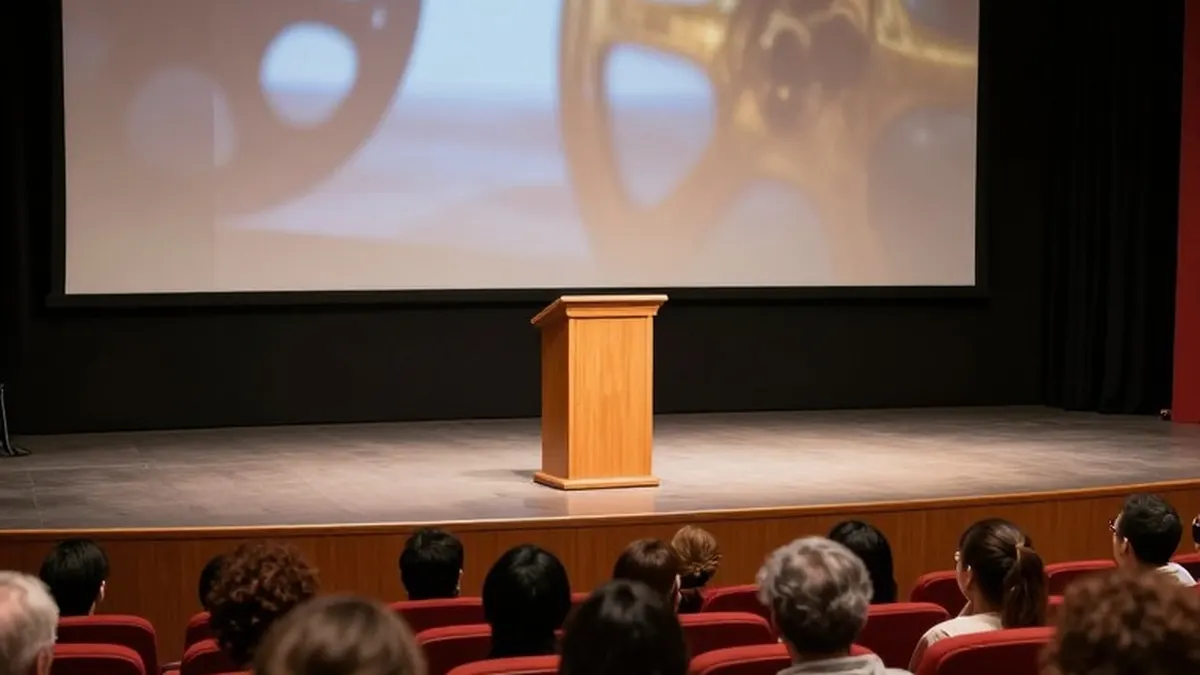
Sir Christopher Hampton delivered a candid assessment of the film industry and the craft of screenwriting during a masterclass at the Tallinn Film Festival. The event, titled From Stage to Screen: The Art of Adaptation, also featured the presentation of an Honorary Oscar to Glenn Close. Hampton, a two-time Academy Award winner and current juror at the festival, offered sharp insights into the modern creative landscape, including his thoughts on the growing influence of artificial intelligence.
Reflecting on Close's award, Hampton expressed his delight, stating that it was about time the Academy recognized her contributions. He noted that while Close may still be hoping for a competitive acting Oscar, the honorary recognition was a fitting acknowledgment of her career. Hampton's comments highlighted his appreciation for long-standing figures in the industry who have not always received the specific accolades for individual roles.
When addressing the topic of AI, Hampton displayed a degree of indifference, describing the technology as a sort of super Google. He argued that the term artificial intelligence is flawed because the intelligence is, by definition, artificial. He stated that he is far more interested in real intelligence. Regarding the fear that AI might replace human screenwriters, Hampton dismissed the idea, asserting that human work is generally more interesting than machine-generated content. He advised newcomers to avoid relying on AI, warning that allowing an external force to take over the creative process is a form of laziness.
Hampton compared the process of getting a film made to gambling in a casino. He explained that the odds of a project being produced exactly as the writer imagined are extremely low. When a film does succeed, the fulfillment is immense, but more often than not, the financier takes the chips away. He emphasized that aspiring writers must accept that there is significant wastage in the industry, with many projects spending years in development only to be left unfinanced and unseen.
The playwright and screenwriter shared personal anecdotes about projects that have languished for decades. He mentioned an adaptation of Dmitri Shostakovich's life, which he wrote three or four years ago but has yet to get made due to a lack of interest in stories about Russia. He also cited a project set in 1950s Indonesia that was rejected by financiers shortly after the September 11 attacks because the subject matter was deemed problematic. Hampton acknowledged that his projects are very slow to materialize, pointing to A Dangerous Method, which took 14 years, and his directorial debut Carrington, which took 18 years to reach the screen.
Looking toward the future, Hampton discussed the upcoming film Embers, a screen adaptation of Sandor Marai's novel starring Ralph Fiennes and Viggo Mortensen. The project has been in development for 20 years and is scheduled for release in 2027. He expressed satisfaction in finally working with Hungarian director Istvan Szabo, a collaboration that has been long in the making. Hampton remains hopeful that other projects, such as a David Lean adaptation of Joseph Conrad's Nostromo, which was shelved due to the director's health, might still find a way to the screen.
In terms of craft, Hampton identified David Lean and Fred Zinnemann as two filmmakers who had a profound impact on his development. He recalled struggling for over a decade to understand the distinct differences between writing for the stage and for the screen. Initially, he mistakenly believed that film writing was easier because it allowed for greater liberty, such as jumping between locations in a single cut. However, he learned that this liberty imposes specific constraints that are not present in theater.
Working with Lean taught Hampton how to ensure scenes flow smoothly across different locations and subjects, maintaining the cohesion of the film even when it is structured in chapters. His time with Zinnemann on a project about the end of World War II, which was eventually cancelled, taught him to focus on telling the story without unnecessary embellishment. These lessons from veteran directors helped him feel confident in his skills when he later worked on Stephen Frears' Dangerous Liaisons.
Hampton also emphasized the importance of economy in screenwriting, a quality he learned from David Cronenberg. He applied this principle while writing the first draft of The Son, immediately cutting 20 pages to keep the story focused. He argued that a screenwriter's most important skill is knowing what needs to be said and avoiding over-explanation. He criticized the tendency of some filmmakers and studio executives to underestimate the intelligence of the audience, often requesting clarifications for elements that are already clear in the script.
Finally, Hampton offered a critical view of current trends in Hollywood and television. He found modern blockbuster franchises based on shared universes incomprehensible and noted that studios often show an aversion to original works. He recounted an anecdote about a test screening of his film Imagining Argentina, where a studio executive groaned when an audience member praised the film for being original. Regarding television, Hampton described the medium as brutal and constricted, contrasting it with the freedom he enjoyed writing for the BBC in the 1970s. He concluded that while television provides ample work for writers, it has become a prescriptive and unimaginative format that no longer appeals to him.
Originally published by News Media House
More News · National news · Report a business · Got a Story?