Cities spend opioid settlement cash on cameras, courts, and lights
A national database shows local governments controlled nearly half of the $3.7 billion distributed in 2025, with oversight gaps allowing for purchases like streetlights and pickleball courts.
By Rebecca Svoboda ·
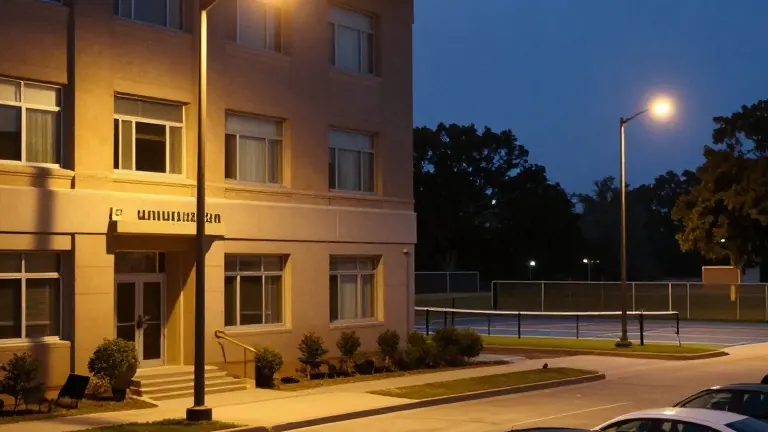
Local governments spent $150,000 on streetlights in Camden, New Jersey, last year using money meant to combat the opioid crisis.
That single line item is one of many unusual purchases documented in a new national database. State and local authorities spent approximately $3.7 billion in opioid settlement funds in 2025. This amount exceeds the median annual income of 42,000 American families combined. The funds originate from companies sued for aggressively marketing painkillers and fueling the addiction crisis.
KFF Health News, the Johns Hopkins Bloomberg School of Public Health, and Shatterproof created the database after a yearlong investigation. The team filed public records requests and analyzed roughly 17,500 entries from government websites. They sorted the data into categories such as treatment and prevention to create the most comprehensive record of 2025 spending available.
While much of the money went to addiction treatment and recovery housing, other expenditures had weak ties to the crisis. Carmel, Indiana, spent $130,000 on Flock cameras. Gilmer County, West Virginia, paid $36,200 for a pickleball court. Mullens, West Virginia, used at least $84,000 for city insurance, building utilities, and vehicle repairs. These local decisions occur because nearly half of the total settlement pot is controlled by county and city officials rather than state governments.
Elizabeth Burke Beaty, a recovery advocate and executive director of the Sea Change Recovery Community and Harm Reduction Center in Ocean County, New Jersey, argues that local politicians lack the expertise to manage the funds. "It shouldn’t be run by these politicians," she said. She believes the settlement should be managed by people directly affected by the crisis. "This whole opioid settlement should be run by the people who’ve lost everything," she said.
Local officials often work with limited staff and face pressure to balance budgets for schools and roads. They also contend with aggressive sales tactics from vendors. Burke Beaty frequently writes letters and attends public meetings to guide local leaders, but she says her feedback is sometimes ignored. She wonders if the spending stems from ignorance or a lack of willingness to do the right thing.
The debate over local control has historical parallels. The 1998 Tobacco Master Settlement paid hundreds of billions of dollars to states. Over 20 years, less than 3% of that revenue went to anti-smoking programs. Philip Rutherford, who leads substance use strategy at the National Council for Mental Wellbeing, notes that no oversight model works flawlessly. He argues local control allows for quicker pivots and lower administrative costs.
Spending on automated external defibrillators, or AEDs, illustrates the disconnect between intent and medical reality. About 100 localities across 20 states committed $3.7 million to AEDs and cardiac monitors in 2025. Mayor Kenson Siver of Southfield, Michigan, spent about $350,000 on Lifepak monitors, citing the complexity of mixed-drug overdoses. However, Dalton Barrett, a paramedic in Edgecombe County, North Carolina, said AEDs are rarely used for opioid overdoses. They work best for shockable heart rhythms, which are not common in overdose victims who typically need oxygen or naloxone.
Barrett said jurisdictions buying AEDs are often plugging general budget gaps for ambulance equipment. He prefers spending on follow-up care for overdose survivors. "People that suffer from addiction are looking for trust," he said. "They’re not looking for fancy equipment."
States have limited power to stop questionable spending. Jennifer Tourville, executive director of a University of Tennessee initiative, said her team provides guidance but cannot tell counties what to buy. Some states maintain lists of unallowable items, including body cameras and drones. Spencer County, Indiana, spent about $16,700 on eight AEDs for its sheriff department despite AEDs being on Indiana's unallowable list. Shelby Thomas, a spokesperson for the Indiana Commission to Combat Substance Use Disorder, said the statute does not grant the state enforcement authority over local spending. Van Buren County, Iowa, spent $1,000 on a recreational site with pickleball courts, citing youth prevention as the justification.