College Football Clocks: Three Separate Timers Create Endgame Chaos
A one-second discrepancy in a recent Big Ten game revealed that stadium, broadcast, and replay clocks do not always synchronize, altering game outcomes.
By Noor Graham ·
4.1 million viewers watched NBC Sports broadcast a game where the on-screen clock and the official game clock disagreed by one second, a discrepancy that determined the final result. The incident occurred during a Week 1 matchup between Michigan and Western Michigan, a game that featured a historic upset and a controversial ending that highlighted the mechanical complexities of college football timekeeping.
The confusion stemmed from the implementation of a new synchronization system by the Big Ten. Officials synced the stadium scoreboard, the television production truck, and the conference replay command center 90 minutes before kickoff. However, the system used in the replay center in Chicago drifted over the course of the 3 hours and 18 minutes of play. By the time the game ended, the replay center clock was one second behind the other timepieces.
The game appeared to end on an incomplete pass by Michigan with time expired, securing a 12-7 victory for Western Michigan. Replay officials ruled that one second remained, added that time back to the clock, and allowed Michigan to complete a touchdown pass for a 13-12 win. The Big Ten later acknowledged the officials made an error but did not reverse the result. This incident contradicted the standard rule that officials should defer to the clock seen by the most people.
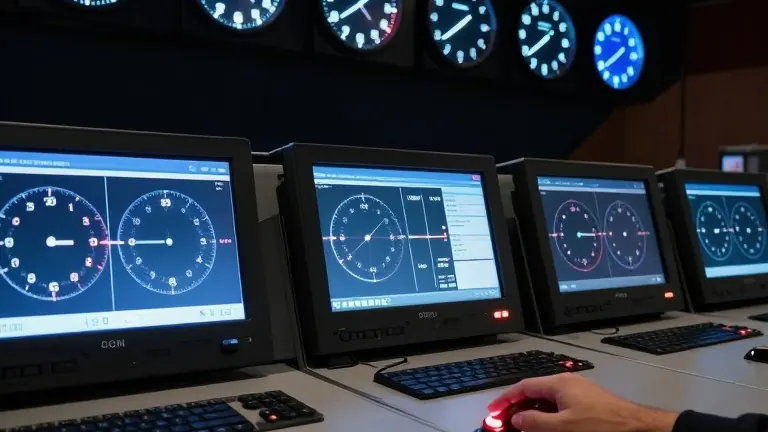
College football currently uses three distinct clocks: the stadium scoreboard, the television broadcast clock, and the replay center clock. For decades, on-field officials also monitored a backup clock on their wristwatches, typically the back judge or sideline officials. Today, those officials watch for anomalies on the game and play clocks without keeping time on their wrists. The referee, wearing a white hat, remains the ultimate authority on when the clock restarts after each play.
Coaches are increasingly focused on managing these timing discrepancies. Vanderbilt head coach Clark Lea, who benefited from a similar late-game controversy against NC State in Week 3, emphasized the need for preparation. NC State held the ball and a three-point lead with six seconds remaining but lost the game. Lea stated that coaches must prepare teams to avoid situations where the clock determines the outcome.
"Our goal as coaches has to be to do our job and prepare our teams as best we can, so that maybe we can avoid those situations where the clock has the power to determine the end of the game," Lea said. He noted that while such finishes are unavoidable in the sport, situational practice is the primary defense against them.
Former Alabama head coach Nick Saban, who led the Crimson Tide to a national title in 2018, credited situational repetition for his team's late-game success. He trained players to slow down their mental processes during high-pressure moments. Saban recalled a 2023 play against Auburn, described by wide receiver Isaiah Bond as the "Gravedigger," which Bond caught to win the Iron Bowl. Bond said people doubted Saban had practiced the specific scenario, but the coach insisted his team was ready for the exact moment.
The practice of clock management has roots in coaching history. Former Davidson and Army head coach Homer Smith wrote a handbook on the topic, warning that coaches cannot escape the scoreboard clock. Bill Belichick, son of Navy scout Steve Belichick, has always designated a staff member as a clock watcher. At the New England Patriots, that role belonged to Bill O'Brien, whose situational analysis influenced how coaches approach the final two minutes of a game.