FAA Funding: Senate Republicans Weigh $50 Billion Request After Ground Stop
Lawmakers debate the scope and method of financing for outdated aviation systems following last week's nationwide flight cancellations.
By Noor Graham ·
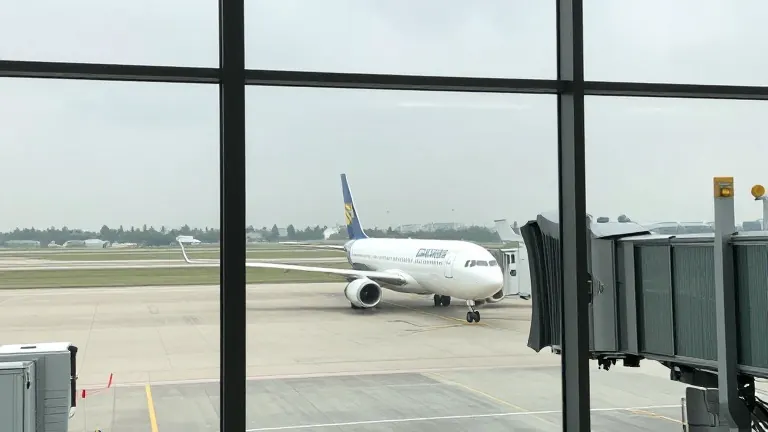
Thousands of travelers remained stranded last Friday after overloaded routers forced the Federal Aviation Administration to issue a nationwide ground stop. The disruption prompted Transportation Secretary Sean Duffy to propose a $50 billion package for the FAA. Senate Republicans received the proposal on Tuesday with a mix of urgency and skepticism regarding the price tag.
The ground stop was triggered by aging technology in the federal aviation system. Duffy argued that the infrastructure requires a complete overhaul to handle modern traffic volumes. He stated that the U.S. needs a resilient new network and investment in physical assets, including air traffic control towers and runways.
Senate Majority Leader John Thune met with Duffy in a closed-door lunch before addressing reporters. Thune noted that the secretary fielded numerous questions about how the funds would be utilized. He acknowledged that while Republicans could move the bill forward alone through reconciliation, the process is complex and time-consuming. Thune emphasized that the current Congress has limited time remaining.
Congress already allocated $12.5 billion for the FAA in the One Big Beautiful Bill Act last year. Thune pointed out that much of that money is already committed to specific projects. He stated that while air traffic modernization was necessary, additional resources are now required to address the gaps exposed by the recent failure.
Duffy explained the jump from an initial $30 billion request to the current $50 billion figure by saying he decided to put everything on the table. He cited a history of underinvestment in aviation. Kennedy, a Republican from Louisiana, expressed frustration with the increased amount. He told reporters he was furious about the change and compared himself to a character not known for naivety.
Sen. Rick Scott of Florida offered a different perspective in a social media post. He supported a $10 billion investment for air traffic control updates. Scott argued that airlines should also contribute financially to the modernization effort. He described the current system as needing a specific, smaller fix rather than a massive package.
Sen. Eric Schmitt of Missouri supported the full $50 billion request. He described the needs for technology upgrades as broad and deep. Schmitt advocated for using reconciliation to pass the measure quickly to avoid partisan gridlock. He stated that the safety of millions of Americans who fly is the most important issue before Congress.
Duffy concluded the meeting by describing the engagement with Republicans as fantastic. He said the administration will work with the Senate to determine the right funding levels. He warned that without action, replacing every tower in the country would take 300 years. He added that the status quo is no longer an option.