French Government Deploys 70,000 Officers for Third Weekend of Youth Protests
Demonstrators gathered across France on Saturday, with smaller rallies occurring in Germany, Italy, and the Netherlands as students demand better conditions.
By Rebecca Svoboda ·
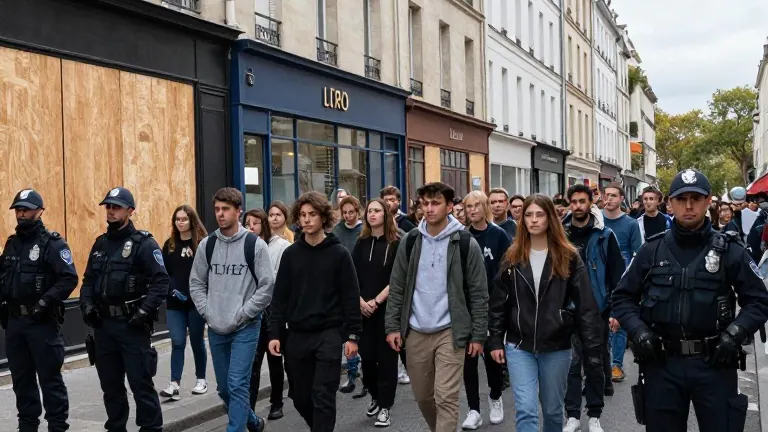
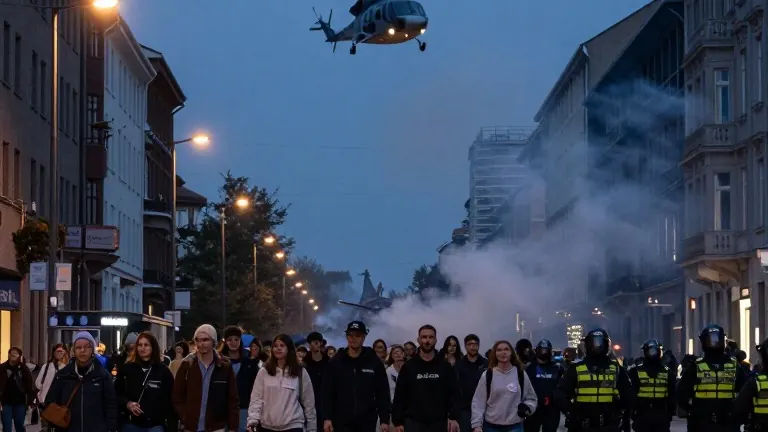
The French government placed 70,000 police and gendarmes on duty across the country on Saturday to manage a third consecutive weekend of youth-led demonstrations. The Interior Ministry estimated that 320,000 people took to the streets, a lower turnout than the previous two Saturdays but still a large crowd. The government said 70,000 of those protesters gathered in Paris, where officials rerouted marches to the city's edge to keep crowds away from central government buildings and tourist sites.
Interior Minister Laurent Nuñez described the risk of disorder as very high, particularly after dark on Halloween. This caution followed incidents on October 17 that saw more than 500,000 protesters and some of France's worst rioting in years. The following Saturday, October 24, drew an estimated 410,000 people. Organizers of the current event suggested the real numbers were higher than the government figures.
The protests began in October as high school students complained about neglected buildings, teacher shortages, and a university admissions system they viewed as unfair. Labor unions and other groups joined the movement, adding grievances about the cost of living and opposition to President Emmanuel Macron. The marchers carried separate banners for each cause, including climate activism and student housing conditions.
Corentin Cabreux, a 21-year-old student, described his living situation in a state-run residence. He said there were damp stains along the bottom of his walls, whole sections of paint peeling off, cockroaches everywhere, and rats. He said he hoped the Saturday protest would feel festive to counter the image of violence that has attached itself to the movement.
In Germany, a youth initiative called Gen Z regelt rallied in many cities. The group demanded more investment in education, health, and climate protection while opposing a return to military conscription. Organizers said more than 180,000 people had signed up online, though only several thousand marched on Saturday afternoon. In Berlin, protesters gathered at the Brandenburg Gate. Lara Breitenbach, a high school student, said the authorities must invest in social services and education because young people will live with the results the longest.
Janelle Schulz, another Berlin high school student, cited a collapsing ceiling and broken toilets at her school. She said nothing was being done about the water damage or the shortage of teachers. On the Kurfuerstendamm boulevard, some shops boarded up their windows on Friday. Authorities deployed 1,500 additional police officers to the German capital to prevent riots, although they said they were unaware of specific threats.
In The Hague, Netherlands, police maintained a strong presence in the downtown shopping area. Local media reported that officers frisked some groups of black-clad youngsters and checked their identities. Many stores had boarded up as a precaution. In Barcelona, Spain, regional police planned a highest-level alert after an anonymous TikTok network called Blocus urged new gatherings. Rioting there on October 24 led to about 130 arrests, mostly of minors.
Italian police stayed on alert following clashes in Milan, Turin, and Bologna. Calls to protest also circulated on TikTok in Belgium, Austria, Switzerland, and Portugal. A Paris court suspended an earlier curfew on minors on Wednesday, calling it a serious and illegal infringement of freedom of movement. Unaccompanied minors now face a 9 p.m. curfew around the Champs-Elysees, while police barred people from entering Place de la Republique and Les Halles from 11 p.m. to 6 a.m.
Source: ABC News