Global Carbon Budget Shrinks to Less Than Four Years as Emissions Dip
New research attributes the 2026 emissions drop to the Iran war and clean energy growth, but notes the carbon budget for 1.5 degrees of warming is now critically small.
By Rebecca Svoboda ·
The global carbon budget has shrunk to less than four years of emissions at current rates, according to a new report from the Global Carbon Project released on November 10. The study projects that total fossil fuel emissions will fall by 0.4 percent in 2026. This decline is not permanent, researchers say, but rather a temporary shift driven by specific economic and energy factors.
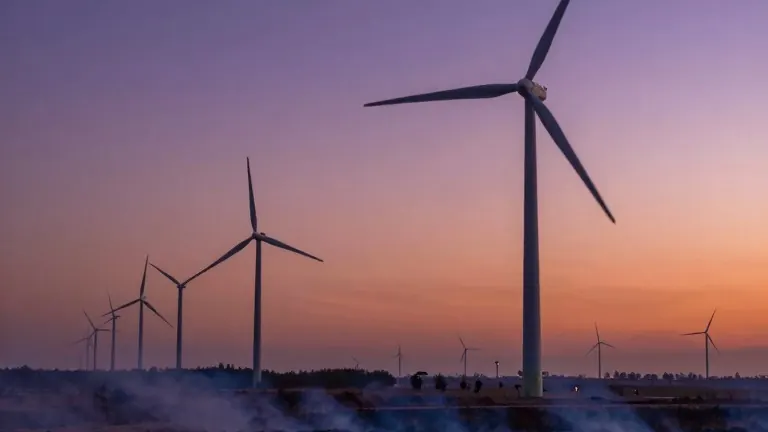
The drop in emissions stems from two main causes. The first is the energy shock caused by the ongoing conflict in Iran. The second is the continued expansion of wind and solar power across the globe. Mike O’Sullivan, a senior lecturer at the University of Exeter and one of the report’s authors, noted that the decrease is likely driven by a short-term shock rather than a systemic peak in fossil fuel use.
Two of the world’s three largest emitters are expected to reduce their output this year. China’s emissions are projected to fall by 0.9 percent, marking a decline after two years of flat or falling numbers. China accounts for 32 percent of global fossil fuel emissions but leads in clean energy adoption. The United States is expected to see a 1.3 percent decrease, primarily due to lower coal usage following a 2025 spike caused by high natural gas prices and cold weather.
However, the U.S. trend faces potential reversal. Since taking office, President Trump has invested hundreds of millions of dollars in reviving the coal industry. The administration has also repealed emissions standards for coal and gas power plants. These policy changes could alter the trajectory of American emissions in the coming years.
India presents a different picture. Emissions there are likely to rise by 4.4 percent in 2026. This figure represents an acceleration from the 3.5 percent annual growth in fossil fuel emissions that India averaged over the previous decade. In contrast, the European Union and Japan are expected to see slight decreases in their emissions.
Emissions from the rest of the world are also projected to drop by 0.7 percent, largely driven by a decline in oil consumption. Separately, global emissions from land-use change are expected to rise to 5.1 billion metric tons. This increase is attributed to a rise in peat fires and the influence of El Niño, which has heightened wildfire risk in Southeast Asia and South America. Peat fires burn beneath the ground and consume wetland soil, often without visible flames, releasing large amounts of carbon dioxide and greenhouse gases.
The concentration of carbon dioxide in the atmosphere is set to reach 427.7 parts per million in 2026. This level is 54 percent above pre-industrial levels. The report states that the remaining global carbon budget to limit warming to 1.5 degrees Celsius above pre-industrial levels is now 150 billion metric tons. If the world continues to emit carbon at its current rate, this budget will be exhausted in fewer than four years.
The United Nations has recently warned that the world is on track to exceed the 1.5-degree threshold. Despite this, the authors point to signs of progress. Between 2019 and 2025, growth in emissions slowed in all regions, including China, India, and other emerging economies. More than two dozen countries have grown their economies without increasing emissions during this period. The global adoption of wind and solar energy has helped avoid billions of metric tons of emissions.
The researchers estimate that between now and the end of 2028, 64 to 79 percent of emissions from new energy demand will be offset by new solar and wind power and electric vehicles. If clean energy adoption continues to accelerate, global emissions could peak and begin to decline within a few years. O’Sullivan acknowledged the rapid expansion of renewables but stated that on a global scale, the current pace is completely inadequate.