Historic Chicano Mural Returns to East Los Angeles After Complex Restoration
A 54-year-old mural honoring Joaquin Murieta has been restored and reinstalled on Whittier Boulevard following a two-year preservation effort.
By Naledi Dlamini ·
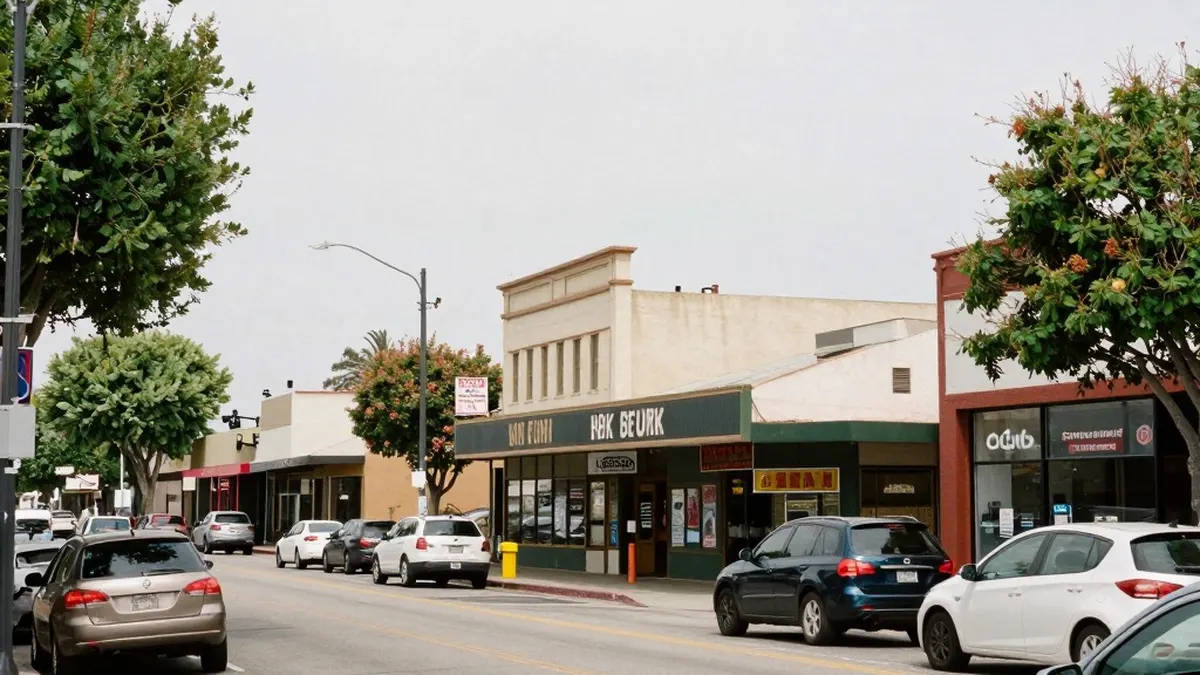
A significant cultural landmark has returned to East Los Angeles after two years of absence. The 54-year-old Centro Joaquin Murieta de Aztlan mural, which weighs approximately three tons and stands 18 feet tall, is once again displayed on Whittier Boulevard. The piece was removed during the renovation of a building on Olympic Boulevard and underwent an extensive restoration process before its September homecoming.
The mural, painted in 1972 by artist Willie Herrón III, depicts the mythical Mexican folk hero Joaquin Murieta. The artwork illustrates the legend of a man who led an uprising against American miners during the Gold Rush after they brutally mistreated him and his family. Herrón, who was 20 years old when he was commissioned to create the piece, noted that the image was inspired by 19th-century etchings found in history books, as no photographs of the historical figure exist.
The need for restoration arose in 2024 when the Legal Aid Foundation of Los Angeles, a nonprofit law firm, announced plans to demolish and rebuild its headquarters. Executive director Silvia Argueta prioritized saving the mural, allocating $200,000 from the $8 million renovation budget to the project. She emphasized that the artwork connects historical struggles for land and labor to the community’s ongoing fight against poverty and discrimination.
After contractors ensured the mural remained intact, it was carefully carved from the original midcentury building. The artwork was then transported to the home of Willie Herrón III in City Terrace. There, the artist and his wife, Leah Moscozo-Herrón, spent two years restoring the piece on a custom metal easel constructed in their driveway.
In February, the mural moved to the Small Green Door design studio in Boyle Heights. Engineers and fabricators reinforced the structure and fumigated the historic piece. An initial attempt to reinstall the mural in April failed because it could not attach to the wall’s bracing system, requiring engineers to redesign the hanging mechanism.
Fernando Mejia, a structural engineer who served as the lead fabricator, described the challenge as unprecedented. He noted that no contractor initially wanted to take on the job because the process of moving a mural of this age and weight had rarely been done. The team had to be creative to support the delicate piece without causing any cracks.
In September, the mural was finally lifted by crane and transported back to Whittier Boulevard. The operation required precision, with the crane operator moving the 6,000-pound artwork millimeter by millimeter to fit it onto the burnt orange wall. Guillermo Memo Tejeda, the project manager who created the Somos Joaquin initiative, recalled growing up with the mural as a key symbol of his Chicano identity.
Herrón, who is now 75, has a long history of creating politically charged public art. His work includes pieces such as The Wall That Cracked Open and the 1984 Olympic mural Luchas del Mundo. He also co-founded the experimental art collective Asco, which used performance and street art as forms of protest. A recent petition seeks to name the alleyway in City Terrace where many of his works are located as Calle Herron to help protect them.
Herrón expressed honor that the mural was deemed important enough to be removed, restored, and returned. He hopes the effort will ensure that future generations continue to learn about the legacy of Joaquin Murieta.
The restoration project marks a significant victory for local historians and artists who advocated for the preservation of Chicano art in East Los Angeles. The mural’s return serves as a visual reminder of the community’s history and resilience.
Originally published by News Media House
More Culture · Whittier news · Report a business · Got a Story?