Knesset Prepares to Vote on Key Bills Including October 7 Inquiry and Prime Ministerial Tenure Limits
Israeli lawmakers are set to debate seven significant pieces of legislation, ranging from a state commission of inquiry into the October 7 events to restrictions on the prime minister's time in office.
By News Media House Staff ·
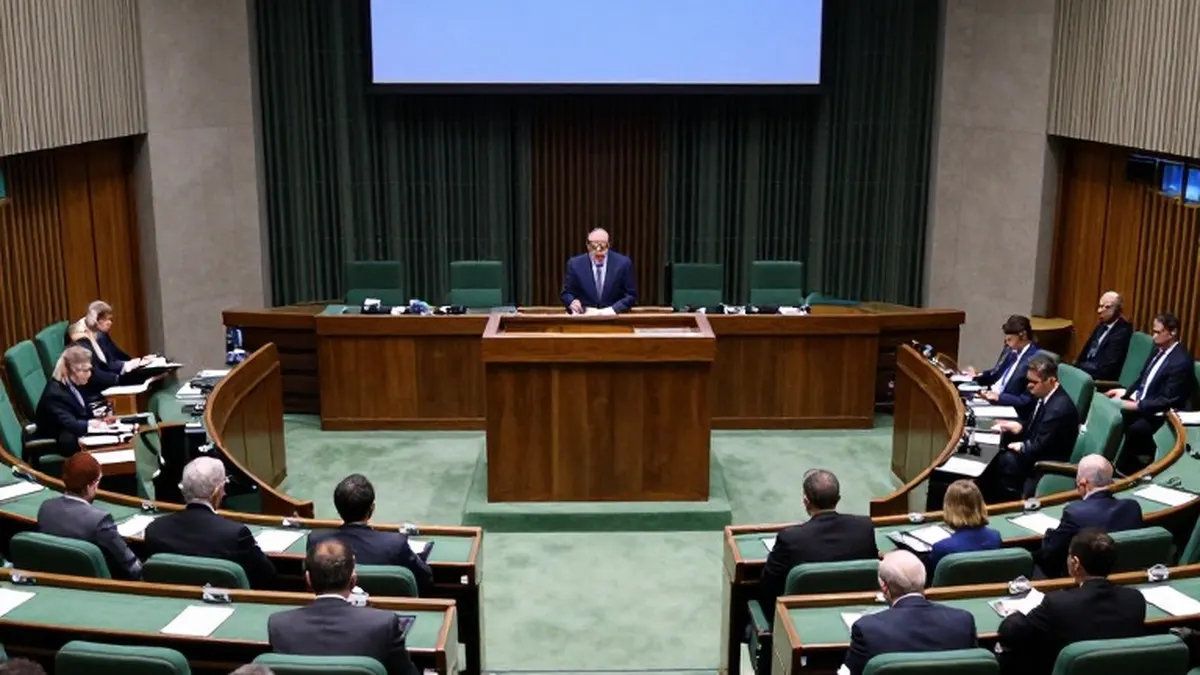
The Israeli parliament is scheduled to hold a session on Wednesday to vote on seven distinct bills, following a decision by the Knesset Arrangements Committee to expedite the legislative process. On Tuesday, the committee, led by Member of Knesset Roy Folkman, granted these proposals a fast-track status, thereby exempting them from the standard tabling requirements. The plenary session is expected to begin at 11 a.m., with the seven bills serving as the primary focus after extensive preliminary discussions.
The agenda includes a range of significant legislative proposals. Among them are bills aimed at establishing a state commission of inquiry into the October 7 massacre and repealing a recent amendment to the Police Ordinance. Additionally, lawmakers will consider measures to limit the tenure of the prime minister and to regulate excessive noise from Muslim calls to prayer. A separate bill seeks to prohibit the return of terrorists' bodies to their families.
Political reactions to the upcoming vote have already begun to emerge. Ahmad Tibi, a Member of Knesset from the Joint List, confirmed during a Wednesday morning interview with the Nazareth-based Radio A-Shams that his faction will vote against the legislation concerning the Muezzin Bill. He noted an interesting dynamic in the voting, stating, 'Today, we will vote against the Muezzin Bill.' He further observed that the Yisrael Beytenu party is also expected to oppose the measure, despite having introduced a similar bill in the past.
Two additional bills are also part of the Wednesday agenda, both of which seek to suspend arrest and enforcement proceedings against yeshiva students who are eligible for military service. These proposals were submitted by Members of Knesset Meir Porush and Yinon Azoulay. The inclusion of these bills highlights the ongoing focus on the intersection of religious education and military obligations.
In preparation for the main session, several committee meetings are scheduled for the morning. At 8:30 a.m., the temporary Knesset Constitution, Law, and Justice Committee, chaired by Member of Knesset Gilad Kariv, will convene to discuss proposed changes to the composition of the Judicial Selection Committee. This meeting is part of a broader effort to refine the legislative framework before the bills reach the plenum.
Another committee, tasked with the repeal of the Communications Law and chaired by Member of Knesset Merav Ben-Ari, will continue its work on the first reading of that bill. There are plans to hold a committee vote on this legislation with the aim of bringing it before the full plenum as early as Thursday. This timeline reflects the accelerated pace of the current legislative session.
The Arrangements Committee is also expected to reconvene on Wednesday to determine which specific committees will handle the bills that successfully pass their preliminary readings in the plenum. This step is crucial for organizing the subsequent stages of the legislative process and ensuring that each bill is directed to the appropriate body for detailed review.
Wednesday's proceedings follow a contentious session in the Arrangements Committee on Tuesday, where the seven proposals were advanced by varying majorities. The bill to establish a state commission of inquiry into the October 7 massacre, initiated by Member of Knesset Orit Farkash-Hacohen, was approved in a 13 to 9 vote. The proposal to amend the Police Ordinance passed with a 12 to 9 majority, as did the bill imposing restrictions on the prime minister's tenure.
This legislative push occurs within a broader political context involving the Yashar party, led by Gadi Eisenkot. The party has been actively working to reverse legislation passed by the previous Knesset, even before the formation of a new government is complete. Yashar previously announced that it had submitted a series of proposals, including the commission of inquiry bill, which had been repeatedly blocked during the term of the 25th Knesset.
Negotiations regarding the haredi conscription law are also ongoing. Reports indicate that Eisenkot is discussing a framework that would exempt yeshiva students from military service without establishing specific enlistment quotas. This development is part of the complex web of legislative and political maneuvers taking place within the Knesset as it works through its current agenda.
Originally published by News Media House