Merck Beats Third-Quarter Estimates and Raises Profit Outlook on Strong Keytruda Sales
The drugmaker lifted its 2026 adjusted earnings guidance after its cancer immunotherapy and a new injectable version of it outperformed Wall Street expectations.
By News Media House Staff ·
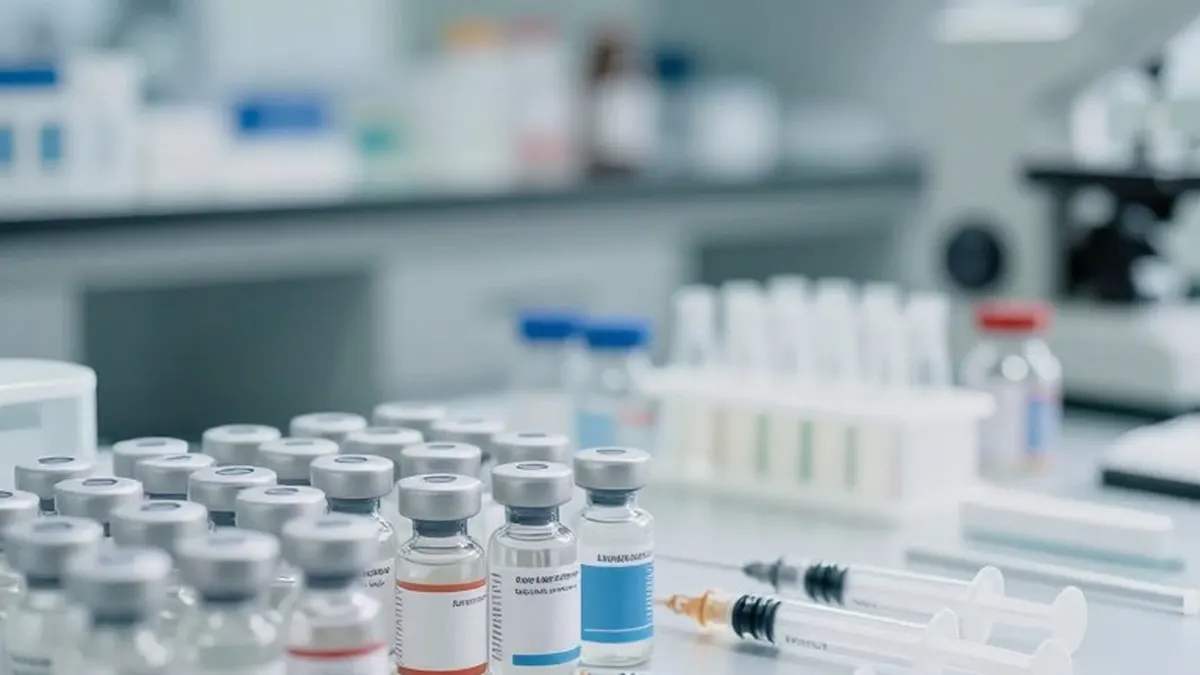
Merck beat third-quarter estimates and raised its adjusted profit forecast for the year on Thursday, helped by stronger-than-expected sales of its cancer immunotherapy Keytruda and a newer injectable version of the drug.
The company now expects adjusted earnings of $2.77 to $2.82 per share for 2026, up from a previous range of $2.66 to $2.76. The new guidance includes a one-time charge of $400 million, or 12 cents per share, tied to a licensing agreement with the Chinese cancer drugmaker SciBrunch. Merck also narrowed the low end of its 2026 revenue outlook, which now stands at $66.8 billion to $67.3 billion, compared with an earlier range of $66.3 billion to $67.3 billion.
For the quarter, Merck reported adjusted earnings of $2.49 per share, well above the $2.08 analysts surveyed by LSEG had expected. Revenue reached $18.09 billion, up 5% from a year earlier and ahead of the $17.31 billion forecast. Net income was $5.07 billion, or $2.04 per share, down from $5.79 billion, or $2.32 per share, in the same period last year.
Keytruda brought in $8.60 billion in sales, topping the $7.73 billion that analysts expected, according to StreetAccount. That total includes $830 million from Keytruda Qlex, the under-the-skin injection that launched in 2025. It was the product's best quarter so far, and well above the $649 million analysts had projected. The result suggests Qlex could soon become a blockbuster, meaning a product with more than $1 billion in sales.
Qlex is central to Merck's plan to protect its franchise as Keytruda faces generic competition after key patents begin expiring in 2028. The company aims to move patients from the original intravenous version to Qlex, which is considered more convenient. That approach would let Merck defend its market share and sustain Keytruda's blockbuster sales after the original version loses exclusivity. Merck has also been on a deal spree as it works to offset the coming generic pressure.
Other newer products also performed well. Winrevair, a treatment for a rare and deadly lung condition, generated $694 million in sales, up 93% from a year earlier and above the $645 million analysts anticipated.
The Gardasil vaccine, which protects against cancers caused by HPV, a very common sexually transmitted infection, drew about $2 billion in sales on higher demand in the U.S. Analysts had expected $1.76 billion. The rebound follows a difficult previous year in which Merck dealt with elevated Gardasil inventory and weak demand for the vaccine in China.
Merck's animal health business posted $1.68 billion in sales for the quarter, coming in slightly below analyst estimates.
Originally published by News Media House · Source: CNBC
More News · National news · Report a business · Got a Story?