Pope Leo XIV Addresses 650,000 in Córdoba Amid Tensions with Government
The pontiff met victims of the military dictatorship and urged followers to emulate local saints, drawing political scrutiny from President Javier Milei's administration.
By Sakura Ellis ·
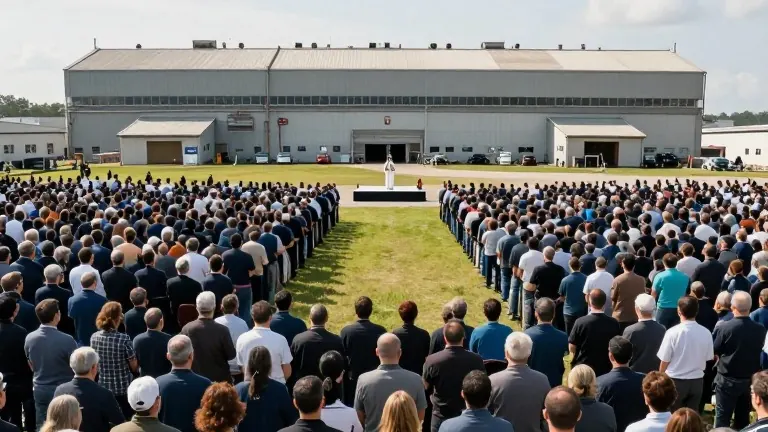
Pope Leo XIV addressed an estimated 650,000 people in Córdoba, Argentina, on Tuesday, urging the faithful to emulate the holiness of local missionaries. The gathering marked the second day of his visit to the country, following a Mass in Buenos Aires on Monday that drew an estimated 2.5 million attendees. The central location of Córdoba made it a strategic choice for the itinerary, the first papal visit to the city in nearly four decades.
The pontiff described the region as a land of saints, specifically referencing St. José Gabriel del Rosario Brochero and Mama Antula. Both figures were canonized by his predecessor, Pope Francis. Leo told the crowd that while these individuals had completed their earthly missions, the responsibility to follow their example now rested with the living. He stated that all people are called to holiness and must continue the work begun by these blessed figures.
After the liturgy, the pope emerged from the balcony of the archbishop’s residence in downtown Córdoba. The street below was packed with thousands of supporters chanting his name. Leo told the assembly that unity would allow them to accomplish great things. The site of the Mass was the grounds of the Argentine Aircraft Factory, a former air force plant. The facility built the attack planes used by the military in late 1975 to strike leftist guerrillas, a campaign that preceded the state terror of the 1976-1983 dictatorship.
Following the service, Leo met privately with 20 individuals selected by the local archbishop. The group included Alba Camargo, 64, whose father, stepmother, aunt, and uncle disappeared under the military rule. Camargo, who was detained by security forces in 1976 at the age of 13, presented the pope with a folder containing photos of excavations at La Perla. This former clandestine detention center outside Córdoba is a focus for relatives searching for remains. Two weeks prior, forensic anthropologists identified the remains of nine missing persons at the site.
Camargo described the interaction as deeply human, noting that the pope listened intently from a distance of 15 centimeters. She said the meeting served as a gesture acknowledging the continued search for the disappeared. This private audience occurred against a backdrop of public friction between the church and the government. President Javier Milei’s administration has reduced funding for memorial sites and organizations dedicated to finding victims. The government has also promoted a revisionist view of the dictatorship, characterizing military actions as excesses in a war against guerrillas rather than systemic state terror.
Political reactions to the visit have been immediate. Four senators from Milei’s party began preparing on Tuesday to advance a stalled bill banning online gambling ads. The legislation is a priority for the church as a method to protect children. Foreign Minister Pablo Quirno defended the administration’s record but acknowledged that the pope’s social messages exposed national shortcomings. He stated that the visit challenges the entire political class to address what the country lacks.
Cardinal Ángel Rossi, the Jesuit host for the Córdoba leg of the trip, is a prominent critic of Milei. Rossi, who trained under Jorge Mario Bergoglio in the 1970s, has previously called the government's cuts to aid for people with disabilities and retirees state and institutional sadism. Governor Martín Llaryora of Córdoba wrote on social media that the pope’s message of peace and fraternity offered hope to a divided nation. The visit continues to serve as a focal point for debates on faith, memory, and social policy in Argentina.