Registered voters under 35 drop to 29% as Nigeria heads to polls
The share of young people on the electoral register has fallen sharply, with analysts citing high nomination costs and a lack of trust in the political establishment.
By Sakura Ellis ·
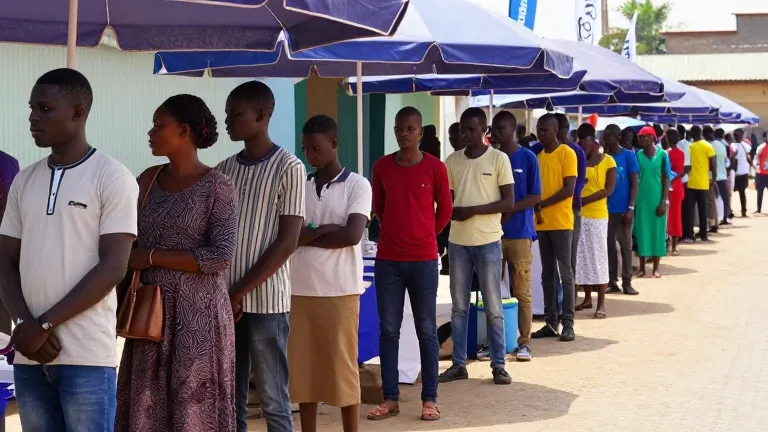
Nigerians under the age of 35 now constitute just 29 percent of the country's registered voters, a steep decline from the 40 percent recorded in 2023. This shift indicates that a substantial portion of the nation's youth is choosing to abstain from the formal electoral process ahead of the general elections scheduled for January 2027.
The total number of registered voters has increased by 10 million to exceed 103 million since the previous election. However, the enrollment of those under 35 has decreased by approximately seven million. This demographic trend occurs in a nation where roughly 80 percent of the population is under 40, creating a distinct disconnect between the age of the electorate and the age of those in power.
Abdulhadi Dalhatu, a 38-year-old candidate for the state assembly in Kano state, views his age as an advantage. He argues that the younger majority should have a greater say in the country's direction. "Younger people are the majority in this country and should be deciding the future," Dalhatu stated. He is running under the Nigeria Democratic Congress, a party led by presidential candidate Peter Obi.
Financial barriers remain a primary obstacle for young aspirants. Under current rules, the cost of nomination forms for the presidency is set at 100 million naira, or approximately $74,000, by the ruling All Progressive Congress, the Peoples Democratic Party, and the African Democratic Congress. This fee is nearly double the 5 billion naira campaign spending limit that applied to the 2023 election, which has since been doubled.
Fatima Zahra Umar, a young politician in the All Progressive Congress, noted that the political system is heavily influenced by capital. "Young Nigerians are poor. Nigerian politics is cash-intensive, so participation is guided by money," she said. She added that many young people accept minor roles, such as special advisor positions, rather than competing for major offices.
The age gap is pronounced at the highest levels of government. President Bola Tinubu is 74 years old and would be 79 by the end of a potential second term. His main challengers include Atiku Abubakar, who is 79 and seeking the presidency for the seventh time, and Peter Obi, who is 65. Only one of the 18 presidential candidates, Moses Olusoji Adebisi, is under 40. In the National Assembly, none of the 109 senators are under 40, and only 14 of the 360 House of Representatives members fall into that age group.
Disillusionment among young voters follows the 2023 election, where Peter Obi's social media-driven movement, the Obedients, failed to secure the presidency. Nonso Chukwudi, a former Obedient, expressed the sentiment of many supporters. "At the time we were so hopeful, but unfortunately the result wasn't what we wanted, which made many lose hope in the system," Chukwudi said. This sentiment builds on the momentum of the 2020 EndSars protests, which saw widespread youth mobilization for police reform and political accountability.
The Independent National Electoral Commission has attempted to reverse the trend by appointing nine ambassadors from the entertainment industry, including film, music, and comedy figures, to encourage youth registration. Despite these efforts, the current figures suggest the campaign has not yet significantly altered the demographic makeup of the voter roll.
Entertainer Charly Boy drew attention to the issue by referencing the success of young candidates in the recent United States midterm elections. He urged Nigerian voters to hold candidates accountable for past promises regarding jobs and security. "Democracy is not a spectator sport, nor is it about sharing rice," he wrote in a widely shared post on X.