Russia and Iran Build New Reactors as Inspectors Lose Access
A $25 billion agreement for the Sirik plant expands Russian influence just as the IAEA reports it cannot verify activity at four key Iranian sites.
By Noor Graham ·
The International Atomic Energy Agency reported on June 4 that it could not verify the status of nuclear material at four uranium enrichment facilities in Iran. This gap in oversight coincides with the launch of a massive new energy project by Tehran and Moscow.
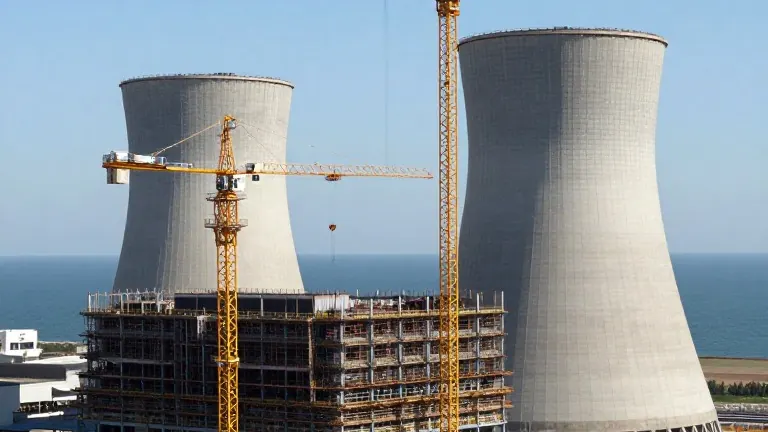
The first major development in this expanded partnership is the Sirik nuclear power plant. Located in Hormozgan Province near the Strait of Hormuz, the facility was agreed upon in September 2025. Iranian state agency IRNA values the deal at $25 billion. The units will have a combined capacity of roughly 5 gigawatts. This output significantly exceeds the current Bushehr complex, which will produce under 3 gigawatts once fully operational.
The second development involves the return of Russian engineers to the existing Bushehr station. After the start of the US-Iran war in February, Rosatom evacuated most of its staff. By October 11, the state nuclear corporation reported that 135 specialists had returned to the site. Work continues on two additional reactor units there. The second unit is more than 60 percent complete, with operations targeted for 2029.
The third development is the deepening of the strategic framework between the two nations. The Comprehensive Strategic Partnership Treaty entered into force in October 2025. This legal foundation supports a practical roadmap approved in September 2024. Analysts note that the relationship is becoming more asymmetrical. Nikita Smagin, writing for the Carnegie Endowment for International Peace in November 2025, stated that the balance is shifting in Russia’s favor. He described Russia as one of the few available sources of investment for an Iran in dire need.
Context for these moves includes the weakening of international monitoring capabilities. The IAEA stated it conducted inspections at Bushehr from June 1 to 3. However, it could not inspect other declared sites during that reporting period. The agency could not confirm whether Iran had suspended uranium enrichment or heavy-water activities as required by UN Security Council resolutions. This lack of verification occurs while both countries face Western sanctions. Russia faces restrictions on energy and finance following its invasion of Ukraine in 2022. Iran faces decades of sanctions over its nuclear program and military activities.
Experts warn that the civilian cooperation may have non-civil consequences. The Arms Control Association noted in June 2025 that Iran’s enrichment of uranium to 60 percent has no civil justification. That level allows for rapid further enrichment to the 90 percent threshold associated with weapons. Russia and Iran have also expanded military contacts and arms transfers since 2022, according to the Center for Naval Analyses. The two countries are now linking their banking sectors and increasing cross-border trade to circumvent Western financial controls.
Source: RFE/RL