Savannah to Gather 10,000 to Honor 1597 Missionary Deaths
The Catholic Diocese of Savannah will declare five Spanish friars 'blessed' this Saturday, a move the Vatican approved after decades of review and historical scrutiny.
By Sakura Ellis ·
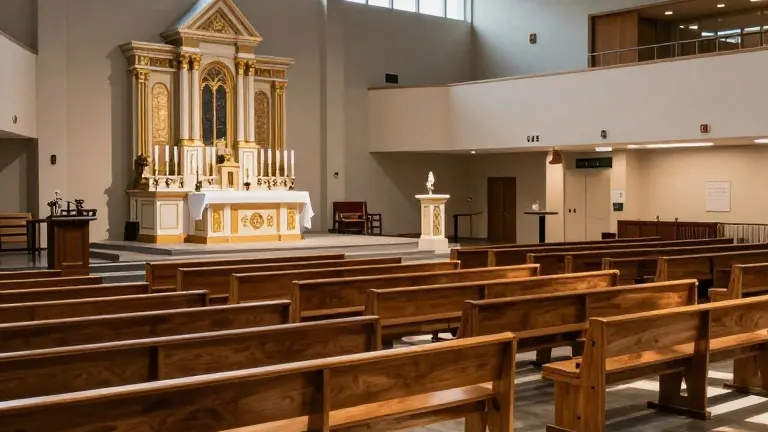
The Catholic Diocese of Savannah will declare five Spanish missionaries 'blessed' on Saturday, a distinction that places them one step away from sainthood. The ceremony will take place at the city's convention center, where organizers expect 10,000 attendees, including bishops from Spain, Rome, and Africa. This event marks only the sixth beatification ceremony held in the United States.
The five Franciscan friars were killed in 1597 in a conflict with the Guale, an Indigenous chiefdom in what is now coastal Georgia. At the time, the region was part of Spanish Florida. Bishop Stephen Parkes, who leads the Savannah diocese, noted that the friars' story remains relevant because of their willingness to sacrifice their lives for their beliefs. 'It’s an opportunity for each person to ask: What am I so passionate about that I would give my life?' he said.
The path to this declaration began in the 1950s when U.S. bishops first proposed the missionaries as candidates. The Diocese of Savannah joined the effort in 1984. In 2007, a Franciscan historian transported a nearly 500-page report to Rome. The Vatican then spent nearly 20 years reviewing the historical records to ensure they met Catholic doctrine. Pope Francis signed a decree recognizing the friars as martyrs in January 2025, shortly before his death.
The friars had lived among the Guale for about two years before tensions escalated. On September 14, 1597, Friar Pedro de Corpa admonished Juanillo, a baptized Guale man, for planning to take a second wife as allowed by Guale tradition. Juanillo led warriors to de Corpa’s hut and killed him with stone clubs. In the following days, warriors attacked other missions and killed four additional friars: Blas Rodriguez, Miguel de Anon, Antonio de Badajoz, and Francisco de Verascola.
Historical accounts describe the friars as acting like early development workers, bringing iron tools and helping the Guale navigate the Spanish system. However, they also expected conversion to Christianity. RaeLynn Butler, secretary of culture and humanities for the Muscogee (Creek) Nation, noted that the 1597 events occurred during a violent period of colonization. 'While the killing of the friars was tragic, the history of the Guale people extends far beyond those events,' she said.
Motive was central to the Vatican's approval process. Beatification requires proof of martyrdom, meaning the individuals must have died at the hands of religious persecutors. Surviving friar Pedro Fernandez described the missionaries as 'little lambs' in a 1597 letter. He also reported that a Guale leader proclaimed there was no longer any Christianity in the area. The Rev. Pablo Migone, who spent the last decade of the diocese's push for beatification as its chief promotor, stated that a strong historical case had to be made to Rome.
The Guale chiefdom was eventually destroyed by English slave raids. By the mid-1700s, remaining Guale had fled to Cuba or were absorbed by other tribes. Modern descendants belong to the Muscogee (Creek) Nation. Sainthood for the five friars would require evidence of a miracle resulting from prayers addressed to them. Bishop Parkes said the diocese would not solicit a miracle but would leave that possibility to God.
Source: ABC News