Wawa's $2.99 Gobbler Changed How Americans Eat Leftovers
The sandwich debuted as a 2008 pilot and became a national seasonal staple, evolving from a simple turkey roll into a cultural fixture.
By Noor Graham ·
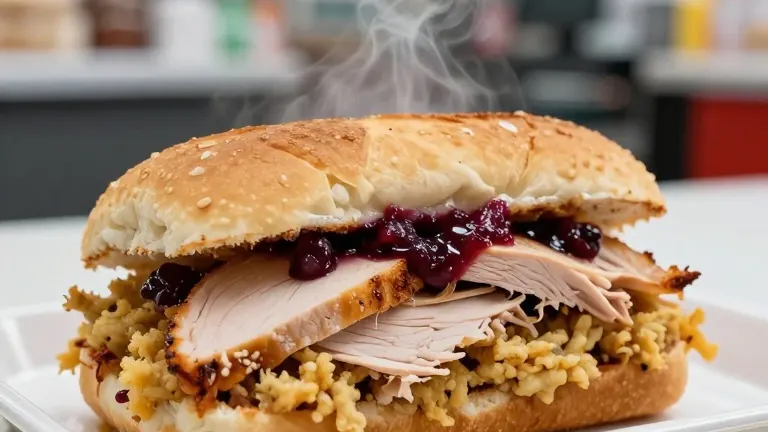
The Gobbler is now a seasonal staple for working families and commuters across the East Coast, but it was not always a convenience store icon. The sandwich, a combination of turkey, stuffing, cranberry sauce, and gravy, has a history that spans more than a century before it became a modern fast-food phenomenon.
Restaurants used the term gobbler to describe turkey sandwiches for over 100 years, often as a playful name for standard turkey dishes. In 1915, a journal article from the Modern Confectioner Publishing Company suggested a sandwich with turkey, cranberry sauce, and mayonnaise for candy stores. By 1950, the USDA published a recipe for a sandwich containing turkey, stuffing, and gravy. A few years later, the Boston Globe featured a recipe called the Man’s Special Turkey Sandwich, which included similar ingredients.
The specific combination that defines the modern Gobbler gained traction in the early 1990s. A 1992 article in the Orlando Sentinel mentioned a sandwich at Darryl’s Restaurant and Bar in Kissimmee, Florida, described as Thanksgiving dinner between white bread. Shortly after that, Kraft, the owner of the Stove Top brand, ran newspaper ads with coupons for Stove Top stuffing and a recipe for a sandwich made with mayonnaise, stuffing, cranberry sauce, and turkey. Kraft officially named that creation the Gobbler.
Wawa, based in Delaware County, transformed the sandwich into a national seasonal item. The company introduced the Gobbler as a pilot program in 2008. It returned in 2009 due to popular demand, costing just $2.99. Lori Bruce, a Wawa spokesperson, told NBC 10 that the company had underestimated how many people would want it. In its early years, Wawa did not release the sandwich until mid-November, a much later debut than the current September release.
The sandwich has evolved in popularity and availability. Restaurants now offer their own versions, and some provide vegan options. Wawa allows customers to add toppings such as American cheese and avocado, which has drawn mixed reactions from purists. The sandwich remains a seasonal item, typically appearing in the fall and disappearing after the holiday season.
Jason Sheehan, a restaurant critic for Philly Mag, ranked the Gobbler highly in a 2018 assessment of Wawa sandwiches. He described it as comfort on a roll and a portable Thanksgiving dinner. He noted that the sandwich is warm, sloppy, cheap, and delicious. His main complaint was that it is not available 365 days a year and sometimes disappears after 9 p.m.
The Gobbler’s rise from a regional curiosity to a widespread seasonal treat reflects changing habits in how Americans consume holiday leftovers. What began as a simple way to reuse Thanksgiving dinner has become a specific menu item with its own identity. For many, it is a familiar taste of the holiday season available long after the turkey is gone.
Wawa continues to sell the sandwich across its locations on the East Coast. The company has not announced changes to the recipe or the seasonal release schedule for the coming year. The sandwich remains a popular choice for customers looking for a quick meal during the holiday period.