Committee rankings spark outrage over SEC bias and Group of 6 exclusion
College Football Playoff rankings have drawn sharp criticism for prioritizing conference strength over team performance, leaving non-SEC schools and the Group of 6 at a distinct disadvantage.
By News Media House Staff ·
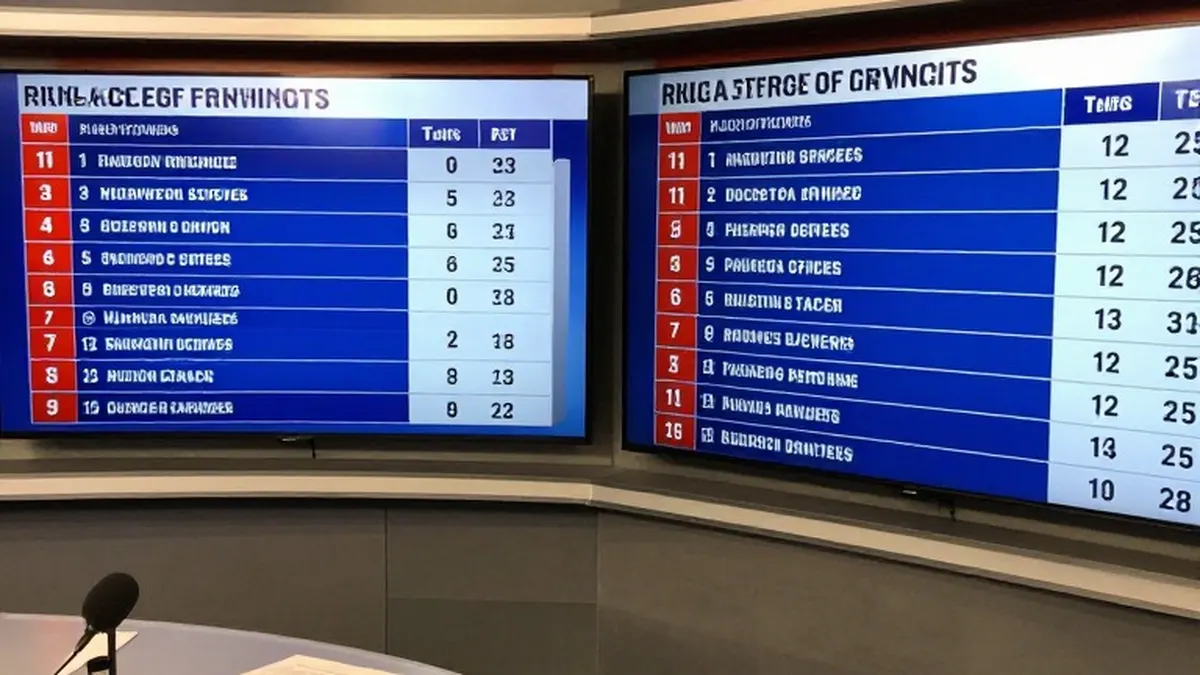
The initial College Football Playoff rankings for the 2026 season have ignited a wave of frustration among coaches and analysts. The committee appears to have heavily weighted top-tier wins, strength of schedule, and conference strength, metrics that critics argue are redundant measures of opponent difficulty. This approach has elevated teams like Alabama, Texas, and Oregon far above what many observers consider their true standing, while penalizing programs such as UCLA, Notre Dame, and Wake Forest for lacking high-profile opponents.
Indiana head coach Curt Cignetti voiced significant displeasure after his team dropped five spots during an open week. In a widely shared social media post, Cignetti questioned the logic of the committee's methodology, asking if bad losses no longer count and if first downs were still ten yards. His critique highlighted a perceived inconsistency where teams with multiple losses, such as South Carolina, Oklahoma, Florida, and Ole Miss, remain in the rankings despite their defeat records.
The debate centers on whether the committee's focus on big wins justifies overlooking bad losses. Georgia, currently ranked number one, suffered a home loss to unranked Auburn. Texas has four wins against top-20 opponents but also lost to Florida and Oklahoma. Oregon's losses to Oklahoma State and Illinois have been cited as particularly damaging. Meanwhile, the committee has seemingly ignored the condensed nature of modern talent, where the gap between elite and average teams has narrowed significantly.
Texas Tech Red Raiders have become a focal point of the anger index. Ranked 12th, the 9-1 Red Raiders find themselves behind BYU, who has a similar record and schedule but benefited from a controversial win over Notre Dame. Texas Tech has shown marked improvement under new quarterback Tommy Castellanos, scoring 139 points in their last three games, yet they remain below the Cougars in the committee's eyes.
The Group of 6 faces its own set of challenges as the field of playoff contenders shrinks. With only 24 teams meeting the criteria of limited losses, the AP poll included Liberty and Memphis in its top 25. However, the committee has not followed suit, suggesting that Group of 6 teams must defeat a top-tier Power 4 opponent to earn consideration. This stance is complicated by the fact that Power 4 schools have little incentive to schedule strong Group of 6 opponents.
Louisville, ranked 23rd, is another source of contention. The Cardinals have three losses, all by three points, including one to NC State. Despite having a higher strength of record and SP+ rating than Arizona and Houston, Louisville sits behind teams with four losses. Their offensive explosiveness contrasts with the committee's preference for stable, low-variance teams.
Tennessee's placement at number nine has also drawn fire. The Volunteers are six spots behind Alabama and four behind Texas, despite holding the head-to-head win over Texas. A comparative analysis of their losses and wins against top-ranked teams suggests Tennessee's résumé is arguably stronger. If the playoff started now, this ranking would send Tennessee to Indiana on the road while Texas hosts Boise State.
Missouri, an unranked 6-4 team, is viewed as a glaring omission. The Tigers beat Florida head-to-head and defeated Arkansas by a wide margin, yet they are not in the top 25. Their four losses were all to ranked teams, a distinction that several ranked teams cannot claim. The exclusion has led to humorous speculation about the impact on the national ecosystem.
Other programs expressing discontent include SMU, Duke, and Auburn. Notre Dame, ranked sixth, was passed by Texas, adding to the narrative of a committee that heavily favors certain conferences and metrics over holistic team evaluation. The ongoing discussion highlights the tension between traditional résumé-based ranking and the evolving reality of college football competitiveness.
Originally published by News Media House
More News · National news · Report a business · Got a Story?