Bottoms becomes first Black woman governor of Georgia amid national surge
The former Atlanta mayor defeated a $200 million opposition campaign, joining a wave of historic wins for Black women candidates in the 2026 midterms.
By Noor Graham ·
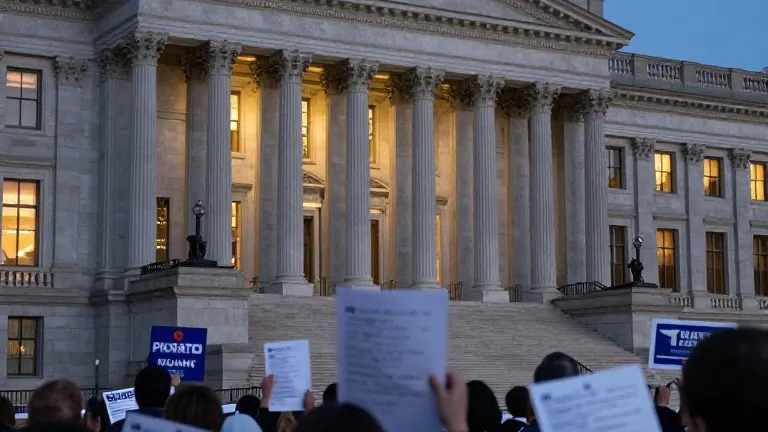
Keisha Lance Bottoms was elected governor of Georgia on Tuesday, becoming the first Black woman to hold the state's highest office. The former Atlanta mayor defeated her opponent despite a $200 million self-funded opposition effort. Her victory marks the first time a Democrat has won the governorship in Georgia since Roy Barnes lost reelection in 2002. The win follows failed attempts by Stacey Abrams in 2018 and 2022 to secure the same position.
Bottoms will join two other Black women in the upper echelons of Georgia state government. Penny Brown Reynolds was elected Secretary of State, and Tanya Miller won the Attorney General race. The source notes that these three officials represent a reshaped political structure in a state often viewed as a progressive hub in the South.
The state-level victories are part of a wider national trend in the 2026 midterm elections. Juliana Stratton won a Senate seat in Illinois, becoming only the second Black woman to represent that state. Her election means three Black women will serve in the U.S. Senate simultaneously, a first in American history. Stratton is the sixth Black woman to hold a Senate seat in the chamber's more than 200-year history.
Democrats also flipped three key Senate seats in the South and Southwest. The party gained control of seats in North Carolina, South Carolina, and Texas. These results followed a period where poverty rates in the South remained higher than in other U.S. regions. The South has the highest child poverty rate in the country at 18%. Black children in the region face a poverty rate of 30.1%, which is nearly three times the rate for white children.
Economic pressures in the region have intensified in recent years. Southern states, including Georgia, have largely refused to expand Medicaid coverage, leaving millions in a coverage gap and contributing to rural hospital closures. Globalization has reduced manufacturing jobs in rural areas, and one in five workers in the South does not earn minimum wage. Data centers have expanded in local communities, raising electricity costs and creating environmental pollution that poses health risks to families.
During her campaign, Bottoms promised to address these specific economic challenges. She pledged to allow local municipalities to cut taxes on groceries and household goods. She also vowed to eliminate the state income tax for public school teachers, expand Medicaid coverage, raise the minimum wage, and pause the construction of new data centers.
The election results come as corporate America has reduced diversity, equity, and inclusion programs. Black women have been pushed out of the workplace at high rates. The ballot box has emerged as a venue for Black women to assert leadership. In Georgia, Yolanda Renee King, the 18-year-old granddaughter of Dr. Martin Luther King, Jr., cast her first vote for these candidates. Additional Democratic wins occurred in areas where Republicans had introduced gerrymandering to retain control, though many of those specific tactics failed.