Democrats shatter midterm curse with historic sweep of Congress
Despite massive Republican spending and redistricting efforts, voters in the Great Lakes and beyond delivered a decisive victory for the opposition party.
By Rebecca Svoboda ·
History has long dictated that a president's party loses seats in midterm elections, a pattern so consistent it is often cited as political law. However, the 2026 midterm results represent a particularly sharp deviation from the norm, with Democrats not only winning seats but seizing control of both chambers of Congress in a wave that has left the White House scrambling to adjust its legislative strategy. The election, held on Tuesday, November 3, 2026, served as a referendum on President Donald Trump's second term, with voters across the nation signaling strong dissatisfaction with the current direction of the country.
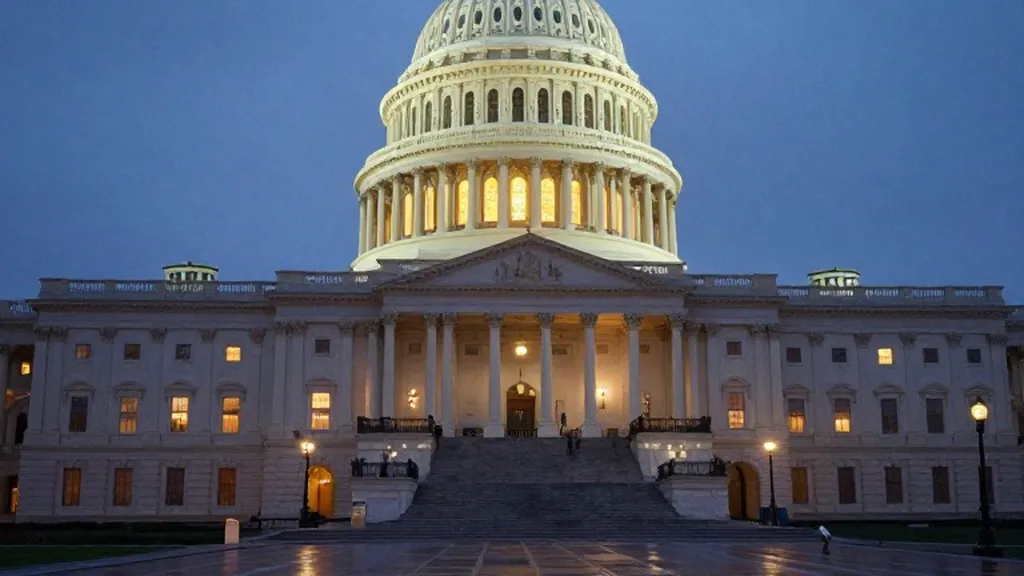
According to final tallies, Democrats have won 238 of the 435 seats in the U.S. House of Representatives, a net gain of 33 seats. This result hands the party a commanding majority, far exceeding the net gain of three seats they needed to retain control. In the U.S. Senate, Democrats have claimed 20 of the 35 seats on the ballot, a net gain of seven seats that secures control of the chamber. This double victory marks a significant shift in the balance of power, as Republicans had held a 53-47 majority in the Senate and a 220-215 majority in the House heading into the election.
The scale of the Democratic victory was evident in the Great Lakes and Ohio Valley regions, where key races flipped from Republican to Democratic control. In Ohio, a state President Trump won in 2024, Democrats gained control of the U.S. Senate seat previously held by Vice President J.D. Vance, who was not running for re-election in the special election. This result is part of a broader trend where seven U.S. Senate seats changed party hands, all shifting to Democrats in states including Iowa, Kansas, Maine, North Carolina, Ohio, South Carolina, and Texas. The loss in Ohio is particularly notable given the state's recent alignment with the Republican Party.
Michigan also saw a significant shift, with Democratic candidate Abdul El-Sayed winning the open U.S. Senate seat. El-Sayed, who will be the first Muslim American U.S. senator, defeated the Republican challenger in a race that drew national attention due to its high profile and the candidate's background. The victory in Michigan adds to the Democratic gains in the region, where the party has traditionally held strong support but faced challenges in recent election cycles. The result in Michigan, alongside the win in Ohio, underscores the ability of Democratic candidates to perform well even in states that recently voted for the presidential candidate.
Kentucky and West Virginia, both of which have historically leaned Republican, also saw competitive Senate races. In Kentucky, the open Senate seat was up for election, while West Virginia saw incumbent Republican Senator Shelley Moore Capito run for re-election. The results in these states reflect the broader national trend of Democratic gains, though the specific margins and final outcomes in these particular races are part of the complex landscape of the 2026 midterm elections. The party's success in these states suggests a shift in voter sentiment that extends beyond traditional blue states.
Despite the Democratic victory, Republicans had invested heavily in an attempt to maintain their majority. According to the nonpartisan watchdog group OpenSecrets, the 2026 U.S. midterm elections are expected to be the most expensive in history. In the battle for the U.S. Senate alone, outside groups and independent committees spent at least $2 billion, separate from candidates' direct expenditures. Republican-affiliated groups spent roughly 60 percent more than Democratic-aligned groups, yet this financial advantage did not prevent them from losing at least seven Senate seats. The disparity in spending highlights the intensity of the campaign and the efforts by both parties to influence the outcome.
Redistricting also played a role in the election, with several states using different congressional maps for the 2026 election than they did in 2024. States including California, Florida, Missouri, North Carolina, Tennessee, and Texas voluntarily underwent mid-decade redistricting, while Ohio used a different map due to state law. Alabama, Louisiana, and Utah also used different maps due to litigation. Despite these changes, which were often designed to favor the party in power, the Democratic wave was strong enough to overcome the structural advantages. The failure of the Republican redistricting efforts to hold the line against the Democratic surge is a key takeaway from the election.
Voters cited the cost of living and the war in Iran as primary reasons for their decision to support Democratic candidates. Exit polls indicated that record Election Day diesel and gasoline prices helped push Americans toward Democrats, with many voters pointing to the impact of elevated gas prices and rising costs in various sectors. The conflict with Iran, which has been ongoing for eight months, contributed to a sense of fatigue and dissatisfaction among the electorate. President Trump had threatened to return to full-scale bombardment if Tehran did not come to a settlement, but the election results suggested that voters were ready for a change in approach.
The new Democratic majority in Congress is already beginning to shape its agenda, with a focus on oversight and accountability. Rep. Jared Huffman of California, the top Democrat on the Natural Resources Committee, stated that he will ensure the committee's full investigative and oversight authority is leveraged to uncover wrongdoing and demand accountability. This signals a more aggressive posture from the new majority, which is expected to scrutinize the administration's policies and projects, including the president's efforts to remake pieces of the District of Columbia. The shift in power provides Democrats with a new tool to check executive branch excesses, complementing the legal challenges already underway in federal courts.