Fossil fuels may have stopped Earth from entering a new glacial period
A study in Science indicates that greenhouse gas emissions prevented the natural regrowth of Arctic ice, altering the planet's long-term cooling cycle.
By Noor Graham ·
Earth is currently in an interglacial period, a warm interval that naturally precedes a glacial period and an ice age. According to a new study published in Science, human activity has disrupted this cycle. The research suggests that burning fossil fuels has halted the planet's progress toward its next major cold spell. This finding challenges the common assumption that the Earth is simply heating up due to climate change without considering the natural cycles that would otherwise occur.
Nicolás Young, a geochemist at Columbia's Lamont-Doherty Earth Observatory and the study's author, explains that the Earth has cycled in and out of glaciations for 2.6 million years. He notes that scientists often use the terms glaciation and ice age interchangeably, even though they are distinct. The specific issue addressed by the study is glaciation, the formation of sprawling glaciers and ice sheets. The data shows that the Earth should have been moving toward a glacial phase, but human interference changed that trajectory.
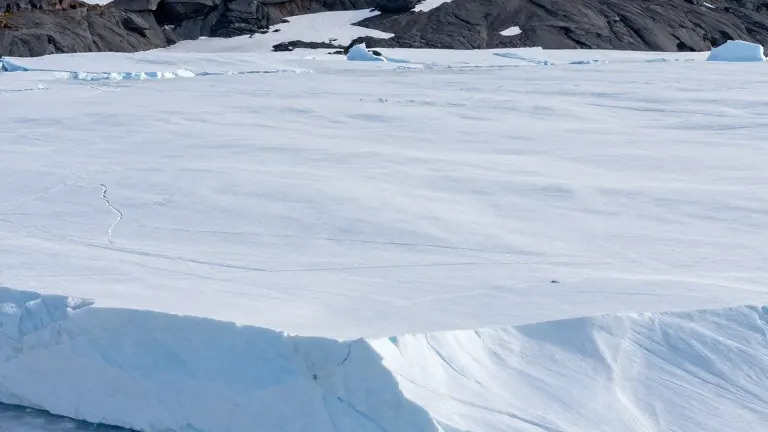
The evidence comes from the Barnes Ice Cap, a glacier located on Baffin Island in Canada. The cap currently covers 2,300 square miles, an area roughly four times the size of London. Twenty thousand years ago, this region was covered by a two-mile-thick ice sheet that extended as far south as Illinois. To determine if the ice has regrown recently, researchers analyzed frozen moss near the ice cap's edges and examined rocks for isotopes, which are radiation crumbs used for atomic dating.
The analysis revealed that the ice reached its minimum size approximately 3,000 years ago. It began to regrow 1,000 years later. However, the regrowth was interrupted by the Industrial Revolution. During this period, humans began burning fossil fuels to power factories, smelters, and steam engines. These activities released greenhouse gases that trapped heat in the atmosphere. By 1960, the ice sheet began to shrink again as human-caused climate change increased global summer temperatures. Today, the cap is melting by as much as one meter per year.
Young states that greenhouse gases and associated temperature rises have overpowered the long-term cooling trend. He emphasizes that this does not mean the planet is saved from an ice age in the immediate sense. Glaciation occurs at a glacial pace. Global cooling would have slowly chilled the United Kingdom over a period of about 50,000 years before blanketing it in ice sheets. Initially, the changes would have been small, and life would have remained normal. Possibly within a few hundred to a thousand years, the UK might have experienced noticeable cooling.
Young advises against viewing climate change as a saving grace. He notes that the cyclic expansion and contraction of ice sheets has been one of the most reliable patterns in the climate system for roughly 2.6 million years. The sudden stop to this cycle warrants caution. Professor Mary Gagen, a climate expert at Swansea University who was not involved in the study, describes the findings as exciting. She explains that ice ages are driven by orbital forcing, which involves changes in the Earth's distance from the sun. These shifts cause small changes in the energy received by the Earth's surface. Gagen calls the conclusion big and exciting, based on evidence from one small ice cap.
Dr. John Hiemstra, a glaciologist at Swansea University, adds that the amount of planet-warming gases in the air is another factor. Carbon dioxide can muddle Earth's orbital forcing. Because heat is retained in the atmosphere due to high levels of greenhouse gases, the planet will not enter a glacial phase simply because of natural orbital changes. This is the current situation, according to Dr. Hiemstra, who looks forward to further research to understand these dynamics better.