France Blames Iran for October Cyberattacks on Food Supply
French authorities say Iranian hackers compromised refrigeration systems at 700 retail locations, causing millions of dollars in food spoilage and targeting hydroelectric plants.
By Noor Graham ·
France formally accused Iran of orchestrating a destructive cyber campaign in October that targeted the nation's critical infrastructure. The French government identified Iranian military hackers as the perpetrators of an attack that disrupted refrigeration systems and power generation across the country. This marks the first time a government has officially attributed this specific wave of cyber sabotage to Tehran.
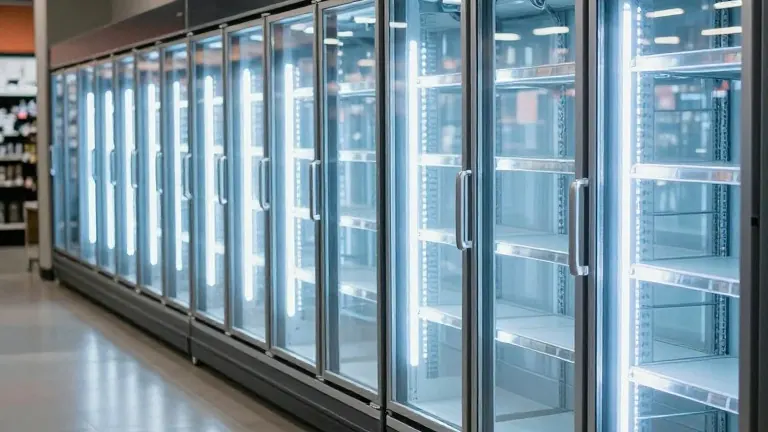
The French National Cybersecurity Agency reported that attackers took control of refrigeration controllers at approximately 700 retail sites. These locations included supermarkets and butcher shops. The intruders raised the internal temperatures during the night, resulting in the spoilage of food valued in the millions of dollars. The agency also confirmed that the campaign targeted several small hydroelectric power plants, causing moderate operational effects.
Foreign Minister Jean-Noël Barrot described the operation as unprecedented in its scale and aggression. He stated that the incident represents the first large-scale cyberattack aimed at sabotage on French national territory. The Paris Prosecutor's Office has opened an investigation into the Iranian cyber unit known as Shahid Kaveh. The French government links this unit to Iran's Islamic Revolutionary Guard Corps. Prosecutors are currently requesting international arrest warrants.
The attacks on France are part of a wider pattern of intrusions into refrigeration systems across Europe, Israel, and the United States in 2026. Grocery stores in Sweden and Ireland suffered similar disruptions last week. In France, employees at a major blood bank recently saved blood samples from heating up after a similar hack. In Israel, hackers claimed responsibility for sabotaging an industrial food processing plant in the spring, an incident that cybersecurity firm Profero attributed to a wing of the Revolutionary Guard Corps.
Over the summer, food also spoiled in refrigerators at U.S. military base commissaries. While U.S. officials suspect Iran was behind those August incidents, the Pentagon has not made an official statement. Mollie Halpern, a spokesperson for the Department of War Office of the Inspector General, noted that the Criminal Investigative Service does not discuss ongoing investigations. The French government identified the hackers using digital clues, including infrastructure connections and Farsi language traces in the code.
Security experts say the targeting of operational technology fits the known strategy of Iranian cyber units. Alex Orleans, head of threat intelligence at Sublime Security, said the attacks represent an attempt by the Revolutionary Guard Corps to reassert power through physically disruptive operations. He noted that Shahid Kaveh has previously targeted American water treatment plants. Ari Ben Am, an adjunct fellow at the Foundation for the Defense of Democracies, described Shahid Kaveh as a key offensive unit responsible for major Iranian cyber operations.
Cybersecurity professionals point to the difficulty of securing these physical systems. Operational technology machines, such as pumps and cooling units, are often outdated and connected to the open internet for remote vendor maintenance. Operators cannot easily shut them down to apply patches without disrupting critical services like healthcare and transportation. Iran has not yet responded to the French accusations.
Secretary of State Marco Rubio attended a G7 meeting in Paris on Monday. When asked if the U.S. shared information with France to help attribute the attacks, Rubio declined to comment but stated that the French are quite capable. He questioned why Iran would attack refrigerators in France, a country he said is not directly involved in the war between the U.S. and Iran that began in February.