Gulf Crude Flows: Houthi missile debris hits Riyadh while tanker traffic through Strait of Hormuz drops by half
Saudi officials warn the conflict could extend for six months as two supertankers catch fire after hitting mines in the strait.
By Noor Graham ·
Middle East crude supply chains face mounting pressure as missile debris struck the Saudi capital and oil transit volumes through the Strait of Hormuz fell to pre-war lows. The disruption comes as regional tensions escalate between Yemenite rebels and their Gulf neighbors.
A Saudi-led coalition stated on Thursday that debris from a Houthi-launched missile fell on Riyadh. A witness reported damage to the Public Investment Fund Tower in the city's financial district. Residents heard loud explosions after receiving warnings of incoming fire. The Houthis had previously claimed attacks on the area, including one on Wednesday, but did not immediately confirm responsibility for the latest strike. The coalition said it intercepted and destroyed missiles in the southern region overnight.
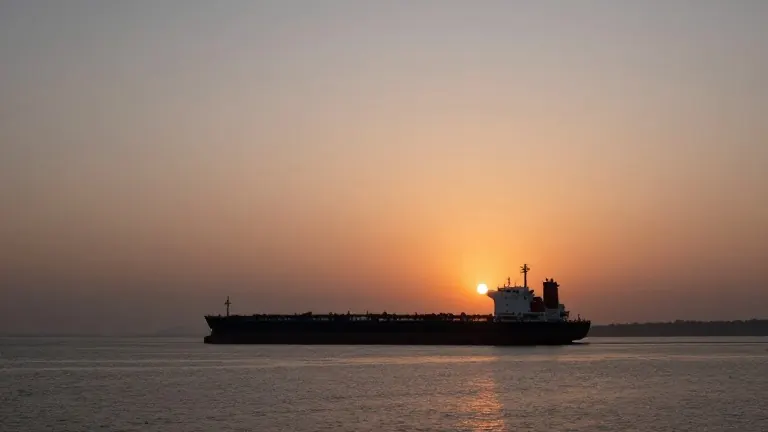
Shipping data from Kpler shows crude oil flows through the Strait of Hormuz dropped to 8.5 million barrels per day as of Monday. This figure represents half the levels recorded at the beginning of the month. Total Middle East oil exports via all available routes reached 15 million barrels per day during the same period. That volume accounts for roughly 64 percent of pre-war flows, down from 97 percent in October. Vessels using the U.S.-protected route off the Omani coast turn off their radio location systems at night to avoid detection. They transfer cargo to other tankers in the Gulf of Oman before returning to the Persian Gulf.
Iran's Revolutionary Guard announced that two supertankers caught fire after colliding with mines in an unauthorized route within the strait. The vessels were carrying more than 4 million barrels of crude. Iranian officials said the tankers were traveling on the southern side of the strait under the protection of U.S. fighter jets and surveillance drones. U.S. Central Command did not provide immediate comment. Iran reiterated on Thursday that it would treat tankers cooperating with the U.S. military firmly.
Saudi officials told allies that the conflict with the Houthis may last another six months. This projection follows Iran's expanded attacks on its Gulf Arab neighbors on Wednesday. The International Energy Agency reported on Friday that the global oil market will be oversupplied this quarter for the first time since the war began. The agency cited maintained Middle East supply and falling demand as primary factors. Crude prices declined following the report despite the logistical challenges in the region.
Freight rates for tankers have risen sharply due to the increased risk of the U.S.-protected route. Shipments of other energy products, including liquefied natural gas and diesel, remain well below pre-war levels. Kpler indicated that the daily crude flow figure could increase in the coming days.
More Business · Consumer Watch · Report a business · Got a Story?