Inspection crews hunt for cracks in aging pipes
GLWA workers are using electromagnetic tools and manual taps to find damage in vulnerable 1960s pipes before they burst.
By Sakura Ellis ·
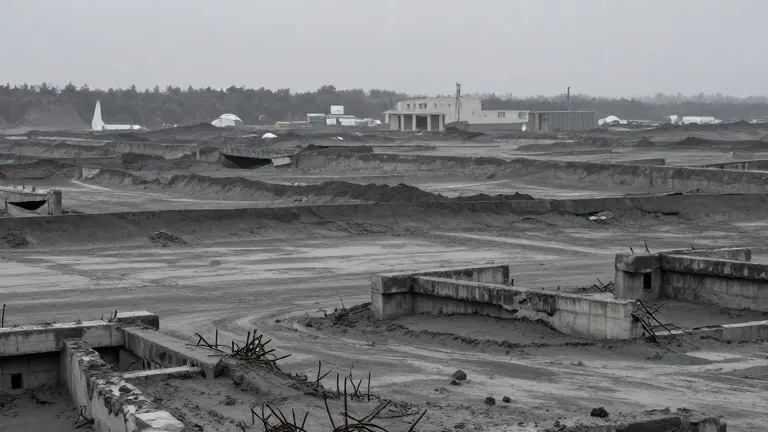
In May, a single pipe failure in Auburn Hills cut off water to thousands of residents in northern Oakland County, forcing a state of emergency. That incident exposed a hidden risk in the region’s infrastructure: a specific type of pipe from the 1960s and 1970s that is prone to internal damage. The Great Lakes Water Authority is now deploying crews to inspect these lines before the next rupture occurs.
The problem centers on prestressed concrete cylinder pipe, or PCCP. While designed to last up to 100 years, the Auburn Hills pipe failed at about 50 years old. Olivia Olsztyn-Budry, a manager at GLWA, noted that the system contains about 80 miles of this vulnerable vintage. "Yes, there’s a vintage that’s a little bit more vulnerable," she said. "We have about 80 miles of it in the system, and so that’s been the focus and one of the factors that goes into picking a pipe for doing the condition assessment."
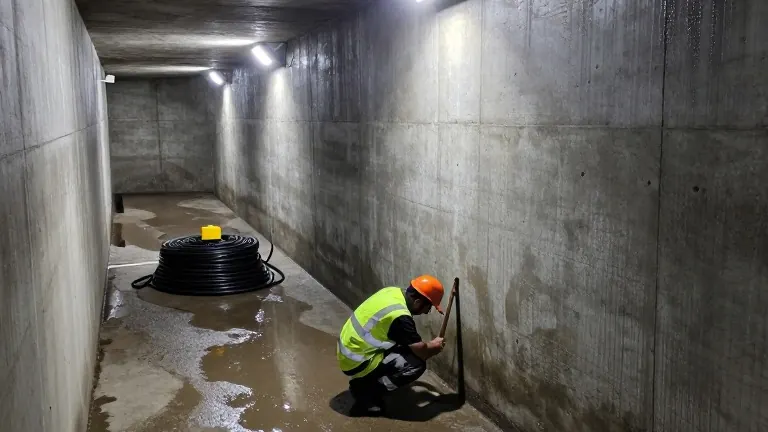
Inspections require extensive preparation. For a transmission main in Van Buren Township installed in 1962, crews spent about a month draining the pipe before entering. This 11-mile line serves Romulus, Van Buren Township, and Ypsilanti, and has broken 12 times since installation. Workers travel through the pipe at a rate of roughly one mile per day to complete the assessment.
Crews use two methods to detect damage. The first is an electromagnetic tool that sends electrical signals through the steel wires embedded in the concrete. Olsztyn-Budry explained, "This is the exciter, and this is a receiver.. When that signal gets disrupted, then we know that there is a break in the wires." The second method is manual; workers tap the pipe walls with rods to listen for changes in sound that indicate cracks or delamination.
If the data shows the pipe has fallen below a structural threshold, engineers choose between two fixes. They can replace the pipe entirely or install a carbon fiber reinforced polymer liner from the inside. This liner method requires no surface excavation and can extend the pipe’s life by roughly 50 years. Olsztyn-Budry stated, "What we’re looking for is we’re looking for problems before they become emergencies."
GLWA serves nearly 4 million residents across eight southeast Michigan counties with an 800-mile system that averages 72 years of age. Replacing all 80 miles of vulnerable PCCP is estimated to cost $1.6 billion. In September, the authority released a report titled "The Crisis Beneath Us," which identified a statewide water and wastewater investment need as high as $85 billion over the next 20 years.