Mystery novels stand out in a world of stories
The New Yorker highlights the most notable mystery novels of the past twenty years.
By Noor Graham ·
The New Yorker highlights the most notable mystery novels of the past twenty years. The site’s usual beat is political and legal commentary, but the author asks for the forbearance of the genre’s true specialists. The author is not the person who can say, for example, which of Louise Penny’s twenty “Chief Inspector Gamache” novels is the best. Tana French’s “The Trespasser” was not on a recent Times list of the “Best Thrillers of the Century.” The book, about a young Irish woman murdered in her hard-won home, is the French novel that most often comes back to the author unbidden. The author has sometimes taken it off the shelf just to reread the final interrogation scene. Kate Atkinson’s “When Will There Be Good News?” is the third in her “Jackson Brodie” series. The book involves the disappearance of a woman and her baby in the long wake of a family murder. Reggie Chase, a babysitter who pulls Brodie into the case, returns as a detective herself in later Atkinson novels. Stieg Larsson’s “The Girl with the Dragon Tattoo” was a bestseller. Its rich afterlife alone might earn this novel a place on the list: much imitated (and parodied); an accelerant in the rise of Nordic Noir; the template for a certain kind of hacker-detective; the basis for two sequels and two movies. Charlotte McConaghy’s “Wild Dark Shore” is a bit of a wild card, a crossover into the climate-fiction genre. The setting is a scientific station on an Antarctic island that must be evacuated because of rapidly rising sea levels, a locked-seed-bank mystery, one might say. A shipwrecked woman confronts the enigma of a missing researcher, an unexplained grave, beached whales, and the question of what can or should be saved. The bonus recommendation is “Women Crime Writers: Eight Suspense Novels of the 1940s & 50s.” The novels in this boxed set (including Vera Caspary’s “Laura,” Dorothy B. Hughes’s “In a Lonely Place,” and Patricia Highsmith’s “The Blunderer”) are outside this list’s time frame, but the grouping (edited, with notes, by Sarah Weinman) is new. Mid-century America could be an awfully unsettling place.
image_prompt
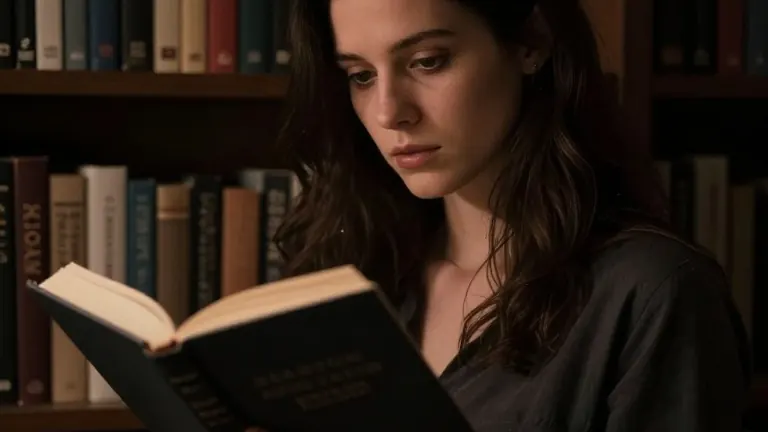
A woman reads a book in a dimly lit room, surrounded by other books on a shelf behind her, the atmosphere suggesting mystery and suspense.
mosquito bowl at the theater
Source: The New Yorker