Reporters in Lebanon hit by missile and drone during ceasefire
A 21-year-old photojournalist survived being trapped under rubble while her 42-year-old colleague died after Israeli forces struck a car in southern Lebanon on April 22.
By Noor Graham ·
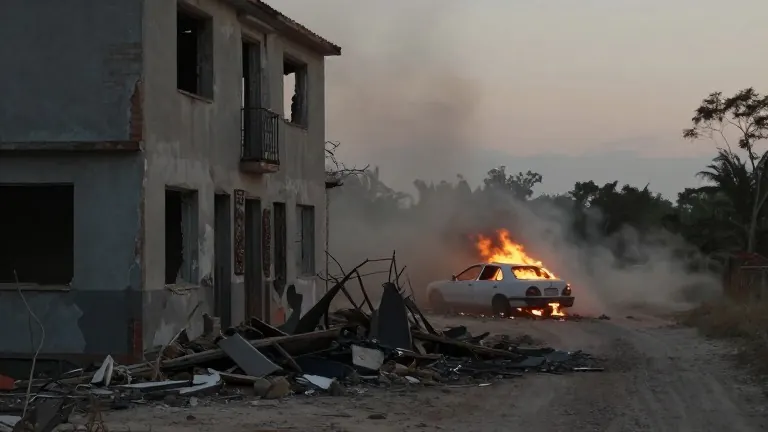
A 21-year-old photojournalist was pinned under rubble for several minutes before paramedics pulled her free from a building in southern Lebanon. Zeinab Faraj was with Amal Khalil, a 42-year-old newspaper reporter, when an Israeli missile struck their vehicle on April 22. The attack occurred one month after a ceasefire was agreed following a month of deadly airstrikes that demolished villages in the region.
Faraj and Khalil were documenting the aftermath of the war in the village of al-Tiri. They were traveling with Ali Nabil Bazzi, a 27-year-old municipal official in Bint Jbeil, and Mohammed Hourani, 37, a friend of the mayor. The group had met at Tebnine governmental hospital earlier that day. Bazzi had planned to sign a marriage contract that evening but joined the trip to see what remained of the area.
Faraj described the moment the first missile hit as a sudden explosion of fire and noise. She heard Khalil screaming and saw the car ahead of them engulfed in flames. As they exited the vehicle to check on the men in the other car, drones appeared. Faraj stated that a drone descended toward her face, causing her heart to pound. Emergency services told them help was on the way, but ambulances were prevented from reaching the site. When the women tried to get back into their car to drive away, a second missile struck the vehicle.
Both women were thrown backward. Khalil wrapped her arms around Faraj as they took shelter in a nearby house. Khalil had visible blood on her face, hand, and leg. Faraj sent a message to her sister that read, 'There’s no hope left. Forgive me,' before her phone died. Inside the building, a drone descended again, and Faraj felt detached and alone. Another missile hit, crushing her under rubble. A paramedic reached her and held her shoulders while a second worker cleared the debris.
Faraj was transported to a hospital where nurses eventually fell silent when she asked about Khalil. Khalil is believed to have died about an hour before paramedics were allowed back into the area. The Israeli military said it identified saboteurs violating the ceasefire. Human rights groups labeled the incident a war crime. An Israeli military spokesperson had shared a video of Khalil a week earlier, describing her work as 'terrorist media.'
Faraj is now preparing to return to university while studying radio and TV. She suffers from a limp and has visible injuries to her hand and face. She wakes screaming at night and is triggered by the sound of drones. She remains haunted by the image of Hourani lying on the ground after the first strike.
Source: The Guardian