Starship Booster Explodes in Gulf, Foiling First Full Rocket Recovery
SpaceX’s massive vehicle reached orbit and deployed 26 satellites, but the booster fell into the sea, ending hopes for a historic double catch.
By Rebecca Svoboda ·
SpaceX has long pursued a vision of fully reusable rockets that could lower the cost of space travel for commercial and government clients. On Friday, the company took a major step toward that goal, though not in the way it planned.
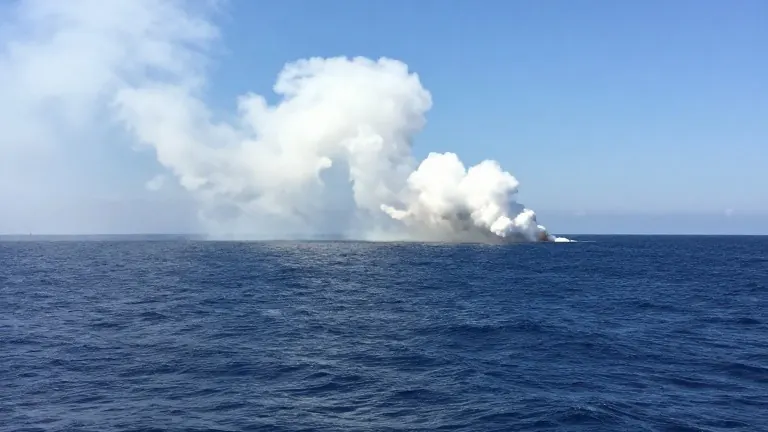
The Starship spacecraft successfully reached orbit and deployed its cargo. However, the first-stage booster did not return to the launch pad in Texas as intended. Instead, the booster veered away from the pad and fell into the Gulf of Mexico, where it exploded shortly after splashdown.
This outcome prevented what would have been the first time in history that a rocket company recovered both the booster and the upper stage in a single flight. The original mission profile called for mechanical arms on the launch tower to catch both the 236-foot booster and the 171-foot spacecraft in midair. With the booster lost, that dual capture was impossible.
Despite the loss of the lower stage, the spacecraft continued its trajectory. It will now spend the next several hours completing approximately 15 laps around Earth at an altitude of about 170 miles. The vehicle is scheduled to steer back to the launch site for a landing attempt on Saturday. The entire flight could last up to 22 hours.
The booster explosion occurred shortly after the stage was supposed to turn back toward Starbase, located near the U.S.-Mexico border. SpaceX had successfully recovered boosters on three previous flights. Launch commentator Kate Tice noted that the decision to divert the booster was part of rigorous safety protocols to protect the pad. No specific technical cause for the failure was provided at the time of the incident.
This was the first test of the upgraded production version of the booster, which is designed for lunar and Mars missions. The combined height of the fully stacked rocket is 407 feet. Previous test flights often ended with the spacecraft in the ocean, either as part of the planned deorbit or due to engine failures. The September test was the first to reach orbit but did not attempt recovery.
SpaceX plans to begin launching Starships from Florida within a few months and from Louisiana in a few years. Kiko Dontchev, vice president of launch, stated that full reusability is necessary to scale launch rates from tens to tens of thousands of flights per year. He emphasized that Falcon rockets are not fully reusable, whereas Starship aims to catch both stages.
NASA is funding SpaceX to land astronauts on the moon with Starship under the Artemis program. A decision on the final lunar lander for the Artemis IV mission is expected in the next year. Astronauts will practice docking with a Starship in Earth orbit during the Artemis III mission next summer.