US Immigration Policy: Enforcement Spikes as Asylum and Refugee Access Tighten
New border wall construction and a record in ICE detentions have coincided with a sharp decline in refugee admissions and a surge in H-1B visa costs.
By Rebecca Svoboda ·
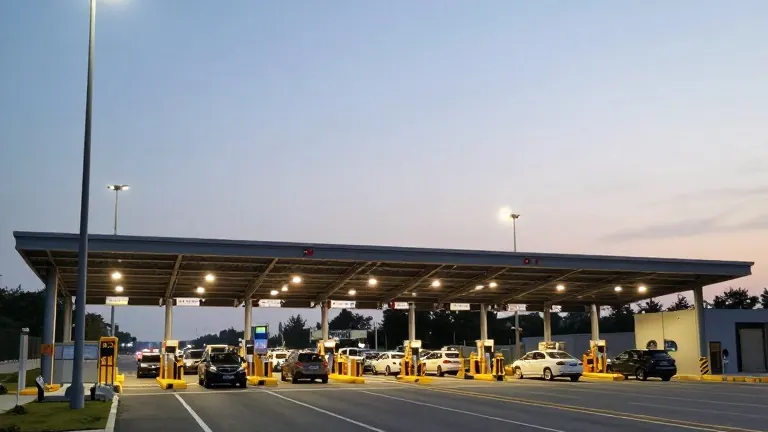
The administration has prioritized physical barriers and domestic enforcement over traditional asylum processing, a shift that has altered the volume and composition of migration flows. This strategy relies on expanded funding and legal precedents that allow for stricter controls than those seen in previous years.
Border metrics illustrate the scale of these changes. The Department of Homeland Security reported that 250 miles of primary and secondary barriers were completed after the new term began, adding to the 644 miles of primary wall that existed previously. An additional 1,443 miles of construction are currently underway, supported by $46.5 billion in new appropriations. Despite this infrastructure push, Aaron Reichlin-Melnick of the American Immigration Council stated that the drop in crossings correlates with policy messaging rather than the new physical structures.
Enforcement actions inside the United States have intensified significantly. The Deportation Data Project recorded nearly 50,000 detentions in July, setting a new record. During that month, ICE removed an average of 1,255 individuals per day, a figure that exceeds the roughly 770 daily removals seen during the final months of the prior administration. The data indicates that a large portion of those detained had no criminal convictions, while detentions of immigrants with criminal histories fell to 27 percent.
Public opinion has shifted in response to these enforcement measures. Following Operation Metro Surge in Minneapolis, which resulted in the deaths of two US citizens, a New York Times and Siena poll released on October 21 found that 50 percent of voters trust Democrats more on immigration than Republicans. A separate Politico and Public First poll conducted in late September revealed that 31 percent of non-MAGA Republicans view the current enforcement campaign as too aggressive.
Access through legal and humanitarian channels has also narrowed. The fiscal year refugee cap was raised to 17,500 in May, yet State Department data shows only 16,292 admissions to date, with 16,287 of those from South Africa. This compares to approximately 60,000 arrivals in fiscal year 2023 and 100,000 in 2024. Additionally, the Supreme Court upheld the termination of Temporary Protected Status for an estimated 350,000 Haitians in June.
Employment-based immigration faces new financial hurdles. A $100,000 fee on new H-1B visas, introduced in September 2025, led to a 40 percent drop in registrations for 2027. Although a court has temporarily blocked the fee, US Citizenship and Immigration Services data suggests the policy has already deterred employers. Meanwhile, the new $1 million residency program, known as the Trump Gold Card, has accepted only one applicant as of April.
Homeland Security Secretary Markwayne Mullin defended the approach on October 16, stating that strong enforcement works. The administration continues to press neighboring countries to curb northbound movement while expanding domestic detention capacity to process the increased volume of arrivals.
Source: BBC News