£10m Bristol centre for disabled children opens after decade of planning
The UK's first purpose-built leisure facility for disabled children is set to welcome visitors in spring, addressing a documented gap in accessible play and physical activity.
By Sakura Ellis ·
Gympanzees, the United Kingdom's first play and leisure center designed exclusively for disabled children, is scheduled to open in spring near the Severn Bridge in Bristol. The facility occupies a converted former service station and represents the culmination of more than a decade of fundraising, research, and site preparation by its founders.
Stephanie Wheen, a children's physiotherapist, initiated the project in 2016 after observing that standard community facilities failed to meet the physical needs of her patients. She cited poor access, negative attitudes, and ill-fitting equipment as primary barriers. "It was completely heartbreaking because these children need exercise more than anyone," Wheen said.
Data from the charity Scope indicates that half of playgrounds in the UK are inaccessible to disabled children. The same research found that children with disabilities are twice as likely to be obese as their non-disabled peers. To test demand, Wheen and volunteers operated pop-up sessions in Send schools during holidays, transporting specialist gear in three lorries. The initial four-week trial attracted 1,000 visitors, some of whom traveled up to eight hours to attend.
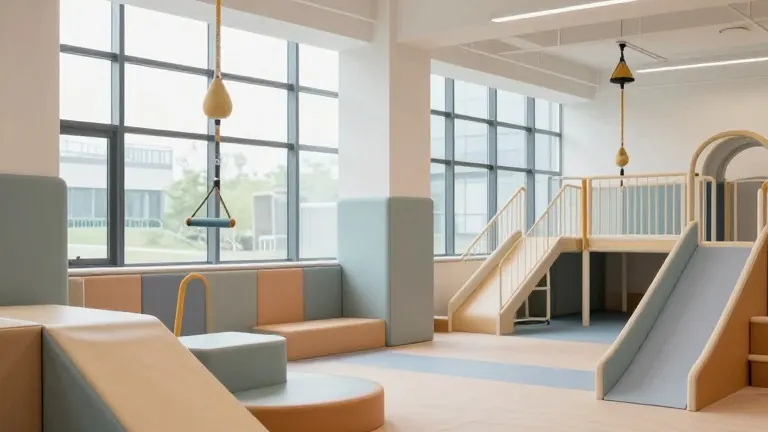
The team acquired the 4,000 square meter site using a £2.2m loan and has raised over £10m to complete construction, with £400,000 remaining. The three-year design process resulted in a two-story facility containing 10 distinct spaces. These include a music room, a gym, sensory rooms, and an outdoor park. The soft play area features two hoist systems that allow wheelchair users to access all levels, while a party room includes DJ equipment controlled by eye-gaze technology.
Fran Garland, the chief operating officer, stated that the design prioritizes inclusivity. "Playgrounds are notoriously not inclusive," Garland said. The center aims to shift the focus from which equipment a child can use to which equipment they choose to use first.
Sessions are categorized by need: butterfly sessions for children with complex medical requirements, leopard sessions for those with sensory needs, and gorilla sessions for children who find socializing challenging. A lending library will also allow parents to test equipment at home.
Bethan Campbell-Watkins, whose five-year-old daughter Malaya has autism, described the center as life-changing. "I just can't even imagine pulling up to a place where Malaya can just run in and be safe," Campbell-Watkins said. Kelly Cotter, whose 15-year-old son Adam is non-verbal and uses a wheelchair, called the facility's scale mind-boggling. Wheen projects the center will serve up to 200,000 visitors annually and aims to open 12 additional sites across the country.