52 million votes cast as Trump rallies in Iowa and Kansas
With the midterm election two days away, the president is campaigning in states he previously won easily while Democrats face internal conflict in Michigan.
By Sakura Ellis ·
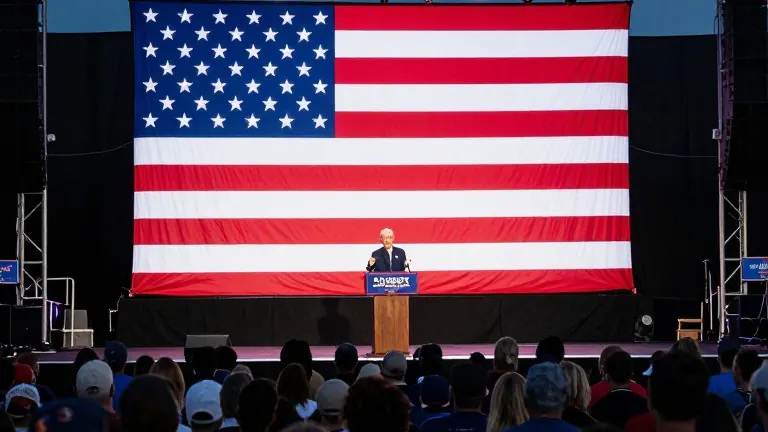
More than 52 million voters have already cast ballots as President Donald Trump closes out the final stretch of the midterm campaign with rallies in Iowa and Kansas. The president’s stops in Dubuque and Salina mark a defensive strategy for the Republican Party, which seeks to hold onto its control of the Senate and the House.
In Iowa, Republicans are fighting to keep a critical Senate seat and the governor’s office. The 2nd Congressional District, which includes Dubuque, has become competitive as the party works to protect its fragile majority in the lower chamber. Trump will follow up with a visit to Salina, Kansas, on the final weekend before Election Day. In that state, Democrat Adam Hamilton is making a strong bid to become the first Kansas Democrat to win a Senate seat in 94 years.
The campaign’s closing days have become a test of Trump’s enduring strength within the Republican Party. The current political environment differs sharply from the 2024 cycle, when the president focused on flipping states that backed Joe Biden. This year, Trump has concentrated his energy on states he dominated in the past. Many voters, including previous supporters, are questioning the economic impact of his tariffs and the war in Iran.
While Republicans campaign, Democrats are confronting challenges in Michigan, where Abdul El-Sayed’s onetime primary opponent, Haley Stevens, endorsed Republican Mike Rogers. Stevens, who criticized El-Sayed for not showing enough support for Israel, said she backed Rogers after an invitation to a Democratic event was withdrawn.
Stevens said in a video announcing her support that El-Sayed told her she was no longer welcome in his campaign. She stated that El-Sayed was right to keep her at a distance, which is why she is endorsing Rogers. The move forced other Democrats to reaffirm their backing for El-Sayed. Senate Democratic Leader Chuck Schumer said the party was united in its support, while Sen. Kirsten Gillibrand stated the party would stand firmly behind El-Sayed and reject efforts to divide Democrats.
Sen. Bernie Sanders, a key supporter of El-Sayed, dismissed concerns about a Democratic split on CBS’ Face the Nation. He noted that Stevens lost a very close primary and could be upset, but he observed that people across the state were standing with El-Sayed. Michigan plays a key role in the Democratic effort to retake the Senate. If they lose that seat on Tuesday, they would face additional pressure to win races in deeper Republican territory such as Texas, Kansas, Ohio, or Iowa.
Outgoing Rep. Don Bacon, R-Neb., raised concerns on Sunday that the president’s policies, particularly tariffs, could weigh down the GOP. Bacon told CNN’s State of the Union that tariffs are not popular in the Midwest and that he tried telling the president so. He predicted a debate in the party about its future if there are major losses this week. In contrast, Sen. Tim Scott, chair of the National Republican Senatorial Committee, expressed confidence that Republicans would keep the Senate. Scott told NBC’s Meet the Press that the midterm election is about Trump and that his agenda is on the ballot.
Source: Pittsburgh Tribune-Review