Anthropic's $1.4 Trillion Price Tag Meets the Hard Math of AI Infrastructure
A massive IPO reveals a company with nearly $900 billion in future obligations, raising questions about whether trillion dollar valuations can survive the costs of running AI.
By Sakura Ellis ·
Wall Street is selling a story of unstoppable growth. Artificial intelligence is framed as the defining investment opportunity of the decade. For many, this narrative feels compelling. The technology is real. It is changing how code is written, how research is conducted, and how businesses operate. But a closer look at the financial disclosures of one of the industry's leaders suggests a more complicated picture.
At the center of this shift is Anthropic, the developer of the Claude model. The company is preparing for an initial public offering that could value it between $1.3 trillion and $1.4 trillion. This figure is lower than earlier expectations of $2 trillion but still represents a staggering sum. It prompts a necessary question for investors and users alike. What exactly is being purchased at this price?
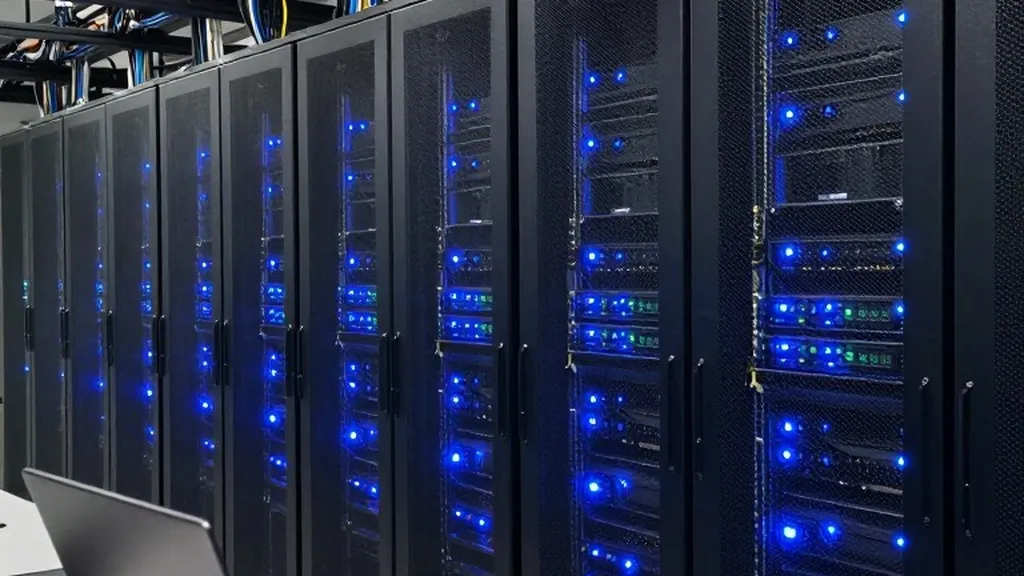
The answer lies in the infrastructure. Anthropic's recent IPO disclosures detail approximately $900.9 billion in purchase commitments and lease agreements. These are largely tied to computing infrastructure. The number is difficult to process. Nearly nine hundred billion dollars is not a projection created by critics. It comes from the company's own securities filings.
Of that total, approximately $451.6 billion is expected to be incurred before the end of 2030. The remainder stretches out through 2045. About $70.7 billion is due within the 12 months following September 30, 2026. While contractual spending commitments are not the same as immediate debt, they represent a massive future obligation. Anthropic has disclosed substantial liquidity arrangements, so it is not currently in a state of insolvency. However, the scale of the commitment requires sustained, high-level revenue generation year after year.
Anthropic's revenue is growing rapidly. Its October annualized revenue run rate reportedly reached approximately $81 billion. This figure far exceeds the less than $20 billion annual revenue number often cited in public discussions. Yet, an annualized run rate is not the same as annual profit or free cash flow. It is a metric of current velocity, not a guarantee of future surplus.
Even if Anthropic eventually reaches $100 billion in annual revenue, it must still cover the costs of computing, research, personnel, electricity, and facilities. Revenue is not the finish line. Profitability and sustainable cash generation are. A trillion dollar valuation relies on the belief that the company will produce extraordinary profits over many years. That belief may prove correct, but belief is not proof.
To understand the pressure on these numbers, consider the hardware. A single Nvidia RTX PRO 6000-class GPU has a retail price of approximately $20,000. In an illustrative scenario, this card can serve 15 to 20 light AI users or one or two intensive coding users. If 20 light users pay $20 monthly, the total revenue is $400. At that rate, recovering the cost of the GPU alone takes 50 months, assuming every dollar of revenue goes toward the hardware.
This calculation ignores the server, CPUs, memory, networking, cooling, electricity, and the engineers who maintain the system. It does not account for failed hardware or the cost of acquiring customers. The actual economics of hyperscale providers are more complex. Enterprise accelerators differ from consumer cards. Efficient batching and specialized chips can improve utilization. But the underlying concern remains. AI is not free to operate. Subscription revenue alone does not guarantee that a customer is profitable.
If a wholesale price of $4,000 per accelerator is assumed, the payback period for a $400 monthly revenue stream drops to 10 months. At $3,000, it is 7.5 months. These are hypothetical figures, not verified contract prices. When depreciation and support costs are added, the break-even period grows. The counterargument is that most users do not use AI continuously. A light subscriber may interact with the service only a few hours a week, allowing the hardware to support a larger base.
However, intensive coding agents create a different challenge. These tools execute long-running tasks and generate enormous token volumes. A $200 subscriber who uses the service occasionally may be highly profitable. A $200 subscriber who constantly runs demanding coding agents may have very different economics. The most important metric is not the number of customers, but the contribution profit each customer produces after the cost of serving them. Until investors understand these unit economics, extraordinary valuations deserve scrutiny.
Nvidia is positioned to benefit regardless of which model wins the market. The industry requires massive quantities of accelerators and high-bandwidth memory. When demand exceeds manufacturing capacity, prices rise. Large technology companies can negotiate supply arrangements and reserve capacity years in advance. Smaller developers cannot compete on the same financial terms. This creates an unequal marketplace where a company with billions can secure infrastructure that a startup or university researcher cannot match.
In September 2026, Nvidia announced an agreement to acquire Hugging Face for approximately $12.93 billion. The transaction includes an equity-based employee retention component and is expected to close in 2027 subject to regulatory approval. Hugging Face is a critical distribution platform for the open-model ecosystem. Millions of developers use it to discover and publish machine-learning models.
Nvidia already dominates the AI accelerator ecosystem through its CUDA platform. Acquiring Hugging Face adds control over model distribution. One company supplies the hardware. Its software influences how developers build models. Now that same company is moving to acquire a major platform for distributing those models. This combination raises legitimate competition-policy questions.
Nvidia says Hugging Face will remain open. Developers will retain the freedom to choose competing hardware. Promises matter, but they should be backed by enforceable safeguards. Will competing manufacturers receive fair access? Will the platform remain neutral toward models that reduce demand for expensive proprietary infrastructure?
While American companies spend billions on proprietary systems, open-weight models are emerging as a powerful alternative. Projects from DeepSeek, Alibaba, Moonshot AI, and independent communities have shown that advanced AI capabilities do not need to stay behind a subscription. These models can be downloaded and run on privately controlled infrastructure.
This changes the economic dynamic. A developer can operate an open-weight model on rented hardware. A business can deploy a coding assistant internally. A university can conduct research without sending sensitive data to an outside service. Advanced AI is becoming more accessible. This accessibility threatens the assumption that customers will remain dependent on expensive centralized services indefinitely.
Quantization is a key technology in this shift. It reduces the precision used to represent model weights, allowing models to occupy less memory. A model with 200 billion parameters requires approximately 400 GB at 16-bit precision. At 4-bit precision, it requires approximately 100 GB. A model that once required an expensive multi-GPU server may become practical on cheaper equipment. This does not mean it will match a frontier model in every task, but it gives developers more choices.