Argo Space: Navigator's solar flaw forces early test of water propulsion
The startup's first mission faced power issues after a solar array failure, halting thruster tests for the water-based spacecraft.
By Sakura Ellis ·
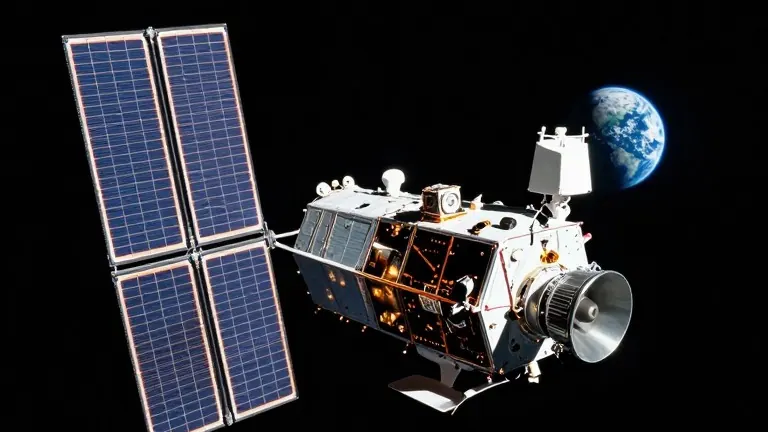
Argo Space’s first demonstration mission, designated Navigator, ended with the spacecraft running low on power. The vehicle launched in July aboard a Falcon 9 rideshare. Ground controllers established communication with the craft, but one of the two rollout solar arrays failed to open. Engineers spent approximately 12 hours diagnosing the fault and monitoring the vehicle’s status. The spacecraft continued to lose charge faster than it could generate electricity, leaving insufficient energy to activate the propulsion system.
The company was founded in late 2022 by Robert, Ryan, and Kirby Carlisle. The three brothers worked at SpaceX during the development and operation of the Falcon 9. They handled tasks including launching, refurbishing, and selling rockets. Upon leaving SpaceX, they chose to build spacecraft rather than rockets. Their new venture focused on creating infrastructure for movement in space.
Argo Space relies on water as its primary propellant. The company selected water because it is abundant throughout the solar system and potentially harvestable on the Moon. Robert Carlisle stated in an interview that the company’s foundation is based on water. This choice supports a planned network connecting low-Earth orbit, geostationary orbit, and the Moon. The system is designed to handle satellite resupply, refueling, repair, and redeployment.
Water serves multiple functions within the spacecraft design. It acts as a coolant for components ranging from thrusters to avionics. It also provides radiation shielding. Using water for cooling allows the vehicle to devote more mass to propellant. This increases the propellant mass fraction, enabling the spacecraft to travel farther and perform more tasks. Robert Carlisle explained that this approach creates a commercial incentive to harvest water from the Moon’s lower gravity well in the future.
The Navigator mission was intended to validate these systems in orbit. The power shortage prevented a full test of the propulsion hardware. The team is now analyzing the data collected during the initial half-day of operations. They will determine the cause of the solar array malfunction. The company plans to use these findings to inform future missions in its water-based transportation network.