Strained by War Costs, Kremlin Turns to Miners and Wealthier Citizens for New Tax Revenue
Russia's 2027-2029 budget, backed by tax hikes announced after the September elections, targets mining firms and investors as the deficit swells and the economy tilts toward military spending.
By News Media House Staff ·
With the war in Ukraine straining state finances, President Vladimir Putin's government is looking for fresh sources of cash. The 2027-2029 state budget, due before the rubber-stamp parliament on Thursday, comes with a series of tax increases unveiled after the September parliamentary elections.
Unlike last year, when the Kremlin raised value-added tax broadly and pulled more small businesses into the VAT net, the new measures aim at a narrower group: mining companies and better-off citizens with investment income, property sales and bank accounts.
The pressure is clear in the numbers. According to the Kyiv School of Economics, the budget deficit reached 5.8 trillion rubles ($72 billion) through August. That is almost 50% above last year's figure and higher than the already revised target of 4.8 trillion rubles. Heavy military spending, weak growth under sanctions, high interest rates for non-military firms, labor shortages and Ukrainian strikes on oil refineries and export terminals have all contributed.
The government proposes a windfall profits tax of 20% to 30% on miners that have gained from higher prices, hitting producers of iron ore, nickel and gold. Income from interest, dividends and property sales would be taxed at rates between 13% and 22%. Currently, such income is taxed at 13% below 2.4 million rubles ($29,800) and 15% above it. Starting Jan. 1, a 100-ruble charge per parcel and 22% VAT would apply to previously tax-free foreign online purchases worth under 200 euros, and a 35% tax would hit dividends paid into restricted accounts for foreign investors from "unfriendly countries."
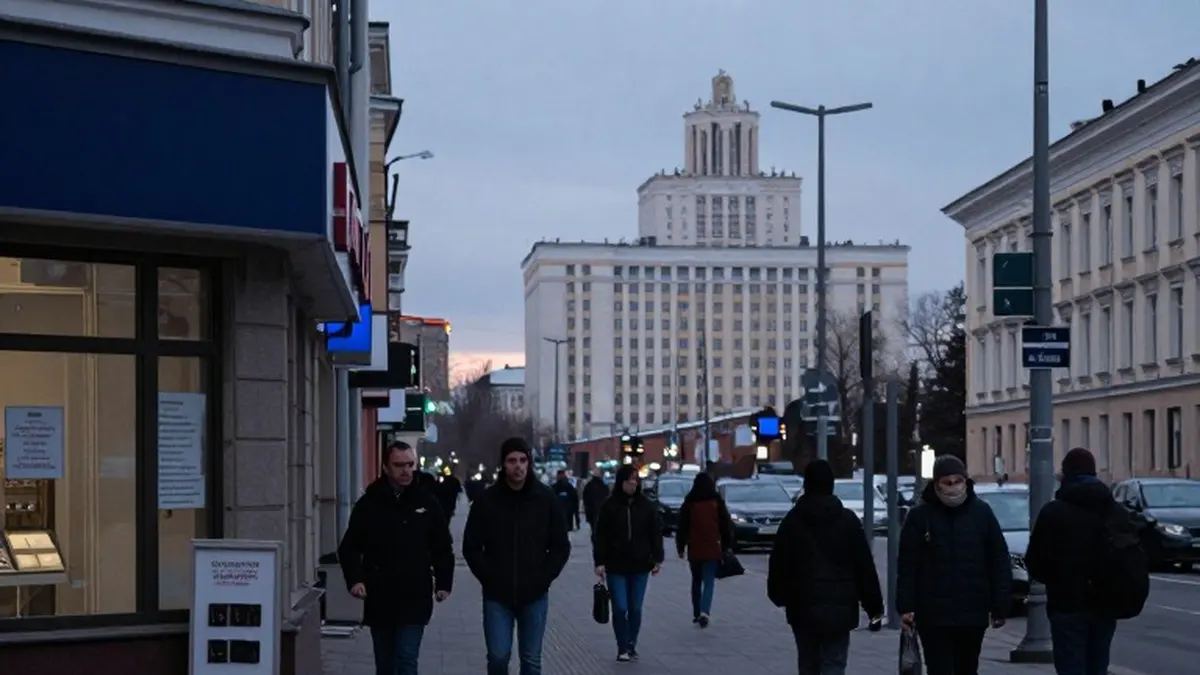
Muscovites asked about the changes voiced complaints mixed with resignation. "What can you do?" said Nelly Godunova, 92. Sergei Sukachev, who said he is "almost 70," noted that everyone knows the money is going to the military operation, adding that it is best "to hang on and to get our way."
Chris Weafer, CEO of consultancy Macro-Advisory Ltd., said Russia has enough financing to cover the deficit in 2027 and probably 2028, but at the cost of higher taxes and household and business expenses. He said the budget is now "primarily funding the military," leaving much less for normal development or infrastructure. Modest growth, he said, comes from state spending on state-linked industries while the rest of the economy struggles badly or fails.
The government has also moved against foreign companies. A subsidiary of German retailer Metro was seized under a law allowing temporary administration of firms from "unfriendly countries" and made to contribute a billion rubles ($12 million) to the war effort. Metro AG said it had no role in the donation, which "does not reflect our position or the way we run our business." Metro Russia said the money would buy vehicles, communications devices and anti-drone equipment for soldiers. Weafer said the seizures may be aimed at bargaining chips for a deal on frozen Russian assets, but warned that the Finance Ministry might come to see foreign firms as windfall revenue sources.
On the surface, the economy looks sturdier. The government forecasts 0.6% growth this year, unemployment is at a record low, and public debt is minimal. Oil export earnings have held up because the war in Iran pushed global prices higher. Finance Minister Anton Siluanov expects the revised deficit to be around 3% of GDP, up from 1.6% last year but close to the EU average of 3.1%.
Yet options are narrowing. Sanctions block access to international bond markets, and domestic resources have been heavily tapped. Banks balked at low rates on government bonds this summer, and sales resumed only after better terms were offered. Banks also fund defense companies through loans, shifting war costs off the federal budget. The liquid assets of the National Wealth Fund have shrunk to 1.7% of GDP. The Kyiv School of Economics calls Russia's finances stable for now, but warns that "the room for maneuver is limited."
Originally published by News Media House · Source: ABC News
More News · National news · Report a business · Got a Story?