Bangladesh shipbreaking wins drone photo prize
George Steinmetz captures the scale of labor on the Bay of Bengal mudflats.
By Sakura Ellis ·
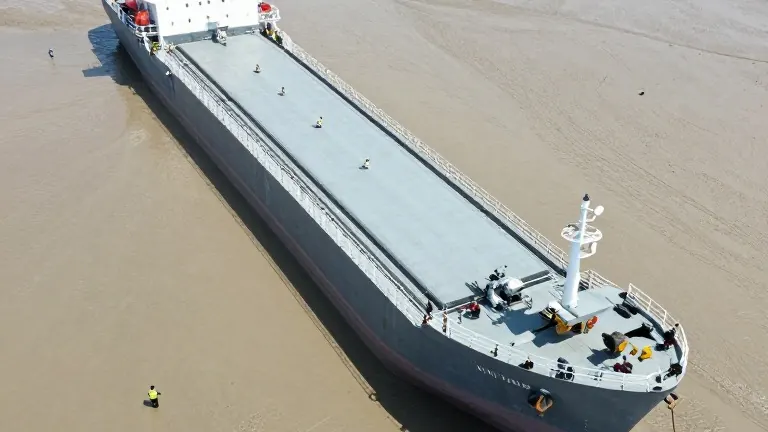
Aerial photography has shifted from a niche technical pursuit to a primary tool for visual storytelling. The 2026 Siena Drone Photo Awards confirmed this shift by crowding its winners with images that reveal hidden layers of human industry and natural geography.
George Steinmetz took the overall top prize for a photograph titled Shipbreaking on the mudflats, Bay of Bengal. The image shows a liquid natural gas tanker stranded on the coast north of Chattogram in Bangladesh. The steel hull appears partially dismantled, resembling a spacecraft settled on a golden beach. Workers move around the massive vessel in tiny figures that emphasize the ship's scale.
Steinmetz, who graduated from Stanford with a geophysics degree in 1979, has long studied the relationship between human populations and the environment. He views the shipbreaking industry as a vast example of recycling. Local photographers warned him that securing access to the shipyards would be nearly impossible because owners are wary of journalists. He surveyed the 13-mile coastal strip with his drone for several days, waiting for the correct low tide to expose the mudflats and the workers.
The photograph captures the moment when workers use winches and boats to pull pieces of the tanker ashore for scrap metal. Steinmetz noted that these tankers are unusual boats that take a long time to break down. He convinced the owner to allow the shoot after finding a vessel in a particularly interesting state of disassembly.
Other winners in the contest focused on the Global South. Dilek Yurdakul won first place in the People section for an image of carpets spread across fields in southern Türkiye. The traditional process exposes handmade rugs to the intense Mediterranean sun for weeks to fade their colors. Yurdakul traveled six hours from Ankara to the Döşemealtı district of Antalya to capture the scene. She described the aerial view as a visual metaphor for the invisibility of labor that sustains everyday life.
In the Nature category, Colas Decloitre received a high commendation for a photo of Tumpak Sewu waterfall in East Java, Indonesia. The image aligns the horseshoe-shaped waterfall with Mount Semeru, which was actively erupting with red glow and ash during the shot. Decloitre stated that a drone was the only way to achieve the specific alignment of the water and the volcano.
Isabella Tabacchi earned commendations for two nature entries. One, titled The Last Ember, shows a volcanic cone in the Argentine Puna. Tabacchi captured the image during an exploratory flight rather than the preferred golden hour, noting that the geometry of the lava field was more powerful than traditional dramatic light. Her other entry, Alien Land, depicts geological formations in Mangystau, Kazakhstan. She said her fascination with the country began during a turbulent flight from Tokyo to Rome.
Holly Kirkland’s photo What Lies Beneath also received a high commendation in the Nature category. The image shows lesser flamingos flying over Lake Natron near the Tanzania Kenya border. Kirkland took the shot from a helicopter rather than a drone. The soda lakes are highly alkaline environments where flamingos thrive due to specialized salt glands and leathery skin.
Source: WVIZ