Freedmen Chose Names Like Washington and Freeman to Define New Identities
Historical records show that Black Americans did not just inherit surnames from enslavers; many deliberately selected new names to assert their legal freedom and family ties.
By Rebecca Svoboda ·
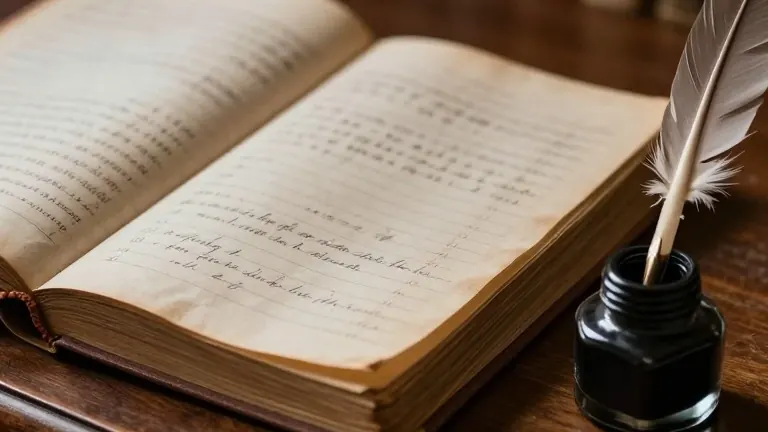
The assumption that formerly enslaved people universally adopted the surnames of their former owners is a persistent misconception that oversimplifies a complex history. While some individuals retained names linked to plantations or enslavers, many others made deliberate choices to redefine their identities after emancipation. This practice was not a uniform cultural shift but a series of individual and family decisions made under specific legal and social conditions.
Prior to the Civil War, the transatlantic slave trade and the institution of slavery disrupted traditional African naming practices. Enslavers controlled legal identification, often altering or ignoring names carried from homelands. NBC writer Julian Craven notes that names connected people to ancestry and community, yet they were frequently lost or changed during the period of enslavement. Some individuals used different names in different contexts, while others kept private family names that never appeared in official records.
The most reliable data on these naming practices comes from Civil War records. Formerly enslaved men who enlisted in the Union Army were registered by white administrators, creating a paper trail that researchers now use to trace lineage. Civil War pension records offer additional insight, as veterans of the United States Colored Troops sometimes had to explain name changes to investigators. These documents are valuable but imperfect, as administrators often wrote names based on pronunciation rather than spelling, leading to inconsistencies that complicate modern genealogical research.
After emancipation, the legal right to choose a name became a primary way for Black Americans to mark their freedom. Many selected surnames such as Freeman or Freedman to explicitly reference their new status. Others chose common American names like Washington, Williams, Brown, and Johnson. Some adopted names associated with prominent figures like Frederick Douglass, while others picked names seen in newspapers or used by their communities. There was no single rule governing these decisions, and the same surname could represent different choices for different families.
The surname Washington provides a clear example of this diversity. According to figures reported by The Atlantic, the 2000 U.S. Census counted 163,036 people with the surname Washington. Approximately 90 percent of these individuals identified as African American. Historians suggest that many newly freed people chose this name to establish independence and align themselves with national significance. However, there is no single explanation for why every family with the surname Washington adopted it. Some may have chosen it for its prestige, while others may have carried it for generations before the war.
Keeping a surname associated with an enslaver could also offer practical advantages. Historian Henry Wiencek, author of An Imperfect God: George Washington, His Slaves, and the Creation of America, explained that powerful white planters remained influential in their regions after the Civil War. Maintaining a link to a leading white family through a shared surname could provide social or economic benefits. Wiencek noted that names often represented a connection to a specific community or plantation, serving as a marker of local identity rather than just a remnant of bondage.
The decades following the Civil War saw increased documentation of Black identities through census records, marriage certificates, and military files. These records, however, were far from consistent. Individuals might appear under one surname in the 1870 census and a different one in the following decade. Spelling variations were common, and different officials recorded the same name in different ways. These discrepancies reveal that naming was often a fluid process rather than a single, permanent decision.
According to 2020 U.S. Census data, common Black surnames include Jefferson, Charles, Jackson, Booker, and Joseph. These names are shared across the broader U.S. population, but they do not indicate shared ancestry. For Black families, these surnames may have originated through inheritance, post-emancipation selection, or marriage. Census statistics reveal demographic patterns but cannot explain the specific history of an individual family. A surname serves as a starting point for research, not a complete account of family lineage.
Genealogist Kenyatta Berry, who hosted PBS’s Genealogy Roadshow, advises researchers to investigate the circumstances behind a surname rather than assuming it came from an enslaver. Berry asks researchers to consider whether an ancestor took a name because they grew up on a specific plantation or because of a family relationship. These questions help distinguish between names chosen for practical reasons, cultural connections, or personal preference, offering a more accurate picture of how Black Americans forged their identities after freedom.
Source: WZAK