Spain's Rail Safety: Two Dead Collisions Expose System Failures
A fatal crash in Toledo brings the death toll to 114 in nine months, intensifying scrutiny over maintenance spending and operational protocols on the Madrid-Andalusia line.
By Noor Graham ·
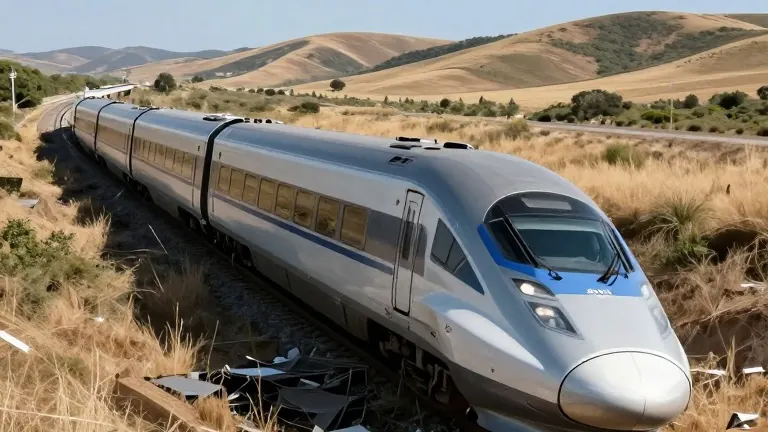
At least 68 people died on Wednesday morning when two high-speed trains collided near Los Yébenes in Toledo province. The crash resulted in the derailment of several carriages in a rural area between two villages. Officials confirmed that the two trains were carrying a total of 544 passengers at the time of the impact.
The collision occurred when a train operated by the state-owned company Renfe struck the rear of a stationary train owned by the private operator Iryo. This incident marks the second major deadly crash on Spain’s rail network in nine months. The previous accident took place in January near the town of Adamuz in Andalusia, where 46 people lost their lives.
Transport Minister Oscar Puente attributed the Wednesday crash to a specific operational sequence. He stated that a computer malfunction caused the security system on a 60-kilometer stretch of track to fail at 8:30 a.m. This failure required all trains on that section to stop. However, the central command center issued an order for the Renfe train to resume movement without speed restrictions. The Renfe train then collided with the stopped Iryo train at 8:53 a.m. Puente described the order as inexplicable.
Renfe issued a statement confirming that its train had been instructed to continue. The company noted that it crashed into the stationary Iryo train for reasons it did not understand. Both operators are involved in the same corridor, which connects Madrid to the southern region of Andalusia. This is the oldest line on Spain’s high-speed network.
The crash occurred one day before a planned 24-hour work stoppage at Renfe. The largest train drivers’ union organized the action to push for system changes. The union cited the need for climate emergency protocols and better communication channels for workers to raise safety concerns. They also demanded definitive technical solutions to reliability issues that have affected the rolling stock for some time. The union has additionally called a six-day rolling strike for drivers at the high-speed operator Ouigo.
Media coverage quickly drew parallels between the two accidents. Both involved the same operators and occurred on the same aging infrastructure line. The January crash triggered a debate about safety standards that rail unions say has continued since then. The timing of the new disaster has amplified these existing discussions about the state of the network.
Political attention has focused on maintenance spending. Pedro Sánchez’s government stated that it increased expenditure on railway network maintenance by 54 percent after taking power in 2018. According to a Reuters analysis of European Union data, Spain spent an average of 1.5 billion euros per year on its high-speed network from 2018 to 2022. This figure places Spain above any other country in high-speed rail spending.
Despite the high total expenditure, the allocation for specific upkeep remains a point of contention. Approximately 16 percent of the funding was earmarked for maintenance, renewal, and upgrades. The rest directed toward new infrastructure. More than 90 percent of Spain’s train network is equipped with the highest level of safety control systems recognized by the European Union. Train travel in Spain grew by 40 percent from 2019 to 2024, a period that coincided with the opening of the network to private companies. In the first half of 2026, 25 million passengers used high-speed trains.
The network is the most extensive in Europe and the second largest in the world after China. Travel by train accounts for about 57 percent of all transport in the country. The recent events have shifted the national focus from the system's scale to its operational safety record.
Source: The Irish Times