Labor Department: Real wages for private workers decline despite pay raises
Compensation rose 3.4% over the past year, but inflation outpaced gains, reducing purchasing power for civilian employees.
By Sakura Ellis ·
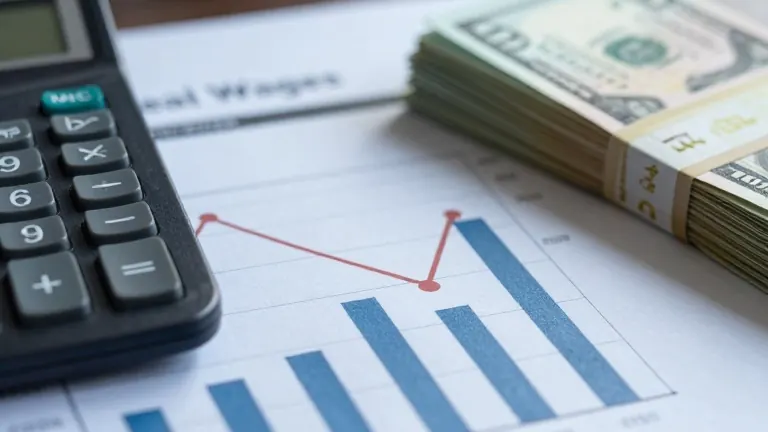
Real wages for American workers declined over the past year, even as total compensation increased, according to a new report from the U.S. Department of Labor.
The Employment Cost Index shows that total compensation for civilian workers, including wages and benefits, rose 3.4% over the 12 months ending in September. Wages and salaries specifically increased by 3.1%, while the cost of benefits climbed 3.9%. These nominal gains, however, failed to offset the impact of rising prices.
After adjusting for inflation, the report indicates that wages effectively shrank. For private-sector workers, inflation-adjusted wages and salaries fell 0.6% over the past year. State and local government workers saw a similar trend, with real wages slipping 0.5%. This divergence means that while employers are spending more on compensation, the purchasing power of employees has decreased.
The data presents a complex challenge for the Federal Reserve, which aims to control inflation without causing a sharp slowdown in hiring or wage growth. The agency raised its benchmark interest rate for the first time since 2023 six weeks ago. Officials indicated that another rate hike could occur later this year to address persistent price pressures.
This wage data arrives after the government reported last month that consumer inflation accelerated in September. The Employment Cost Index serves as a key indicator for underlying wage and benefit pressures within the economy, closely monitored by policymakers assessing the health of the labor market.
More Business · Consumer Watch · Report a business · Got a Story?