Midterm Upheaval: Democrats Break Republican Strongholds in Texas and Iowa
Voters in traditionally conservative states elected Democrats for Senate and governor, shattering a decade of political stagnation and forcing both parties to rethink their 2028 strategies.
By Rebecca Svoboda ·
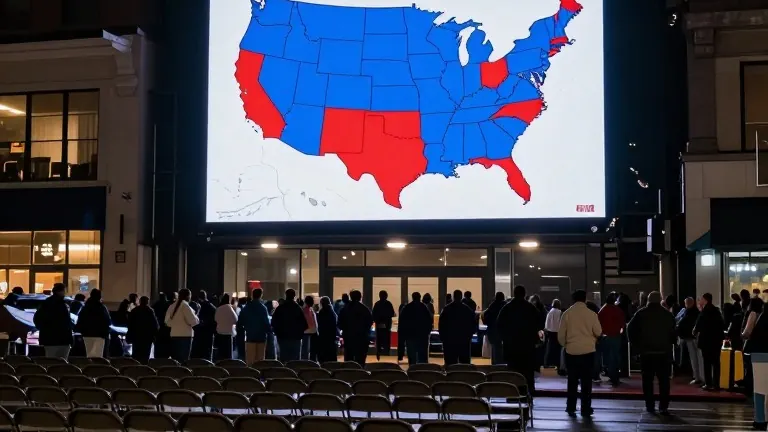
Voters in Kansas, South Carolina, Texas, Ohio, and Iowa rejected the status quo on Tuesday, electing Democrats to the U.S. Senate in states President Donald Trump won easily two years ago. The results broke a decade of political stagnation, with Democrats also winning governorships in several of these conservative states.
In Texas, Democrats captured their first Senate seat in 38 years. They also defeated three-term Republican Governor Greg Abbott and took control of the state House. This victory delivered a major shift in political power, rivaling the post-Watergate election of 1974.
Iowa showed a marked change in rural voting patterns. While about six in 10 rural and small-town voters backed Republicans in 2022, the vote split more evenly this year. Democratic Senate candidate Josh Turek won about 4 in 10 voters in this group, compared to just over half for Republican Ashley Hinson. Turek also carried lightly populated eastern counties that no Democratic Senate candidate had won since Tom Harkin retired in 2008.
The shift reflects deep dissatisfaction with President Trump and the cost of living. Alan Abramowitz, a political scientist at Emory University, described the outcome as a breakthrough driven by strong discontent. However, he cautioned that the country remains highly polarized, with supporters of each party viewing the other as a threat to their way of life.
Joshua Huder, a Georgetown political scientist, noted that Democrats must now adapt to compete in the red center of the country. This requires embracing issues like the farm bill that matter to voters in Kansas, Iowa, and Texas but are often ignored by liberal activists. Huder asked if Democrats are willing to commit to these areas, stating that doing so fundamentally changes politics.
Democratic strategists are moving to build organizational structures in these states for the first time in over 10 years. Jim Messina, who managed Barack Obama’s 2012 reelection campaign, said the party will build local apparatus in Texas while carefully analyzing the 2028 landscape. He noted that Texas represents a hundreds-of-millions-of-dollars decision for a presidential campaign manager, one that will be delayed as long as possible.
John Anzalone, a Democratic pollster who advised Obama’s 2008 and 2012 campaigns, said analysis begins immediately in Ohio, Iowa, and Texas. His team plans to conduct polling and focus groups to determine the rate of return on resources. He emphasized that the strategy is entirely about resource allocation.
Democrats achieved these wins despite being outspent across much of the country. They also gained ground among white voters without college degrees, a demographic critical to Trump’s success in previous elections. Florida Governor Ron DeSantis, who is finishing his second term, called the current political era volatile. He urged leaders to recognize that what worked two years ago may not work today. He will be replaced by Republican Rep. Byron Donalds, who won a narrow victory in a state once considered a conservative stronghold.
Republican strategist Kristin Davison advised her party against panicking. She urged members to study the results and chart a path forward. She stated that anyone presuming 2028 implications before the dust settles will need to make revisions.