NOAA forecasts warmer, wetter winter driven by 'historic' El Niño
National weather agencies warn of increased flooding risks and drought relief, though scientists caution that seasonal predictions do not guarantee specific outcomes.
By Rebecca Svoboda ·
Winter weather patterns across the continental United States are shifting as the National Oceanic and Atmospheric Administration predicts warmer than average temperatures and above average precipitation in several regions. The agency attributes these changes to a developing El Niño event that officials describe as potentially the strongest on record.
Ken Graham, director of NOAA's National Weather Service, characterized the current conditions as a strong, if not historic, El Niño entering the winter season. While the forecast points to a milder winter in many areas, Graham emphasized that these seasonal predictions serve as a roadmap for resource allocation rather than a guarantee of specific weather events. He noted that earlier and better decisions save lives by allowing communities to assess risks and mitigate them.
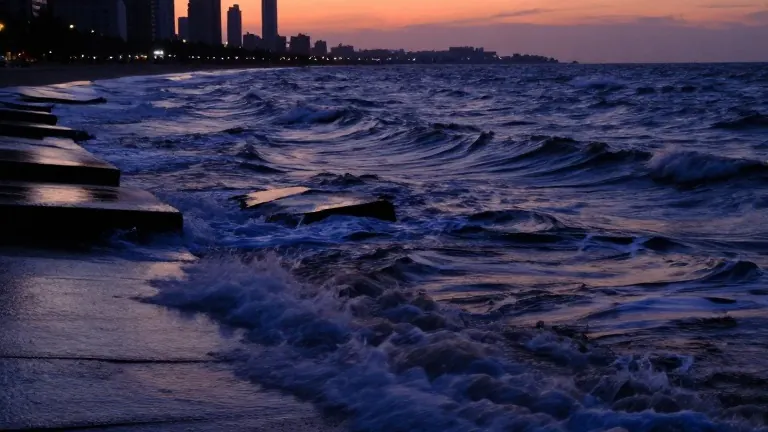
The impacts of this climate pattern are already visible on the West Coast. A Kelvin wave, a band of warm water moving north, raised sea levels in early October and contributed to extensive coastal flooding associated with Tropical Storm Rachel. Dillon Amaya, an assistant professor of atmospheric sciences at North Carolina State University, explained that while such waves do not cause flooding alone, they increase the likelihood of it occurring. Another Kelvin wave was located between Los Angeles and San Francisco as of late October, with several more expected through the fall and early winter.
In the Southwest, severe flooding in the Four Corners region forced rooftop rescues and evacuations in late October. Daniel Swain, a climate scientist with the University of California Agriculture and Natural Resources, linked these severe thunderstorms to moisture from record warm waters off the West Coast, driven by El Niño and a recent marine heat wave. Swain cautioned that despite the wetter conditions, the water crisis in the Colorado River basin remains acute, with Lake Powell and Lake Mead at record low levels.
The East Coast faces a similar combination of warmer temperatures and increased precipitation. Forecasters expect the Northeast and Mid Atlantic to experience flooding levels comparable to those seen during the record setting 2023 El Niño event. Studies suggest this pattern can strengthen nor'easters by pushing warm, moist air north, potentially leading to coastal erosion. Graham noted that while El Niño favors a milder winter, it does not erase the risk of snow, citing a 2016 blizzard that produced over 30 inches of snow and 60 mile per hour wind gusts in the Northeast.
The South holds the highest probability for above average precipitation this winter, particularly in northern Florida, southern Georgia, and South Carolina. This follows an unusually quiet Atlantic hurricane season that featured only one named hurricane, Isaias. However, historical data indicates that El Niño years often bring higher tornado risks to the region. Jon Gottschalck, a NOAA meteorologist, added that dry conditions in western Oregon and Western Washington may improve, potentially ending droughts in those areas.
The Midwest is expected to see smaller snowpacks due to warmer temperatures, with Michigan, Ohio, and Indiana likely to remain drier than average. Iowa may receive more rain, but Gottschalck said drought conditions are expected to persist across the region, with growing concerns that the current dry spell may worsen.
Source: WVXU