Ohio Deer Program Mandates Testing in Nine Counties Amid Disease Spread
Officials require hunters to submit deer from Western Ohio for Chronic Wasting Disease checks as hemorrhagic disease expands northward.
By Noor Graham ·
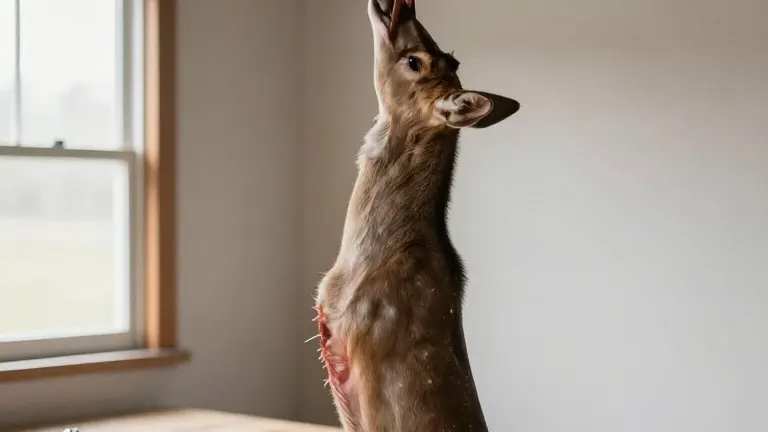
The Ohio Department of Natural Resources will require hunters to test deer harvested from nine specific areas starting later this month. This new mandate targets the spread of Chronic Wasting Disease, a condition officials describe as a long-term threat to the state's wildlife.
Clint McCoy, the deer program administrator, explained that two distinct illnesses currently affect Ohio deer. Hemorrhagic disease acts as a short-term threat, while Chronic Wasting Disease poses risks that could persist for years. McCoy noted that hemorrhagic disease struck northern Ohio this year, affecting Lorain and Portage counties. He stated that the long-term impact of this virus is limited because surviving deer develop antibodies against future infections.
The virus that causes hemorrhagic disease spreads via a tiny midge. McCoy attributed the expansion of this midge population to warmer weather associated with climate change. Last year, the disease caused severe population declines in parts of southern Ohio.
In contrast, Chronic Wasting Disease is driven by an abnormal protein fragment known as a prion. These prions settle in the deer's brain and spread through contact with infected animals or via contaminated soil, water, and plants. The disease is always fatal, though it can take up to 18 months to kill the host. During that period, the animal continues to shed the prion into the environment. McCoy said prions can survive in soil for years, making the disease difficult to eliminate once it takes hold.
The testing requirement applies to all deer taken in Allen, Harden, Marion, and Wyandot counties. It also covers portions of Crawford, Morrow, Delaware, Union, and Hancock counties. McCoy stated that the department defines this region as the current disease surveillance area.
Hunters are advised not to consume meat from infected deer, although officials have not confirmed whether the prion can infect humans. The state harvests approximately 220,000 deer annually. Residents are encouraged to report sick or dead deer to help officials track the movement of both diseases.
Source: WOSU-FM