Michigan Democrats Secure Trifecta as Data Center Oversight Gains Federal Momentum
The party sweep includes a win for a senator who has promised to protect ratepayers from data center costs and a ballot initiative that blocks utility political donations.
By Noor Graham ·
Democrats captured the Michigan governor’s office, state Senate, and state House in Tuesday’s election, creating a legislative trifecta that could shield the state’s 2023 clean energy law from repeal. This control of all three levers of state power gives the party the authority to advance environmental protections and address rising utility costs without legislative deadlock.
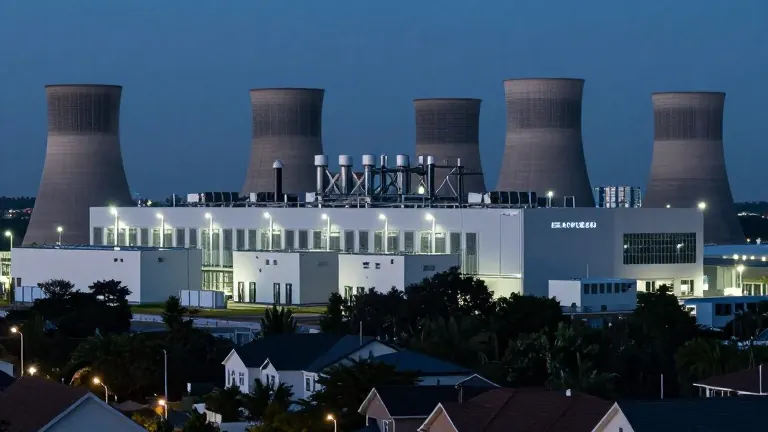
The victory extends to the federal level, where Abdul El-Sayed won the open U.S. Senate seat over former Congressman Mike Rogers. El-Sayed has positioned himself as a strong advocate for regulating data centers, a sector facing intense opposition in many Michigan communities. He previously released a set of terms for data center development that includes protections for ratepayers, community engagement, and compliance with clean energy laws.
El-Sayed highlighted the influence of DTE Energy during the campaign, noting that the utility received fast-tracked approval for its Oracle and OpenAI data center contracts in Saline Township. He stated that he was the only candidate in the Senate race who received no donations from corporate political action committees, including those funded by DTE. His opponent, Rogers, initially supported streamlining development but shifted in August to back a statewide one-year moratorium.
In the attorney general race, Eli Savit secured the office and pledged to continue the work of his predecessor, Dana Nessel. Nessel spent eight years intervening in rate cases before the Michigan Public Service Commission, often calling for reduced hikes from investor-owned utilities like DTE and Consumers Energy. Savit told reporters in September that rates should ensure reliability and be no higher than necessary to do so.
Savit’s approach includes challenging how utilities calculate returns on equity and their inclusion of expenses such as travel and lobbying in rate cases. His opponent, Doug Lloyd, emphasized public safety as a primary focus of the office, while Savit focuses on utility accountability and ratepayer protection.
Voters also addressed the influence of money in politics by passing Proposal 2 with 81% support. This measure, known as Michiganders for Money Out of Politics, bans political contributions from utilities and major state contractors. The initiative was backed by Democrats running for statewide office and more than 80 organizations. Christy McGillivray, co-chair of the steering committee, said voters were fed up with a pay-to-play system where government works for corporations rather than people.
The Mackinac Center for Public Policy filed a federal lawsuit against Secretary of State Jocelyn Benson and Attorney General Nessel the same day. The lawsuit alleges that Proposal 2 violates free speech protections. Representatives for utilities and Blue Cross Blue Shield of Michigan also challenged the initiative, arguing it would silence employees who wish to engage in the political process.
Ann Arbor residents rejected a separate public power initiative, Proposition E, by a margin of 52% to 48%. The measure would have created a municipal energy utility board to eventually replace DTE Energy in the city. Backers argued the move would improve affordability and accelerate the transition to renewables, while opponents cited high costs and potential setbacks to other city services.
Source: Planet Detroit