Storms Hit Pacific Northwest
Back-to-back atmospheric rivers bring heavy rain to Oregon and Washington this weekend as sea levels rise.
By Sakura Ellis ·
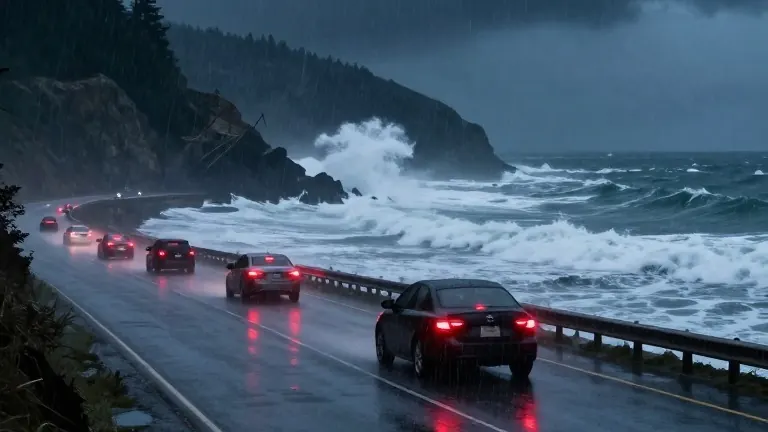
The Pacific Northwest is experiencing some of its heaviest rainfall of the year. Two atmospheric rivers will strike parts of Oregon and Washington on Friday and Saturday. These storms follow two earlier systems that already delivered multiple inches of rain to both states earlier this week.
Josh Weiss, a meteorologist at the National Oceanic and Atmospheric Administration's Weather Prediction Center, warned about the cumulative effects of these events. He identified flash flooding, urban flooding, and landslides as the primary risks. Weiss noted that this year's atmospheric river season, which runs from October to March, has started quickly.
Atmospheric rivers are narrow bands of water vapor driven by wind. F. Martin Ralph, director of the Center for Western Weather and Water Extremes at UC San Diego's Scripps Institution of Oceanography, described them as literal rivers in the sky. He stated these formations can reach 2,000 miles in length and 600 miles in width. Weiss added that 50 to 60 percent of California's rain originates from these systems.
Current conditions are complicated by El Niño warm ocean waters and annual King tides. Jeff Michalski, a National Weather Service meteorologist in Seattle, forecast that Washington's coast could face 20-foot swells this weekend. These factors place coastal and inland waterways at risk for flooding.
Ralph cited 40 years of Federal Emergency Management Agency data. He said atmospheric rivers cause 90 percent or more of all flood damage in the Western U.S. The storms are not unique to the West Coast. Ralph explained that some East Coast nor'easters can also carry strong atmospheric rivers.
Residents may recognize these storms by nicknames like the Pineapple Express. This name refers to the system's origin in Hawaii. A Pineapple Express in late October caused severe flooding and multiple deaths in the Southwest's Four Corners region.
Research by Ralph suggests atmospheric rivers do not become stronger during El Niño years. He stated they do not dance to the tune of El Niño. Scientists agree there is insufficient data to link these patterns directly to human-caused global warming, though a warming atmosphere holds more water vapor. Ralph advised that observers must monitor atmospheric rivers in all climate phases, including El Niño, La Niña, and neutral years.