Tesla Optimus External Deliveries Slipped to Late 2027 Due to Hand Mechanics
The humanoid robot's external release has been pushed back as the manufacturer identifies significant hurdles in durability and artificial intelligence integration.
By Jayden Sweiler ·
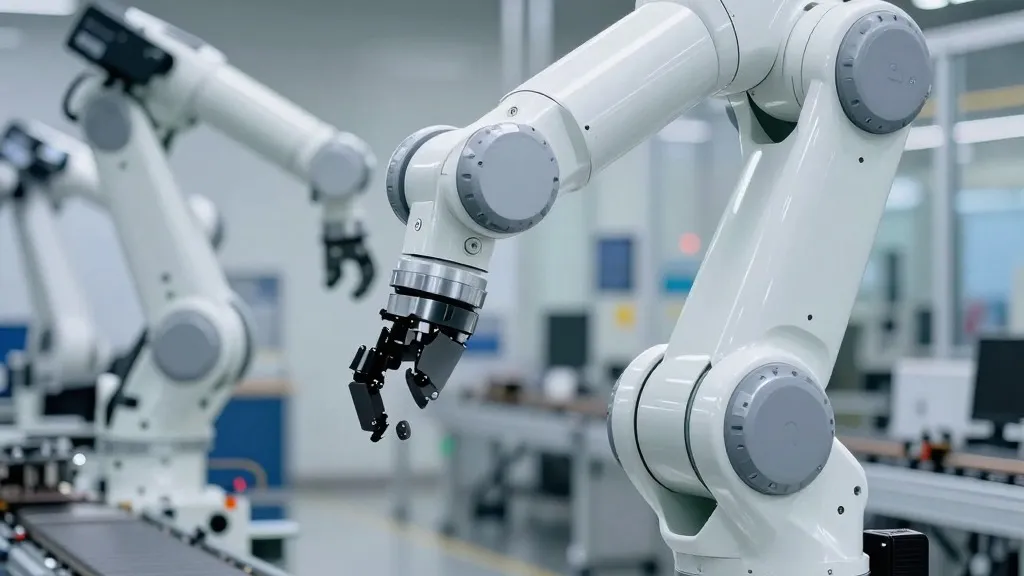
For families and businesses in the Great Lakes and Ohio Valley regions, the arrival of general-purpose humanoid labor is now forecast for late 2027 rather than the earlier dates previously suggested. This shift indicates that while the technology is being manufactured, it is not yet robust enough for widespread commercial use outside of controlled environments. The delay primarily stems from ongoing challenges with the robot’s physical components, specifically the hands, and the reliability of its core artificial intelligence systems.
During the third-quarter 2026 earnings call, CEO Elon Musk outlined the reasons for the timeline adjustment. He stated that Tesla has begun early production of the Optimus robot on the high-volume line in Fremont, California, a facility previously used for Model S and Model X vehicles. Although the line is designed for a capacity of one million units annually, Musk acknowledged that reaching this target will take at least a year, potentially longer, because the design is still evolving. The immediate goal is to solve issues related to AI architecture, electromechanical design, and long-term reliability before external customers receive units.
The primary hardware obstacle remains the robot’s hand. Engineers noted that the fingers must be soft enough to handle delicate objects yet durable enough to withstand constant industrial wear, a balance that human skin manages naturally but robotic materials struggle to replicate. Additionally, custom gears present reliability concerns. On the software side, Tesla lacks a large fleet of robots to collect real-world data, a challenge it faces unlike its vehicle fleet. To address this, the company plans to build 10,000 to 20,000 units for an internal 'Optimus Academy' to practice tasks, with the AI5 chip integration expected around April 2027.
This timeline marks a significant shift from previous projections. In 2024, the company suggested high-volume production for other companies by 2026. In January 2025, expectations were set for several thousand robots performing useful work by year-end, a target that was later admitted to have been missed. The current focus is on industrial jobs that are dangerous, repetitive, or require 24-hour operation, with the first external deliveries expected in the final months of 2027.
Competitors in the sector are also grappling with similar engineering hurdles, though some appear to be progressing on parallel tracks. XPeng recently activated an automated production line in Guangzhou, with mass production planned for the end of 2026 and deliveries to retail spaces in the first half of 2027. Meanwhile, Boston Dynamics has begun producing its electric Atlas robot, with all 2026 deployments already committed to clients, including Google DeepMind. Boston Dynamics has taken a pragmatic approach by prioritizing sturdy grippers over human-like dexterity, effectively sidestepping the hand design issues currently slowing Tesla.
Musk argued that no other company is close to Tesla in developing a general-purpose humanoid, a claim that contrasts with the recent advancements by rivals. While Tesla may have the highest number of units under development, the core challenge for all manufacturers remains making the robots useful and reliable enough to justify their cost. A video demonstrating unscripted tasks is promised within the next two months, which will serve as a critical test for the company’s revised timeline.
The shift in strategy highlights that building the robot is no longer the primary hurdle; making it function effectively in unpredictable environments is. For consumers and industrial buyers, this means the era of widespread humanoid labor is approaching but remains a few years away, with the next 12 to 18 months dedicated to refining the AI and mechanical integrity of the machines.
Source: Electrek