US reopens talks with Myanmar junta while EU holds firm on sanctions
Washington seeks rare earth access and prisoner releases, creating friction with Brussels, which maintains a non-recognition policy despite growing regional engagement.
By Noor Graham ·
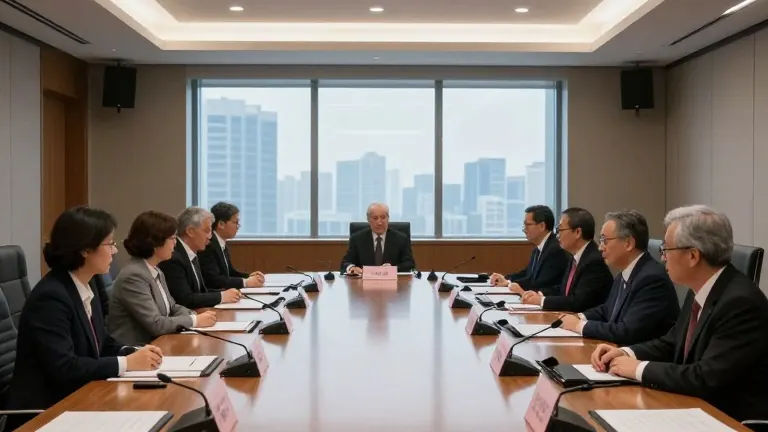
The United States has begun quiet diplomatic talks with Myanmar's military-backed government, a move that contrasts sharply with the European Union's continued refusal to recognize the junta. State Department representative Michael Vance met with Myanmar officials in Naypyitaw and then in Tokyo earlier this month. These are the second round of negotiations since September.
Washington is pursuing three primary objectives in these discussions. First, the US aims to address the proliferation of online scam centers. Second, it seeks the release of Adam Castillo, an American businessman currently held in Myanmarian prison. Third, the US hopes to gain access to Myanmar's rare earth resources, a market currently dominated by its rival China.
The EU maintains a different approach, continuing to reject the legitimacy of the military leadership. Brussels imposed targeted sanctions following the February 2021 coup. These measures currently cover 105 individuals and 22 entities connected to the military. The EU extended these sanctions for another 12 months in April. Despite this, the bloc continues to provide humanitarian aid to displaced communities and Rohingya refugees while supporting local civil society groups.
Trade relations remain complex for Europe. The EU stopped short of withdrawing Myanmar's preferential trade access due to concerns over the impact on workers, particularly young women in the garment industry. Bilateral goods trade reached approximately 4 billion euros in 2025, up from 3.4 billion euros in 2019. This economic link persists even as diplomatic engagement remains limited.
Regional dynamics are shifting as Southeast Asian governments question their isolationist policies. Thai Foreign Minister Sihasak Phuangketkeow welcomed the renewed US engagement last week. He suggested that ASEAN members would hold substantive discussions about Myanmar's future at their summit in Manila next month. Myanmar's leader Min Aung Hlaing also gave his first interview to a major Western publication, Time magazine, in September.
European experts warn that the US strategy appears transactional, focusing on specific interests like cybercrime and mining. Kristina Kironska of Palacky University Olomouc noted that the most important rare earth mining operations are controlled by ethnic rebels rather than the military. She argued that abandoning the EU's stance on democracy and human rights would undermine Brussels' credibility, even if isolation has achieved relatively little so far.
The EU faces a balancing act between maintaining credibility with democratic opposition and retaining influence in regional negotiations. Sabe Soe, director of the Burma Centre Prague, suggested Brussels could keep sanctions while expanding diplomacy through ASEAN and the UN. She proposed tying any easing of restrictions to improvements in humanitarian access and political freedoms. For now, Brussels shows little appetite for a fundamental policy change, but this could evolve as more governments reopen channels with Myanmar's generals.
Source: Deutsche Welle