After GOP loss, Trump's $5,000 dividend faces steep uphill battle
Democratic control of Congress complicates the president's election-day promise of a universal payment, which experts say was already unlikely to pass.
By Sakura Ellis ·
President Donald Trump's campaign promise to send every American adult a $5,000 check, known as the Trump dividend, was conditioned on Republicans keeping control of Congress in the November 3 midterm elections. The proposal was first announced at the Republican Midterm Convention in Dallas, where Trump told the crowd that if his party won, voters would win with them and receive the payment. The promise was framed as a reward for voters who supported the Republican ticket, but with Democrats now holding both chambers, the path to delivering on that pledge has grown significantly more difficult.
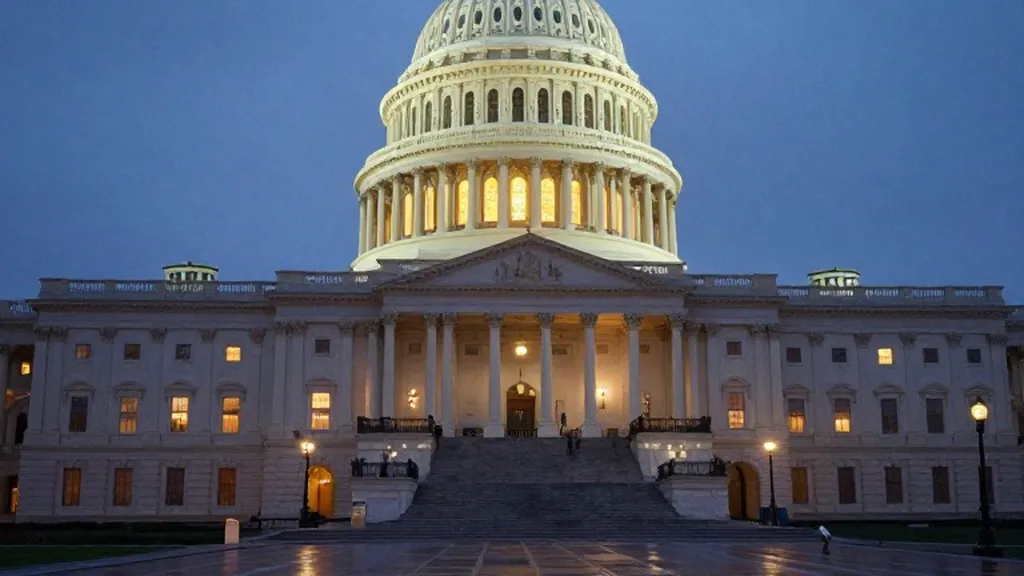
The election results delivered a resounding victory for Democrats, who gained control of both the U.S. House and the U.S. Senate. According to Ballotpedia, Democrats won 238 of the 435 House seats and 20 of the 35 Senate seats on the ballot, with seven Senate seats changing party hands to the Democrats. This shift in power means that the legislative machinery required to authorize such a massive expenditure is now in Democratic hands, a party that has long signaled a desire to scrutinize the administration's spending priorities.
The financial scale of the promise is enormous. PolitiFact noted that the payment could cost the federal treasury more than $1 trillion. The U.S. Census Bureau estimates there are about 245 million U.S. Citizen adults, which would place the total cost at approximately $1.2 trillion. This figure would add to an annual budget deficit that is already nearly $1.8 trillion. Critics argue that introducing such a large new spending measure during a period of persistent inflation and rising interest rates poses a significant risk to the broader economy.
House Speaker Mike Johnson, who led the Republican majority in the House, acknowledged the complexity of the situation. Speaking on Sunday, Johnson said that congressional approval is needed for the dividend. He stated, "I would assume, yes, he'd need Congress to act, and that's a creative idea." Despite the challenge, Johnson pledged that he would work to get the proposal through, calling Trump the "big ideas president" and committing that Congress would find consensus on the matter. His comments underscore the legal reality that the executive branch cannot unilaterally authorize such a large payout without the cooperation of the legislative branch.
The bipartisan criticism of the plan began almost immediately after the announcement in Dallas. Some Republicans questioned the price tag, with Texas Congressman Chip Roy writing on social media that "Dependency is evil and soul-sucking in all its forms." Democratic leaders also weighed in, with Senate Majority Leader Chuck Schumer noting that no American should have to make tradeoffs at the supermarket while the president is making inside trades on the stock market. The skepticism reflects a broader concern among voters in the Great Lakes and Ohio Valley regions, where the cost of living and the impact of the Iran war on gas prices have been central issues.
PolitiFact's analysis found that the biggest payment is far from certain, even if Republicans had retained power. The administration has announced no formal plan for how Americans would receive the checks, and the White House press release provided few details on the logistics. Trump cited tariff revenues as a potential funding source, but the One Big Beautiful Bill Act, which became law in 2025, did not include a separate tariff dividend. The Tax Foundation estimated that the cost of the checks would spend almost all the revenue that new tariffs are projected to bring in over a decade, raising doubts about the sustainability of the funding source.
For voters in states like Ohio, Michigan, and Kentucky, the promise of a $5,000 check may have been a compelling message on the campaign trail, but the legislative reality is now shaped by a Democratic Congress. In Ohio, where polls were open from 6:30 a.m. To 7:30 p.m., and in Michigan, where polls were open from 7 a.m. To 8 p.m., the election brought an open Senate race and an open governor race. The outcome in these key battlegrounds contributed to the overall Democratic wave, setting the stage for a period of intense oversight and potential confrontation over the administration's financial commitments.
The election also marked a shift in the political landscape for the region. In Ohio, the Democratic Party gained control of the state's U.S. Senate seat, a significant flip from Republican control. Similarly, in Michigan, the Democratic candidate for the open Senate seat emerged victorious. These results reinforce the Democratic hold on the legislative agenda in Washington, D.C., and suggest that the Trump dividend will face rigorous scrutiny from a Congress that has vowed to investigate the administration's business dealings and spending habits.
The legal and economic barriers to the promise were highlighted by experts who questioned whether the president had the authority to make such a pledge. Election law expert Rick Hasen noted that while the promise is likely protected by the First Amendment, it is not a guarantee of implementation. The payment would require a bill to be introduced and passed by both chambers of Congress and signed by the president. With Democrats now in control, the likelihood of such a bill passing in its original form has diminished, leaving the promise as a major talking point for the next two years rather than a near-term financial relief for American households.
As the new Congress prepares to convene, the focus will turn to the administration's broader budget priorities. The Trump dividend, once a centerpiece of the Republican midterm campaign, now serves as a case study in the challenges of delivering on ambitious campaign promises. For the millions of Americans who heard the pledge in Dallas, the question is no longer whether the check will arrive, but how the new Democratic leadership will handle the request, and whether the promise will be used as a benchmark for the administration's fiscal discipline in the years to come.