AI Drones Gain Autonomy in Final 500 Meters of Ukrainian War
Ukrainian startups are deploying systems that take control from pilots for the last third of a mile, a shift driven by the need to outpace Russian military technology.
By Sakura Ellis ·
Ukrainian tech entrepreneur Yaroslav Azhnyuk argues that artificial intelligence can make military drones 10,000 times more effective. This estimate comes from a 37-year-old computer scientist who runs two defense firms, The Fourth Law and Odd Systems. These companies are among the leading producers of AI-powered drones in the country.
The core system, the Lupynis-10-TFL-1, pairs a small first-person-view drone with an autonomous guidance unit. Dozens of Ukrainian military units already use this equipment. The system takes over control during the final 500 meters of flight. At roughly 0.3 miles, the onboard computer navigates the drone to a target without human steering.
Azhnyuk states that this technology is simpler than the AI used in data centers or self-driving cars. It relies on basic image recognition tools. The same image recognition technology was previously used in Petcube, a company Azhnyuk founded that sold one million smartphone-connected pet cameras. Those cameras used AI to watch pets and dispense treats.
Russia is also fielding AI-enabled drones against Ukraine. President Volodymyr Zelenskyy has warned that AI could be making battlefield decisions as soon as next year. This development has created a high-tech arms race that concerns many observers.
The Fourth Law names its weapons after Ukrainian intellectuals and artists killed or persecuted by Russians over the past century. The Lupynis drone is named for Anatoliy Lupynis, a 20th-century poet and political activist. Lupynis endured decades of Soviet imprisonment and psychiatric torture. Azhnyuk says the company believes their ideas are still with them and are now fighting back.
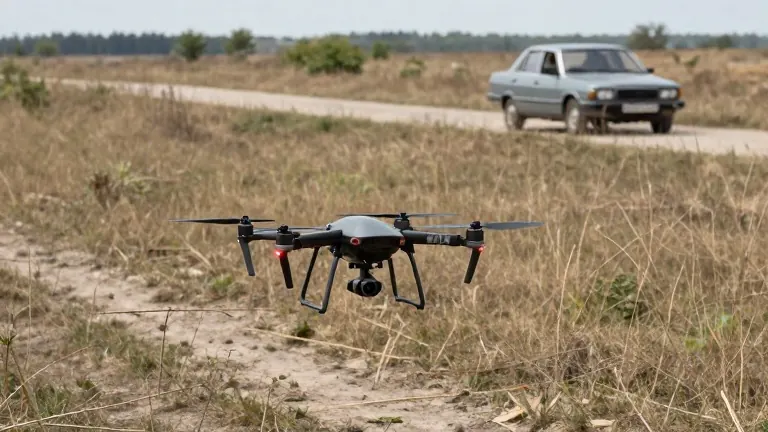
The company tests these drones daily at an overgrown field outside Kyiv. The head of the test and integration team, who uses the call sign Stab, explained that a microcomputer inside the drone runs a deep-learning neural network. This network is trained on hours of combat footage to recognize vehicles, light-armored vehicles, tanks, and flying objects.
In a demonstration, a pilot with the call sign Professor guided the drone with a control stick. He selected a target and checked a video monitor. A red flash indicated the drone had locked onto an old car driven by an employee along a dirt road. Professor released the stick, and the drone flew itself to the car. The test drone carried no explosive.
Stab notes that these drones are difficult to jam and have safeguards to prevent them from going rogue because humans select the targets. Azhnyuk rejects the term killer robots, calling the devices calculators. He acknowledges that drones capable of designating targets on their own are conceivable within a few years.
Azhnyuk argues that survival drives current choices. If adversaries use AI for offensive decisions and Ukraine refuses to do so in defense, the country has lost. He notes that machines decide in microseconds while human control can take minutes, hours, or days. He states that if Ukraine loses, there is no way to debate the ethics of AI. His priority is to not die.
Source: NPR
More News · National news · Report a business · Got a Story?