Michigan demographics: Census data reveals steady population and income gaps
The state held near 10.1 million residents in 2025, but household income and electric vehicle adoption rates remain below national averages.
By Rebecca Svoboda ·
The US Census Bureau released American Community Survey data this week, showing Michigan’s population remained nearly flat in 2025. The agency estimated the state had 10.1 million residents. That figure represents a loss of 12,575 people compared to 2024. The decline was less than half a percent.
Four of the state’s 17 largest cities recorded modest population increases. Detroit and Grand Rapids each grew by 0.5%. Detroit gained 3,413 people to reach an estimated 649,115. Grand Rapids added 1,049 residents, bringing its total to 201,180. Lansing saw the largest percentage gain among major cities. It added 1,317 residents, a 1.2% increase, to reach 114,783. Dearborn, Southfield, Rochester Hills, and Farmington Hills each lost approximately 800 residents.
Median household income in Michigan rose from $72,389 in 2024 to $75,832 in 2025. Despite the increase, the state median remains lower than the national median of $84,780. The data also revealed gaps in education levels. Ninety-two point seven percent of Michiganders hold a high school diploma or equivalent. That exceeds the national estimate of 90.6%. However, only 33.9% of the state population has a bachelor’s degree or higher. The national average for that group is 37.4%.
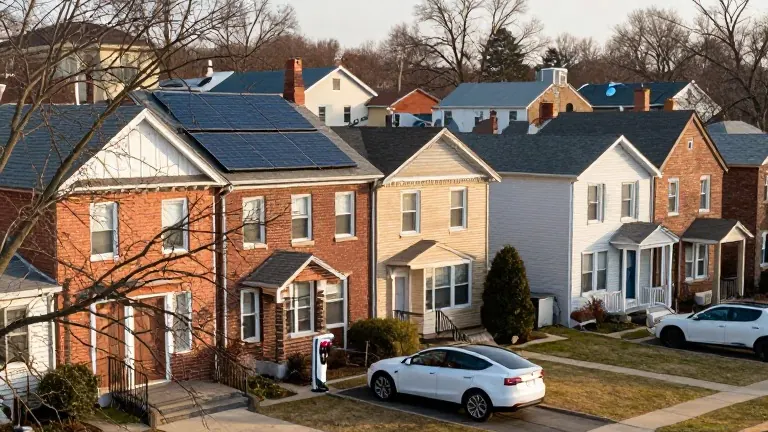
The survey included new data on electric vehicles and solar panels for the first time. An estimated 148,819 Michigan households owned an electric vehicle in 2025. That accounts for about 4% of households. The national estimate was 5.5%. Illinois and Minnesota had higher adoption rates than Michigan. California had the highest rate, followed by Washington, Hawaii, and Nevada. Tricia Holley, a survey statistician at the Census Bureau, noted that western states have led the switch to electric vehicles.
Solar panel adoption in Michigan also trailed nearby states. The census estimated 65,918 Michigan households had solar panels in 2025. Illinois had 177,113, and Ohio had 72,125. Educational metrics show continued challenges in college readiness. Data on SAT scores released earlier this year indicated only a quarter of 11th graders in the state are college ready. That is a slight drop from 26.6% the previous year. A decade ago, that figure was 35%.
The annual survey provides estimates for national and statewide characteristics. It covers areas with populations over 65,000. The data includes educational attainment, income, and transportation metrics. Matt Mencarini, a Report for America corps member, covered the data and accountability for Bridge Michigan.
Source: Bridge Michigan