Apple Adds Touch to the Mac With New MacBook Pro, Reversing Long-Held Stance
Apple has unveiled its first touchscreen laptop, a MacBook Pro with an OLED display, starting at $2,899 and going on sale Nov. 6.
By News Media House Staff ·
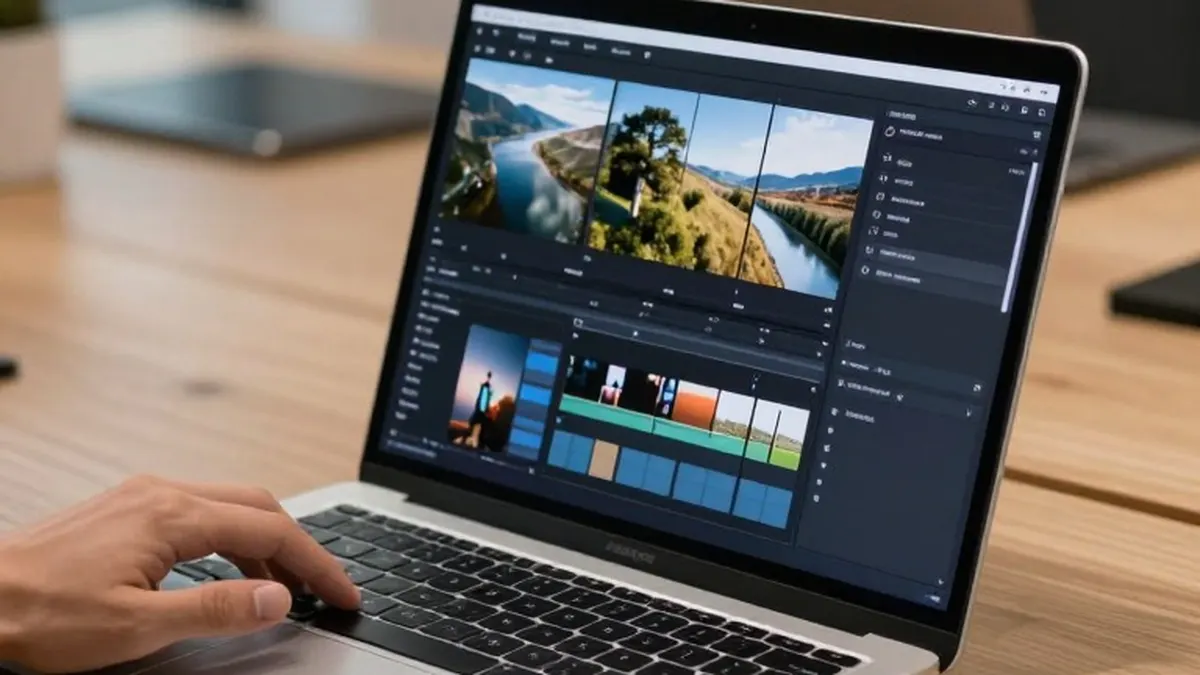
Apple on Wednesday announced its first laptop with a touch screen, a model it calls the MacBook Pro with ProLED XDR Display. The move marks a sharp break from the company's decades-long refusal to put touch input on its notebooks, even as some Windows machines adopted the feature.
The laptop uses a new OLED display that Apple says delivers more brightness, better colors and wider viewing angles. It is powered by M5 Pro or Max chips and is lighter than Apple's current pro laptops. It still runs MacOS rather than a version of the iPhone or iPad software. In a demonstration video, users swiped across the screen to manipulate videos and images, and the lid carries a glowing Apple logo.
The 14-inch model will start at $2,899 and the 16-inch version at $3,399 or more, both notable increases over existing models. Sales begin on Nov. 6. "Yes, for the very first time, we are bringing touch to the Mac," CEO John Ternus said in live remarks to media and analysts in Los Angeles.
It is the third major product launch under Ternus, pointing to a faster hardware cadence. Earlier this week Apple introduced new iMac and MacBook Pro models with M6 chips, after price hikes of several hundred dollars across the lineup in June. On Monday it released an iPad Mini starting at $699, which is $100 more than its predecessor. In September, the company unveiled new iPhones, including its first foldable, the iPhone Duo, along with a smart speaker with a display called HomeView that uses a redesigned Siri.
The launch arrives during one of the worst slumps the laptop market has seen. Overall shipments are expected to fall 11% this year, and analysts say an AI-driven global memory shortage has pushed up laptop prices and hurt demand. Market researcher IDC estimates that total PC shipments dropped 20% year over year in the third quarter, while Apple's own shipments fell 11%. Former CEO Tim Cook warned this summer that memory pricing was "unsustainable," and nearly all Macs have received price increases this year. Mac Minis introduced in August, for example, rose by $300.
The Mac remains strategically important to Apple even though it brings in less revenue than the iPhone. In the most recent quarter, Mac sales totaled $10.35 billion, just under 10% of the company's revenue. The Mac is also the only supported platform for developing iPhone apps, and Apple has recently promoted its chips and memory architecture as well suited to AI that runs locally on a device. Meta's AI model developer team bought hundreds of Mac Minis this year to test agents, and Apple and Meta announced earlier this month that nearly frontier models can run on clusters of Macs linked by high-speed cabling.
Apple's resistance to touchscreen laptops has been long-standing. Software chief Craig Federighi explained in 2018 that the ergonomics would fatigue users. In 2021, Ternus, then senior VP of hardware engineering, told The Wall Street Journal's Joanna Stern: "We make the world's best touch computer on an iPad. It's totally optimized for that. And the Mac is totally optimized for indirect input. We haven't really felt a reason to change that." Ternus has worked on Macs since joining the company and was credited, alongside silicon chief Johny Srouji, with leading the shift of Macs from Intel chips to Apple's own.
Ryan Reith, IDC vice president for worldwide device trackers, said touchscreens have long been available on Windows laptops but are just another feature rather than a driver of purchases. IDC data shows only 17% of notebooks shipped globally this year will have touchscreens, and they sell at a slightly lower average price than non-touch models. Reith said hardware was not the obstacle to merging Apple's desktop and mobile interfaces, and that Apple may have waited until it could offer a polished experience. "This is really a user interface and software thing," he said. "It's one more thing that can draw the developers in."
Originally published by News Media House · Source: CNBC
More News · National news · Report a business · Got a Story?