China Opens Joint Military Training Center in Laos
Beijing and Vientiane established a facility north of the capital to train Laotian pilots, marking a shift toward deeper security ties.
By Sakura Ellis ·
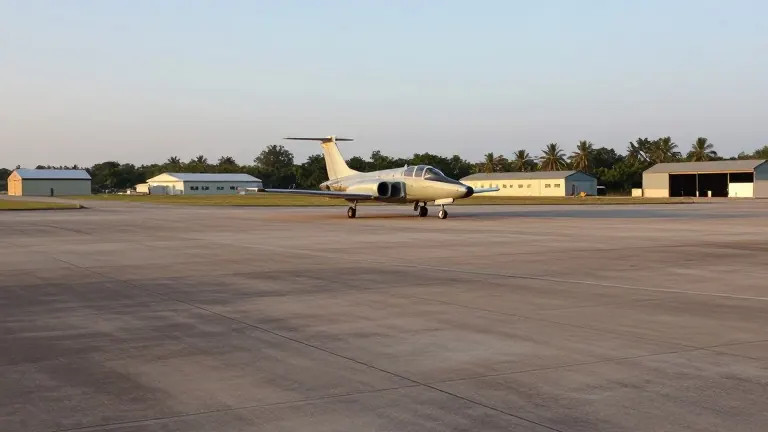
China and Laos opened a joint military support and training center north of Vientiane in late September, a move that expands Beijing’s operational footprint in mainland Southeast Asia. The facility, located at Ban Keun airfield, will initially host Laotian Air Force pilots for training programs designed by Chinese officials. This development follows a series of diplomatic and military engagements that have tightened the bond between the two nations over the past year.
In early November 2026, Chinese Foreign Minister Wang Yi met with counterparts from Laos, Cambodia, Vietnam, Thailand, and Myanmar in Beijing. The six governments agreed to pursue closer economic and security cooperation during the summit. This agreement formalizes a trend where Chinese influence extends beyond trade and infrastructure projects into direct military partnerships.
The new center builds on earlier expansions of Chinese military presence in the region. In 2025, China increased its activity at Cambodia’s Ream naval base on the Gulf of Thailand. While Japanese and Vietnamese vessels can visit that port, they dock at a separate southern quay, leaving the access conditions for other navies unclear. The Ban Keun facility adds an air component to this growing network of strategic assets.
Experts note that the training aspect distinguishes the current phase from immediate deployment. Johann Fuhrmann, head of the Konrad Adenauer Foundation’s Beijing office, explained that China gains influence by co-designing the training and operation of such facilities over several years. He cautioned against assuming that the presence of Chinese equipment implies a permanent military base. The runway at Ban Keun is 2,000 meters long, a length too short for large Chinese bombers that typically require 3,000 meters of space for takeoff and landing.
Data from aviation media outlet FlightGlobal shows that four K-8 jet trainer and light attack aircraft are currently in service in Laos. Satellite images analyzed by Reuters in early October revealed eight K-8s at the Ban Keun base. While this does not confirm permanent stationing, it indicates a tangible increase in hardware on the ground. Marco Bünte, a professor of Asian politics at the University of Erlangen Nuremberg, stated that Beijing is expanding its military operational capabilities, though he stopped short of labeling the trend as military hegemony.
Regional reactions remain mixed as nations balance their relationships with major powers. Vietnam and the Philippines watch these developments closely due to their territorial disputes with China in the South China Sea. Vietnam declared in early November that military cooperation must serve peace and stability, referencing the ASEAN Treaty of Amity and Cooperation. Beijing has stated that its activities are not directed against any third parties, even though China is not a member of ASEAN.
Smaller Southeast Asian nations are adopting a pragmatic approach to these shifting dynamics. Countries like Laos, Cambodia, and Myanmar are considered closer to China, while other states aim to expand relations with Beijing without severing ties with the United States or Western partners. Fuhrmann suggested that Western nations should help strengthen these smaller countries by taking their interests seriously. He emphasized that a counterweight to Chinese influence requires tangible contributions rather than warnings or lectures from Europe.