Launch Industry Updates: SpaceX Declines Military Work as Spanish Rocket Nears Completion
SpaceX passes on three Space Force contracts while PLD Space reports that its Miura 5 rocket is in final assembly ahead of a 2027 debut.
By Xiaoyu Wang ·
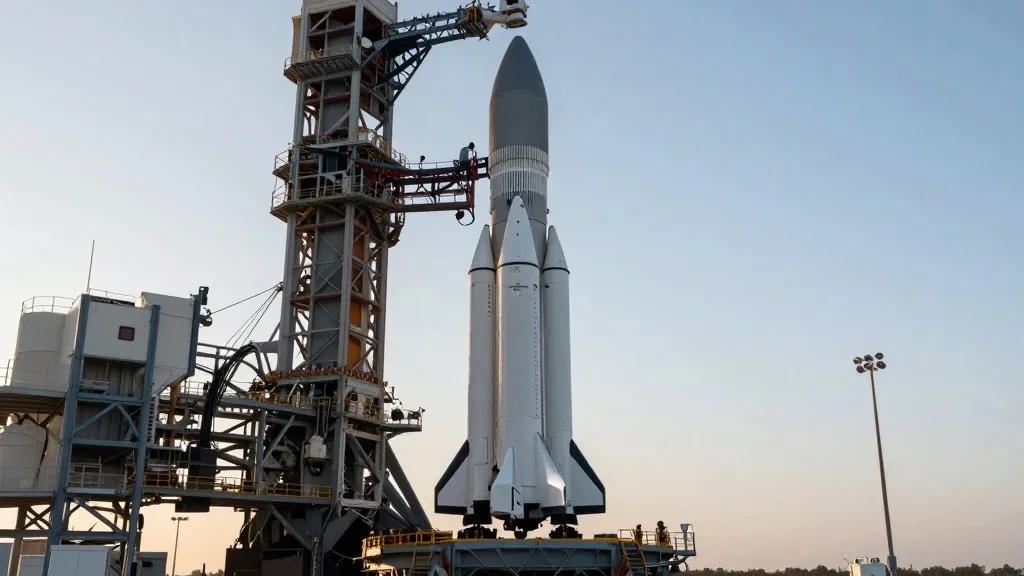
SpaceX has officially declined three launch opportunities offered by the United States Space Force. The company communicated its decision to military officials this week, signaling a strategic shift in how it manages its commercial and government portfolio. This rejection comes just days before other significant technical disclosures regarding the company’s flagship vehicle. The move suggests a continued focus on specific mission parameters that the military contracts may not have fully satisfied.
In a separate development on the civilian side of the launch industry, a NASA safety review panel issued a new assessment regarding the Starship program. The panel indicated that supporting a lunar landing mission could require as many as 22 in-orbit refueling operations. This figure represents a significant logistical challenge for the company. The estimate provides a clearer picture of the complexity involved in preparing heavy payloads for deep space travel. It also highlights the ongoing engineering hurdles that must be overcome before the vehicle can achieve its primary goals.
Meanwhile, in Europe, PLD Space has announced that its Miura 5 rocket is nearing the final stages of integration. The Spanish company stated that the vehicle is on track for its inaugural launch next year. This small-lift rocket is one of three units that the company has already manufactured. The other two vehicles were designed to qualify key system elements for the production model. This progress marks a critical milestone in the development timeline for the company’s first commercial offering.
Raúl Torres, the CEO of PLD Space, provided details during a program update on October 19. He noted that the manufacturing of the three vehicles allowed their teams to work continuously across different production phases. The company applied lessons learned from each qualification campaign directly to the launch vehicle. Currently, one Miura 5 second stage is fully integrated. This unit has begun system-level testing under conditions that represent actual operating scenarios.
The integrated second stage is located at the PLD test facility in Teruel. It is undergoing a qualification campaign that includes a wet dress rehearsal. The testing process also features a static hot-fire test. These steps are essential for verifying the reliability of the propulsion system. The successful completion of these tests will pave the way for the full vehicle to be cleared for flight. The company now targets a first flight of the small-lift vehicle before mid-2027.
In Canada, another launch startup is moving aggressively to expand its operations. Reaction Dynamics is seeking to raise $350 million in new funding. The company aims to grow its staff from 68 employees to more than 350 people. This expansion is intended to support the development of its small-lift Aurora rocket. The company hopes to see the Aurora reach orbit in 2028. This timeline aligns with its broader goals for establishing a consistent launch cadence.
Reaction Dynamics has also announced plans to develop a medium-lift rocket named Borealis. The company targets a debut for this larger vehicle by 2031. This dual-rocket strategy is designed to capture different segments of the launch market. The smaller Aurora will handle lighter payloads, while the Borealis will serve heavier requirements. This approach allows the company to diversify its customer base and revenue streams.
The launch industry continues to see a mix of strategic decisions and technical milestones. SpaceX’s choice to decline military work reflects a specific business calculus. Simultaneously, the detailed refueling requirements for Starship underscore the engineering challenges of lunar missions. In Europe, the integration of the Miura 5 second stage represents tangible progress for a new player in the small-lift sector. These developments collectively shape the competitive landscape for the coming years.
As companies refine their vehicles and secure funding, the pace of activity in the sector remains high. The next three launches on the calendar are expected to provide further data on current vehicle performance. Stakeholders in the Great Lakes and Ohio Valley regions will continue to monitor these trends. The balance between commercial agility and technical readiness defines the current era of spaceflight. Each company is navigating these pressures with distinct strategies and timelines.
Source: Ars Technica