Record spending failed to save GOP majority in Great Lakes states
Democratic candidate-level advantages overwhelmed a significant Republican committee funding edge in the 2026 midterm election.
By Rebecca Svoboda ·
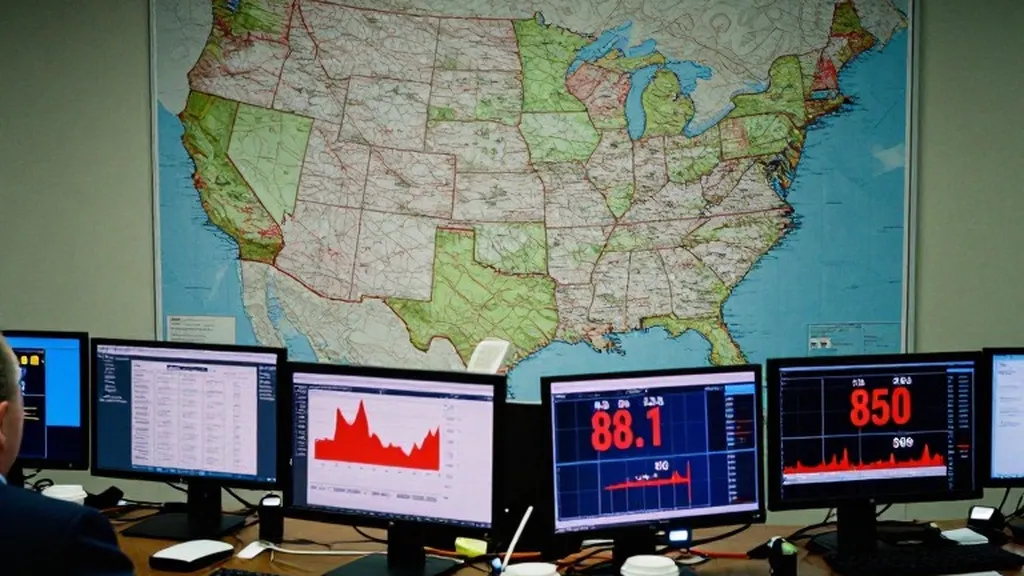
The 2026 midterm election concluded with a decisive shift in power, resulting in what is being described as the most expensive election in history. Democrats secured majorities in both the U.S. House and Senate, picking up at least 43 House seats and seven Senate seats that had previously been held by Republicans. This outcome marks a significant departure from the financial expectations set by party committees, which had heavily invested in Republican retention efforts. The final tally indicates a House majority of at least 250-157 for Democrats and a Senate majority of 54-44. The scale of the defeat for the president's party places this election in the top 20% of historical years in terms of seat swings, meeting the threshold for a wave election in the Senate. The net loss of at least seven Senate seats underscores the magnitude of the change, even as the House net loss of 42 seats remains slightly short of the 48 seats required for a formal wave classification there.
Financial reports indicate that the Republican committee maintained a distinct edge in overall spending during the campaign cycle. However, this aggregate advantage did not translate into electoral success for the party. The data reveals a complex dynamic where total committee funds did not align with candidate-level outcomes. Democrats demonstrated a strong candidate-level edge, particularly in key battleground states across the Great Lakes and Ohio Valley regions. This divergence suggests that targeted spending and candidate-specific appeal outweighed the broader financial resources allocated by national Republican committees. The election results highlight a potential inefficiency in how committee funds were deployed relative to the specific needs of individual races.
In Ohio, the absence of a Senate race meant that the state's political energy focused heavily on the open governor's seat and House contests. The polls in Ohio were open from 6:30 a.m. to 7:30 p.m. on November 3, 2026. The state saw a notable victory for Sherrod Brown, who was elected to the Senate, a seat previously held by a Republican. This win was part of a broader Democratic surge that included strong performances in House districts. The Republican National Congressional Committee had invested significant resources in the state, yet the party failed to hold onto key seats. The governor's race also swung to the Democrats, contributing to the state's overall shift in power. The financial investment by Republican committees in Ohio did not prevent the loss of the governor's office or the gain of the Senate seat by the opposing party.
Michigan presented a critical test for the Republican financial strategy, with polls open from 7 a.m. to 8 p.m. The state had both an open Senate seat and an open governor's seat on the ballot. Despite the Republican committee's financial edge, Democrats won the governor's race, marking a significant change in party control. The Senate race in Michigan was won by Abdul El-Sayed, a progressive candidate who had previously defeated the party's preferred candidate in the primary. This outcome reflects a broader trend where progressive candidates in Michigan outperformed establishment-backed rivals. The financial resources deployed by the Republican committee were substantial, but they were insufficient to counter the momentum of the Democratic candidates in both the gubernatorial and Senate races.
Kentucky, where polls were open from 6 a.m. to 6 p.m., featured an open Senate race but no governor's race. The state saw a Democratic victory in the Senate, contributing to the national trend of Democratic gains. The financial disparity between the parties was evident here as well, with Republican committees spending heavily to defend the seat. However, the Democratic candidate prevailed, adding to the party's overall majority in the upper chamber. The lack of a governor's race meant that the state's political focus was concentrated on the federal contest. The result in Kentucky further illustrates that committee-level spending did not guarantee retention of seats for the Republican party, even in states with fewer local offices up for election.
West Virginia, with polls open from 6:30 a.m. to 7:30 p.m., held a Senate race featuring incumbent Shelley Moore Capito. The state did not have a governor's race on the ballot. The Republican committee invested in Capito's reelection, leveraging the incumbent advantage and the financial resources of the party. However, the broader national trend of Democratic success was felt in West Virginia as well, contributing to the party's net loss of Senate seats. The financial edge held by the Republican committee was not enough to secure a win in this state, adding to the tally of losses for the party. The outcome in West Virginia highlights the challenges faced by incumbent Republicans in the face of a strong Democratic campaign and voter sentiment.
The election results demonstrate that the most expensive election in history did not produce the outcome favored by the party with the higher total spending. The Republican committee's financial advantage was a significant factor in the campaign, but it was not decisive. Democrats' ability to leverage candidate-level advantages and targeted messaging allowed them to overcome the financial disparity. This shift in power has significant implications for the new Congress, as Democrats will now control both chambers. The loss of the majority for the Republican party means that the new Democratic leadership will have the power to set the legislative agenda, including oversight of the administration and key policy issues such as health care and the cost of living.