Democrats seize both chambers as Great Lakes states flip key offices
A historic wave election has resulted in Democratic control of Congress and state governments across the region.
By Rebecca Svoboda ·

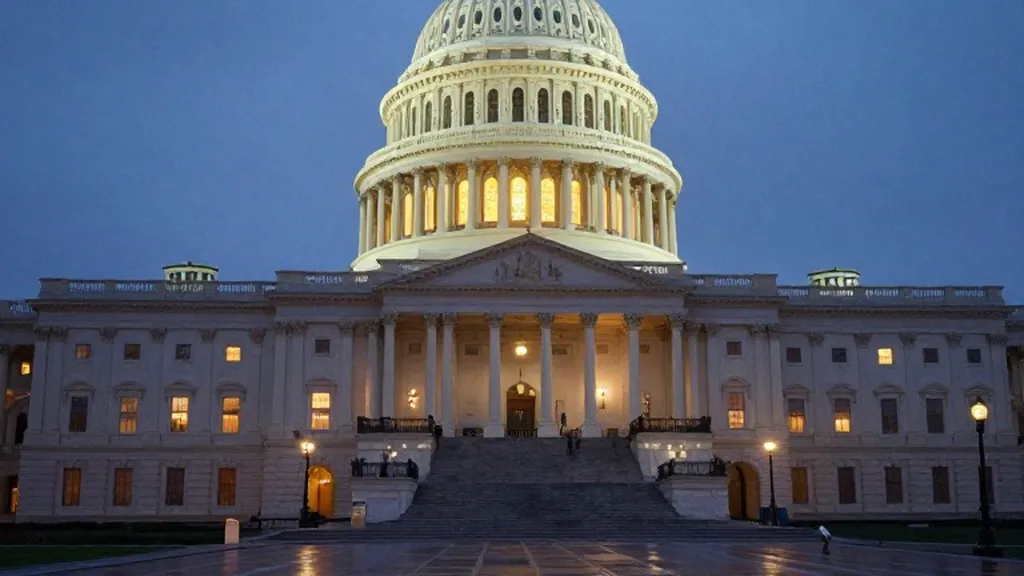
Democratic candidates have secured majorities in both chambers of the United States Congress following the midterm elections held on Tuesday, November 3, 2026. As of 4:00 p.m. Eastern Time on November 6, the party controls at least 250 seats in the U.S. House of Representatives and 54 seats in the U.S. Senate. This outcome marks a decisive shift in power that directly impacts the legislative agenda for the coming two years.
The net loss of at least seven U.S. Senate seats for the Republican Party places this election among the most significant shifts in recent history. This margin of defeat qualifies the result as a wave election, a term used to describe years where a president's party suffers substantial losses. The shift in the Senate provides Democrats with a stronger position to conduct oversight of the executive branch and influence federal policy.
In the U.S. House of Representatives, Democrats have picked up at least 43 seats. Of these, 42 were previously held by Republicans and one was held by an independent candidate. While the House has not yet reached the specific threshold defined as a wave election, the scale of the Republican net loss of at least 42 seats signals a major realignment in the lower chamber.
For readers in the Great Lakes and Ohio Valley, the results have brought significant changes to state leadership. Democrats have won a majority of governorships nationwide for the first time since before the 2010 elections. In the region, this trend is reflected in the control of state legislative chambers and executive offices.
Specifically, Democrats have won 22 of the 36 gubernatorial races reported across the country. Five of these changes in party control moved from Republican to Democratic hands. This shift means that statehouses in the region are now more likely to align with the new majority in Congress on issues such as infrastructure and public services.
The control of state legislatures has also shifted decisively. Democrats won 46 of the 88 state legislative chambers on the ballot. Twelve of these chambers changed party control, with all twelve moving to Democratic hands. No Republican party gained control of any chamber during this cycle, indicating a broad-based gain for the opposition.
In the Great Lakes region, states such as Ohio, Michigan, and Kentucky saw key races decided. While specific state-by-state results for every office are still being finalized in some counties, the national trend favors Democratic candidates in both federal and state contests. This gives the party a stronger foothold in regions that have historically been competitive.
The shift in power also affects the balance of state trifectas, which refer to the control of the governor's office and both legislative chambers by the same party. Democrats have secured 20 trifectas nationwide, compared to 16 for Republicans. This control allows for more cohesive state policy implementation and reduces the likelihood of legislative gridlock at the state level.
President Donald Trump has acknowledged the losses by initiating a major transition within his administration. He announced that he is replacing longtime adviser Susie Wiles with Stephen Miller to serve as the next White House chief of staff. Miller is known for his role in shaping the administration's hard-line immigration policies and is viewed as a determined figure within the president's inner circle.
The change in leadership comes as the White House struggles with the political fallout of the midterm results. Trump also made an unconventional announcement regarding his press secretary, offering the position to UFC boss Dana White. The move highlights the administration's desire to change its public messaging strategy in response to the new political landscape created by the election results.
The new Democratic majority in Congress will likely prioritize issues such as the cost of living and health care oversight, which were central themes for voters in the region. With control of both the House and Senate, the party can advance legislation and conduct investigations without the need for bipartisan cooperation on every measure. This sets the stage for a more assertive legislative approach in the coming months.