Voters Reject Trump's $5,000 Dividend as GOP Loses Congress
Democrats took control of both chambers of Congress, rendering the president's Dallas promise of a $5,000 payment to every adult citizen effectively dormant and sparking debate over its fiscal feasibility.
By Sakura Ellis ·

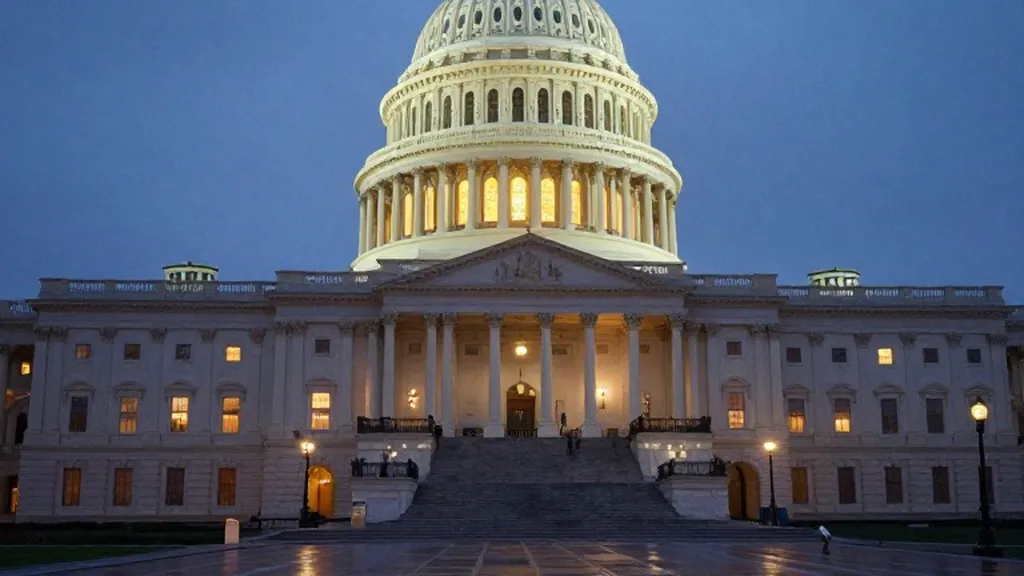
President Donald Trump's pledge to send $5,000 to every American adult if Republicans retained control of Congress has been rendered effectively dormant following the party's loss of both chambers in the November 3 midterm elections. The promise, branded the Trump dividend, was a central feature of the Republican campaign in the Great Lakes and Ohio Valley, where voters faced high costs and an open Senate seat in Michigan. With Democrats now holding majorities in the House and Senate, the mechanism for delivering the checks requires a level of congressional cooperation that appears unlikely in the near term.
The pledge was made at the Republican Midterm Convention in Dallas, where Trump told the crowd that if his party won, voters would win with them and receive a check. He described the payment as a reward for the country's economic success and compared it to a corporate dividend. However, the administration has not announced a formal plan for how the funds would be distributed, leaving many voters in states like Ohio and Kentucky uncertain about whether the money would ever reach their accounts.
House Speaker Mike Johnson, who campaigned heavily in the region, stated on Sunday that the proposal requires congressional approval. He pledged to work to make the idea happen, calling it a creative concept from the president. This position contrasts with Trump's later comments to CBS News Texas, where the president suggested Congress might not need to authorize the payments, though he did not specify how the government could spend more than $1 trillion without legislative action.
Bipartisan criticism of the plan focused on its massive price tag and timing. The payment could cost the federal treasury more than $1 trillion, a sum that would add to the country's nearly $1.8 trillion annual budget deficit. Kenneth Rogoff, a former chief economist at the International Monetary Fund and a professor at Harvard University, warned that the spending would blow up the deficit and increase the odds of a debt crisis in the coming years.
In the Great Lakes region, the election results were decisive for Democrats. In Michigan, polls were open from 7 a.m. to 8 p.m., and voters elected a new senator in an open seat while also deciding the governor's race. In Ohio, polls closed at 7:30 p.m., and the state saw a significant shift in power without a Senate race on the ballot. In Kentucky, polls were open from 6 a.m. to 6 p.m., and voters selected a new senator in an open seat. In West Virginia, polls were open from 6:30 a.m. to 7:30 p.m., and incumbent Shelley Moore Capito retained her Senate seat.
The loss of the House and Senate means that the Trump dividend faces a steep legislative hurdle. Senator Bernie Moreno of Ohio, who said he would introduce legislation to fund the proposal, now faces a Democratic-led chamber where such spending is likely to be scrutinized closely. Political analysts had already noted that the legislation would likely need a 60-vote supermajority in the Senate to pass, a threshold that is difficult to reach under the new partisan balance.
Election law expert Rick Hasen of the University of California, Los Angeles, noted that while the promise was likely legal under the First Amendment, it did not guarantee the checks would be issued. He compared the pledge to other campaign promises, such as tax cuts or healthcare expansions, which require legislative action to become reality. The fact that the promise was tied to a specific election outcome added a layer of complexity that fiscal experts questioned.
The White House has pointed to tariff revenues as a potential source of funding for the dividend. However, the Tax Foundation estimated that the new tariffs would generate about $208 billion in revenue in 2026, a fraction of the $1.2 trillion cost of the checks. Erica York, a senior economist at the Tax Foundation, wrote that the cost of the checks would spend almost all the revenue that the new tariffs are projected to bring in over a decade.
For voters in the region, the promise of a $5,000 check may have influenced turnout, but it was not enough to overcome broader concerns about the cost of living and the war in Iran. The election results indicate that voters prioritized checking the power of the administration over accepting a one-time financial incentive. The Democratic victory in these key states provides a new dynamic for oversight of the executive branch, with committees expected to review the administration's spending and trade policies.
The political landscape in the Great Lakes and Ohio Valley has shifted significantly, with Democrats now holding the governor's office in Michigan and controlling the state legislatures in several of these states. This gives the party a platform to push for cost-of-living relief and healthcare access, issues that were central to the campaign. The Trump dividend remains a point of contention, with Republicans likely to revisit the idea in the future, but for now, the promise of a check in the mail is on hold as the new Congress prepares to take office.
As the new Congress convenes, the question of whether the Trump dividend will ever be realized will likely remain a topic of debate. With the president's approval ratings low and the economy facing persistent inflation, the political cost of the promise is high. The election results suggest that voters are skeptical of large financial incentives that come without a clear plan for repayment, setting the stage for a contentious battle over the federal budget in the coming months.